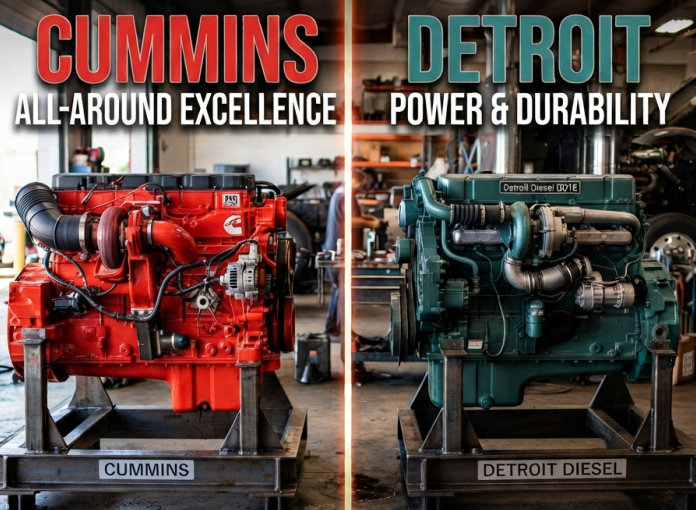
Cummins vs Detroit Diesel Engine: Key Differences and How to Choose?
In the realms of heavy-duty trucks, construction machinery, and long-haul transport across North America and globally, Cummins and Detroit Diesel stand undeniably at the pinnacle of the power pyramid. For fleet managers, independent truck drivers, and heavy equipment buyers, choosing between these two engine giants directly impacts operational efficiency, fuel costs, and the total cost of ownership (TCO).
This article provides an in-depth technical comparison of Cummins and Detroit Diesel across multiple dimensions, including fuel economy, reliability, maintenance costs, and spare parts availability, to help you make the most informed power decision for your actual operations.
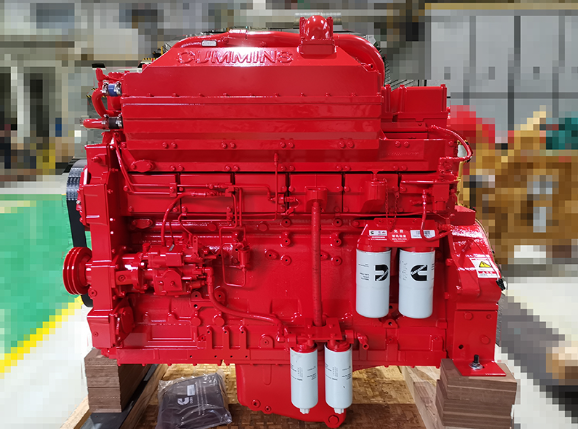
What is a Cummins Diesel Engine?
Founded in 1919 in Columbus, Indiana, USA, Cummins is a global leader in power equipment manufacturing, operating across more than 190 countries and regions.
Renowned for modular architecture and exceptional versatility. From the classic B-series (such as 5.9L/6.7L) to the flagship X15 series, Cummins engines are not only widely matched with highway heavy trucks (such as Ford and Dodge RAM), but also deeply penetrate construction machinery, mining equipment, oilfield pump trucks, marine vessels, and generator sets.
Characterized by being “rugged, durable, and offering extremely high global parts commonality,” allowing them to be easily serviced by independent repair shops almost anywhere.
What is a Detroit Diesel Engine?
Detroit Diesel has more than 80 years of glorious history (now it is a wholly owned division of Daimler Truck North America). Starting from the legendary two-stroke engines Series 71 and pioneering Series 60 and reaching up to today’s highly-efficient DD engines line (DD13, DD15, DD16) it has always been associated with North American trunk logistics operations.
The unique strength of Detroit is in the vertical integration of its drivetrain system. The performance of Detroit engines when matched with its exclusive DT12 automated manual transmission and axles provides unmatched fuel efficiency and drive comfort on highways.
Domination in the North American trunk logistics segment (engines for mainstream heavy trucks like Freightliner Cascadia).
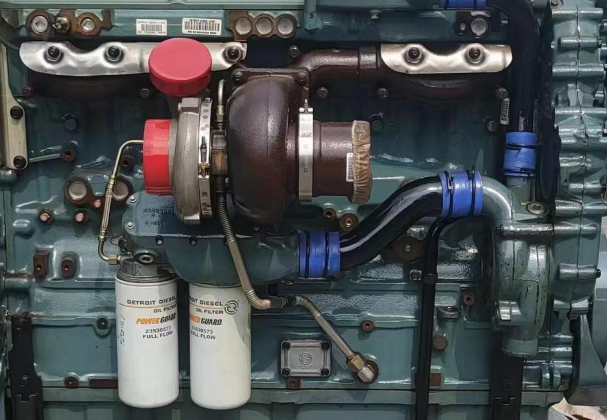
Cummins vs. Detroit Diesel: Core Differences
As two absolute giants in the heavy-duty diesel engine sector, Cummins and Detroit Diesel compare across several key areas:
1. Horsepower Ceiling and Heavy-Load Burst (Power & Torque)
Cummins (Represented by the Cummins X15 Series):
Traditionally considered a “heavy-load beast.” Its horsepower ceiling typically reaches 600+ hp, with exceptionally strong torque performance (up to 2,050 lb-ft). It holds an advantage in handling overloaded hauling, steep grade climbing, and demanding off-highway environments.
Detroit (Represented by the DD15 Series):
Horsepower typically ranges from 405 hp to 505+ hp. It places greater emphasis on smooth, low-RPM torque output, effectively reducing shifting frequency during long-haul highway cruising.
2. Design Philosophy and Ecosystem Compatibility
Cummins (Independent Power Giant):
Features a highly modular design. Given its position as the world’s biggest independent engine manufacturer, its engines are compatible with most of the popular heavy-duty truck brands available in the market (such as Kenworth, Peterbilt, Volvo, International, and Freightliner), resulting in maximum compatibility.
Detroit (Vertically Integrated Ecosystem):
It is highly tied up with Daimler Truck North America. The engines (DD13, DD15, and DD16) produced by the company become part of the vertically integrated powertrain in combination with Detroit’s unique DT12 automated transmission and axles.
3. Fuel Economy and Application Scene Preferences
Detroit:
Long dominant in the North American trunk highway logistics market. In high-standard fleet data tracking, if a vehicle adopts a Detroit integrated powertrain running standard linehauls, its highway fuel economy (MPG) often enjoys a marginal lead.
Cummins:
Beyond exceptional highway logistics performance, its application scenarios are more diversified, widely penetrating vocational fields such as construction, mining, oilfield machinery, marine vessels, and stationary generator sets.
4. Service Network and Convenience
Cummins:
Possesses a vast and mature global independent service network. No matter where a vehicle travels, the vast majority of local independent repair shops and technicians are extremely familiar with this platform, making parts acquisition very convenient.
Detroit:
Heavily relies on its exclusive authorized dealer network and integrated diagnostic system (Detroit Assurance). While factory diagnostics are precise, its universality among independent small repair shops lags behind Cummins.
5. Maintenance Cycles and Aftertreatment Systems
Oil Drain Intervals:
In factory standard specifications, Detroit (such as the DD15) features relatively long oil drain intervals (reaching up to 45,000 miles under certain operating conditions), whereas Cummins’ regular intervals typically range from 25,000 to 35,000 miles, placing slightly higher demands on oil and filter maintenance frequency.
Aftertreatment Packaging Design:
Detroit deeply integrates Daimler’s “One-Box” aftertreatment system, resulting in a compact structure deeply bound to the chassis. Cummins adopts its signature Single Module™ system, which is lighter in weight and offers stronger adaptability to different frames and multi-brand retrofits.
Driving Texture: Original Engine Brake Performance (Jake Brake)
Older truck drivers and fleets have profound experiences with their Jake Brakes (compression braking). Cummins’ engine brake sounds robust with an aggressively fierce braking force (frequently described as a “hand of God” pulling sensation), providing immense confidence during long descents or heavy-load decelerations.
In contrast, Detroit’s integrated engine brake leans toward smooth and soft operation, with noise control better suited for modern long-haul driving comfort.
6. Vehicle Retrofitting and Engine Swapping Flexibility
Cummins:
Serves as a “universal heart.” Due to its independent supplier attribute, many fleets choose to swap original engines in older heavy trucks (such as Kenworth, Peterbilt, or International) for Cummins units, with highly mature electrical and interface adaptation schemes in North America.
Detroit:
Extremely difficult to “guest-star” in other brand chassis. Because Detroit engines form a deep closed-loop with Freightliner/Western Star driving computers and proprietary data networks, forced cross-brand transplants face immense electrical and system compatibility challenges.
Maintenance and Parts Strategy: The Key to TCO
An engine you can afford to buy does not mean you can afford to maintain it. What truly widens the gap in long-term operating costs is never the initial purchase price, but the frequency of preventive maintenance and spare parts procurement costs.
Daily Maintenance and Diagnostics
Cummins
Backed by a massive and mature global independent repair network, parts are easily accessible, and technicians at independent repair shops anywhere can get up to speed quickly.
Detroit
Relies heavily on proprietary integrated diagnostic systems and authorized networks, achieving highly precise electronic troubleshooting within specific systems.
Parts Cost Pain Points and High-Cost-Performance Solutions
Whether it is Cummins’ overhaul cylinder liner assemblies and turbochargers or Detroit’s high-pressure common rail fuel injection systems, sourcing genuine factory overhaul parts through traditional retail channels often imposes a heavy financial burden on fleets.
Finding a reliable authorized distributor of Genuine OEM Parts is the optimal solution to break through high maintenance pressures. Directly connecting with the source supply chain not only secures highly competitive wholesale pricing, drastically cutting daily maintenance and overhaul budgets, but also ensures zero compromise on engine quality and uptime.
For instance, ordering Cummins engines or parts through Longshine eliminates the need to endure overly strict bulk purchasing minimum order quantities (MOQs). Longshine supports single-piece ordering and fast global shipping, truly helping global fleets and repair shops compress “downtime waiting for parts” to the absolute minimum.
Cummins or Detroit Diesel: Which One Should You Choose?
Choose Cummins if:
Your business extends beyond standard highway logistics to widely involve diverse operating conditions such as construction, mining, oilfield operations, or agricultural heavy hauling.
You desire maximum autonomy in parts selection during vehicle maintenance and want to easily find local technical support familiar with the platform at any time.
Choose Detroit Diesel if:
Your core business focuses on North American trunk highway logistics, and your fleet’s primary vehicles are heavy trucks deeply equipped with Detroit powertrains, such as the Freightliner Cascadia.
You place an extreme value on peak highway cruising fuel economy and pursue the primary powertrain matching efficiency consisting of the engine, transmission, and axles.
Looking for Cummins Engine and Cummins Parts?
Regardless of which industrial heart you choose, maintaining peak condition across millions of miles of high-intensity operation requires scientific maintenance combined with uncompromising parts quality.
Keeping your heavy-duty fleet running efficiently should not become a heavy financial burden. Longshine specializes in providing you with 100% genuine OEM heavy-duty truck engines and engine parts at reasonable prices, supporting single-piece sales and flexible, rapid global shipping.
Contact our technical sales team today to get a highly competitive quote!