
What Does Black, White, or Blue Smoke from a Diesel Engine Mean?
Seeing smoke coming from a diesel vehicle or generator set can be worrying, especially when the smoke suddenly becomes thicker or changes color. But not all smoke means the same thing. The color can give you a useful first clue about what is happening inside the engine.
Black, white, and blue smoke are usually linked to different combustion or lubrication problems. Black smoke often points to incomplete combustion, while white smoke can be related to unburned fuel or coolant. Blue smoke, on the other hand, is commonly associated with engine oil getting into the combustion chamber.Knowing the difference can make troubleshooting easier. Instead of treating all visible smoke as the same problem, you can start by looking at the smoke color and then checking the components most likely to be involved, such as the fuel injectors, air intake system, fuel system, piston rings, or other oil-related parts.
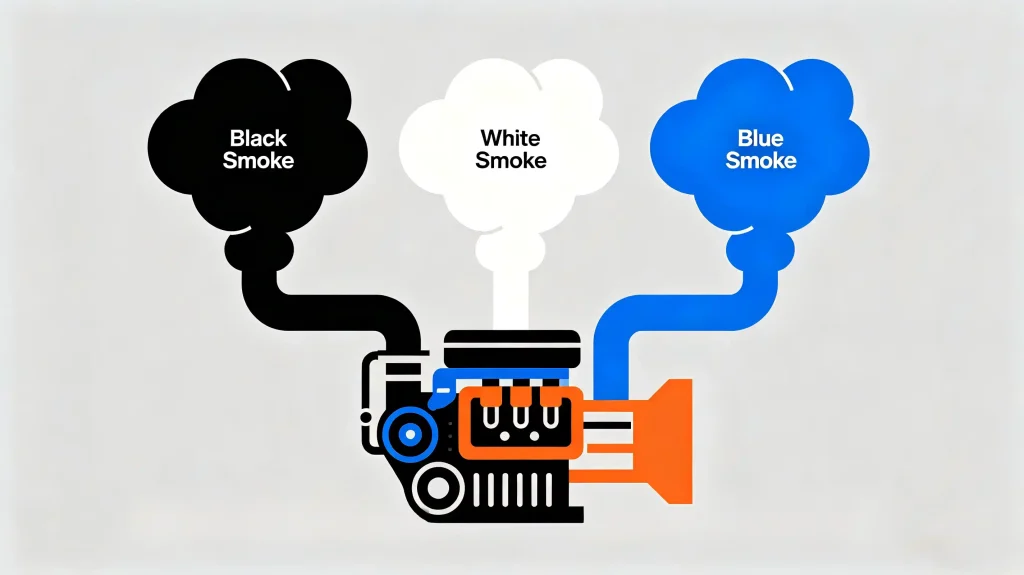
Black Smoke: A Sign of Incomplete Combustion
Black or dark gray smoke usually means the engine is getting more fuel than it can burn cleanly. It is often easier to notice when the engine is accelerating, working under heavy load, or when a generator suddenly takes on a larger electrical load.
The most common reason is an imbalance between fuel and air. Too much fuel, not enough air, or poor fuel atomization can leave carbon particles in the exhaust, giving the smoke its dark appearance.
Several issues can cause this, including:
- Worn or faulty injectors that deliver too much fuel or have a poor spray pattern
- A restricted air intake, such as a dirty or clogged air filter
- Fuel system problems that affect injection pressure, timing, or fuel delivery
- Excessive engine load or an operating condition that exceeds the engine’s normal range
On Cummins engines, the injectors and fuel system are often worth checking first, particularly on models using a PT-type fuel system. A worn injector or uneven fuel delivery can make black smoke much more noticeable under load.
The air filter is usually one of the easiest things to check. If the intake is clear but the smoke remains, the next step is to look more closely at the injectors, fuel pressure, injection timing, and related fuel system components.
A small amount of black smoke during a sudden increase in load is not necessarily a sign of a serious fault. If the smoke is heavy or continues during normal operation, though, the engine should be inspected. Running this way for an extended period can increase carbon deposits and may also reduce fuel efficiency.
White Smoke: Cold Starting or Unburned Fuel?
White smoke is not always a sign of a serious engine problem. It is fairly common when a diesel engine is started cold, especially in low temperatures. Before the engine reaches its normal operating temperature, the fuel may not burn completely, leaving a light white or gray exhaust. A cold engine or air trapped in the fuel lines are also listed as possible causes of white smoke in Cummins service information.
What matters is whether the smoke goes away as the engine warms up. If it continues after the engine reaches normal temperature, the cause needs closer attention.
One common cause is poor fuel injection. A worn injector may not atomize the fuel properly, while incorrect injection timing can also leave unburned fuel in the cylinder. Low compression is another possibility, particularly if the engine is also difficult to start or runs unevenly. Perkins also lists faulty injectors and incorrect injector timing among the possible causes of white smoke at startup.
White smoke can also come from coolant or water getting into the combustion chamber. A damaged head gasket, cracked cylinder head, or faulty cylinder liner can allow coolant to enter a cylinder. In that case, the smoke may continue after warm-up and may be accompanied by coolant loss or rough engine operation.
So, don’t judge the problem from the smoke color alone. A small amount of white smoke that disappears after startup is often related to cold combustion. Smoke that remains once the engine is warm is a different situation and usually calls for a closer inspection of the fuel system, compression, and cooling system.
Blue Smoke: Engine Oil Is Being Burned
Blue or blue-gray smoke usually points in a different direction. In most cases, it means engine oil is entering the combustion chamber and being burned with the fuel.
One common cause is wear inside the engine. Worn piston rings or cylinder liners can allow oil to pass into the combustion chamber. Valve guides or valve seals can also contribute to oil entering the cylinder.
The turbocharger should not be overlooked on turbocharged diesel engines. A problem with the turbocharger’s sealing system can allow engine oil into the intake or exhaust side. Cummins’ turbocharger troubleshooting information lists worn piston rings or liners, crankcase breather restrictions, and turbocharger-related oil leaks among conditions associated with blue smoke and increased oil consumption.
An easy clue is the engine’s oil level. If the oil level keeps dropping without an obvious external leak, and blue smoke is appearing from the exhaust, internal oil consumption becomes more likely.
However, checking the oil level alone cannot identify the failed component. A compression test, inspection of the turbocharger and crankcase ventilation system, or further engine testing may be needed to determine the actual cause.
Black Smoke vs. White Smoke vs. Blue Smoke
| Smoke color | Common meaning | Priority checks |
| Black | Too much fuel or not enough air | Air filter, intake system, load, injectors, fuel system |
| White | Unburned fuel, especially during cold start, or coolant entering the cylinder | Engine temperature, injectors, fuel system, compression, coolant level |
| Blue | Engine oil entering the combustion chamber | Oil consumption, piston rings, valve seals/guides, turbocharger, crankcase ventilation |
The timing of the smoke matters, too. Black smoke under load suggests a different line of investigation from white smoke only during a cold start. Likewise, persistent blue smoke combined with increasing oil consumption deserves more attention than a brief puff after starting.
If a diesel vehicle or generator set begins smoking, start with the simple checks: note the smoke color, when it appears, whether the engine is cold or hot, and whether there is any loss of power, unusual noise, increased fuel consumption, or falling oil or coolant levels. Check the air filter and fuel condition before moving directly to major engine repairs.
For diesel engines using sensitive fuel-system components, fuel quality also matters. Cummins notes that water, particles, and other contaminants can contribute to injector wear and fuel-system problems.
When smoke continues or becomes heavier, the next step should be proper diagnosis rather than simply replacing parts. The injector, fuel pump or fuel system, turbocharger, cylinder sealing components, and related engine parts may all require different inspection methods.
Smoke color is useful as a starting point, but it cannot identify the exact fault by itself. The engine model, operating load, when the smoke appears, and any other symptoms all provide important clues. For a diesel vehicle or generator set, having this information ready can make it much easier to narrow down the problem.
If you need to replace an injector, fuel-system component, or other Cummins engine parts, Longshine can help you identify the appropriate component for your engine model. You can contact Longshine for parts information and technical assistance.