
How Long Can a Diesel Generator Set Last During a Power Outage?
When the power goes out, a common concern is how long a diesel generator can keep running before it needs to be refueled. A small diesel generator may cover several hours of work, while a larger standby unit with a high-capacity fuel tank can run much longer.
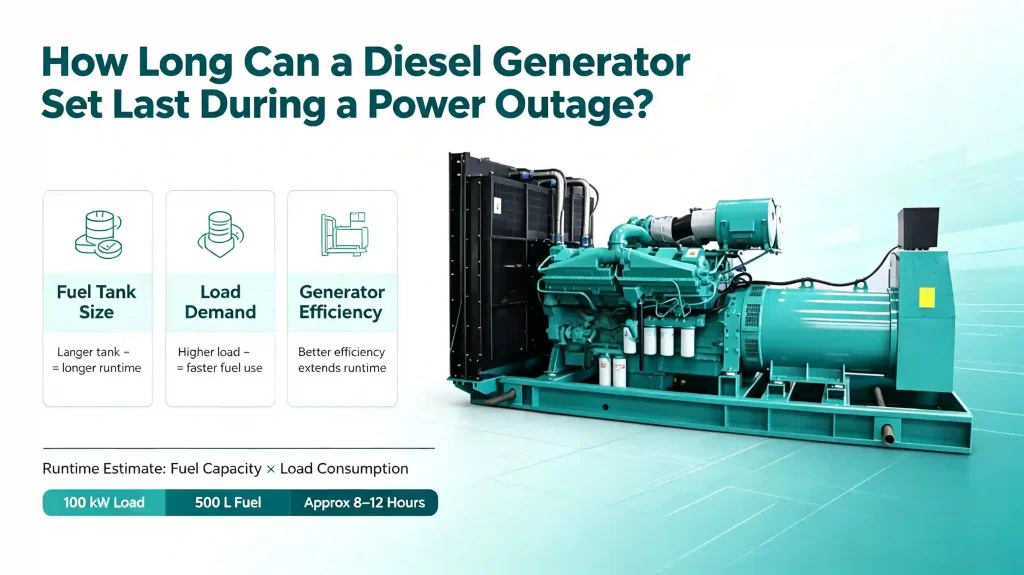
The actual runtime depends mainly on three things: the size of the fuel tank, the generator’s fuel consumption, and how much electrical load it is carrying. A generator running at a light load will generally use less fuel per hour than one operating near its rated capacity. Once you know the tank capacity and approximate fuel consumption, you can get a good estimate of how long the generator can run.
How Long Do Diesel Generators Usually Run?
For a general reference, typical runtime can look like this under moderate loads and with a standard fuel tank:
- 10–20kW diesel generators: around 6–10 hours of continuous operation.
- 30–50kW diesel generators: around 8–15 hours, depending on tank size and load.
- 100kW and larger generators: often 10–20 hours or more when equipped with a suitable fuel tank or external fuel supply.
These figures are only general references. Two generators with the same rated power can have different runtimes because their fuel tanks and engines are different.
For example, a 20kW generator with a relatively small tank may need refueling sooner than another 20kW model equipped with a larger base tank. Likewise, a generator running at 80% load will normally use more diesel per hour than the same generator supplying only half of its rated capacity.
For a specific model, the manufacturer’s fuel consumption data and fuel tank capacity are more useful than the rated power alone.
What Determines How Long a Diesel Generator Can Run?
1. Fuel Tank Capacity
The most obvious factor is how much diesel the generator can hold.
A generator with a 100-liter tank has more potential runtime than one with a 50-liter tank, assuming similar fuel consumption. However, you should not simply divide the total tank capacity by the manufacturer’s maximum fuel consumption figure. The generator may be operating at a lower load, and not all of the tank capacity should necessarily be treated as usable fuel.
Some standby generators use a built-in base fuel tank, while larger installations may use an external or auxiliary tank. An external tank can extend operating time considerably, which is useful for facilities that need backup power during long outages.
2. Electrical Load
The amount of electricity you are actually using also affects fuel consumption. A diesel generator does not necessarily consume fuel at its maximum rate all the time. If a generator is supplying a moderate load, its hourly fuel consumption will generally be lower than when it is operating close to full capacity.
For example, a 50kW generator running at 50% load is not using the same amount of diesel as when it is running at 90% load. This is why the actual load should be considered when estimating diesel generator runtime.
At the same time, running a generator continuously at an extremely low load is not ideal for many diesel engines. When sizing a standby generator, the goal is usually to select a capacity that can handle the required loads without leaving the engine consistently underloaded.
3. Fuel Consumption Per Hour
Every diesel generator has a specific fuel consumption rate, usually expressed in liters per hour (L/h) at a particular load.
Fuel consumption varies between engines and generator models. It can also change as the load changes. Manufacturer specifications may provide fuel consumption at 25%, 50%, 75%, or 100% load, which gives you a better basis for estimating actual runtime.
The generator’s condition matters as well. A clogged air filter, dirty fuel filter, poor-quality fuel, or an engine that has not been properly maintained can affect operating efficiency and reliability. These issues do not automatically mean a generator will use dramatically more fuel, but they can make real-world consumption less predictable.
Temperature, altitude, and other operating conditions can also affect engine performance, particularly in demanding environments.
How to Calculate Diesel Generator Runtime
The basic calculation is straightforward:
Runtime (hours) ≈ Usable fuel in tank (liters) ÷ Actual fuel consumption (liters/hour)
For example, suppose a diesel generator has 100 liters of usable fuel and consumes approximately 8 liters per hour under the current load:
100 ÷ 8 = 12.5 hours
So the estimated runtime would be about 12.5 hours.
Consider another example. A smaller generator has 50 liters of usable fuel and consumes around 6 liters per hour at its operating load:
50 ÷ 6 ≈ 8.3 hours
In practice, it is better to leave some margin rather than plan to run the tank completely empty. Fuel consumption figures in product specifications are normally measured under defined test conditions, while an actual site may have changing loads and different operating conditions.
If the generator will be used as an emergency power source, it is also worth calculating the expected runtime based on the actual loads that will remain connected during an outage, rather than simply using the generator’s maximum rated power.
How Can You Make a Diesel Generator Run Longer?
The easiest way to extend operating time is to manage the load and fuel supply properly.
During a long power outage, prioritize essential equipment instead of running every available electrical load at the same time. This reduces the generator’s fuel demand and can make the existing fuel supply last longer.
It is also useful to have a clear refueling plan for extended outages. If an external fuel tank is used, make sure the installation and fuel storage arrangements meet applicable safety requirements.
Regular maintenance should not be overlooked either. Keeping the air and fuel filters in good condition, using suitable engine oil and clean diesel fuel, and following the manufacturer’s maintenance schedule can help the generator operate consistently.
During operation, operators should also keep an eye on fuel level, engine temperature, oil pressure, and unusual sounds or changes in performance. These checks can help identify problems before they interrupt backup power.
So, How Long Can a Diesel Generator Really Run?
For many common diesel generators, 6–15 hours of continuous operation on a standard tank is a reasonable general reference, while larger generators with larger or external fuel tanks can run considerably longer. But the generator’s kW rating alone cannot tell you how long it will operate.
If you want a more accurate answer, check three numbers for the specific generator: usable fuel tank capacity, fuel consumption at the expected load, and the actual electrical load. Once you have them, the runtime calculation is simple.
For anyone preparing for frequent or extended power outages, it is worth working out this figure before an emergency happens. Knowing how often a generator needs refueling makes it much easier to plan fuel storage, staffing, and backup power requirements. For model-specific fuel consumption, configurations, and generator support, you can also refer to the manufacturer’s diesel generator specifications and technical documentation.