
What Types of Fluids Are Used in an Engine? A Guide to Their Functions and Maintenance
An engine relies on several fluids to operate properly, and each has a specific job. Diesel fuel provides the energy needed for combustion, engine oil protects moving parts, and coolant helps control operating temperature. Other fluids, such as hydraulic oil and gear oil, are used in supporting equipment and transmission systems.
Although these fluids may all be part of routine maintenance, they are not interchangeable. Using the wrong fluid or neglecting replacement can lead to premature wear, poor performance, or equipment failure. For diesel engines, in particular, fuel quality and lubrication requirements deserve close attention. Understanding the main engine fluids makes it easier to follow maintenance schedules and identify potential problems before they become serious.
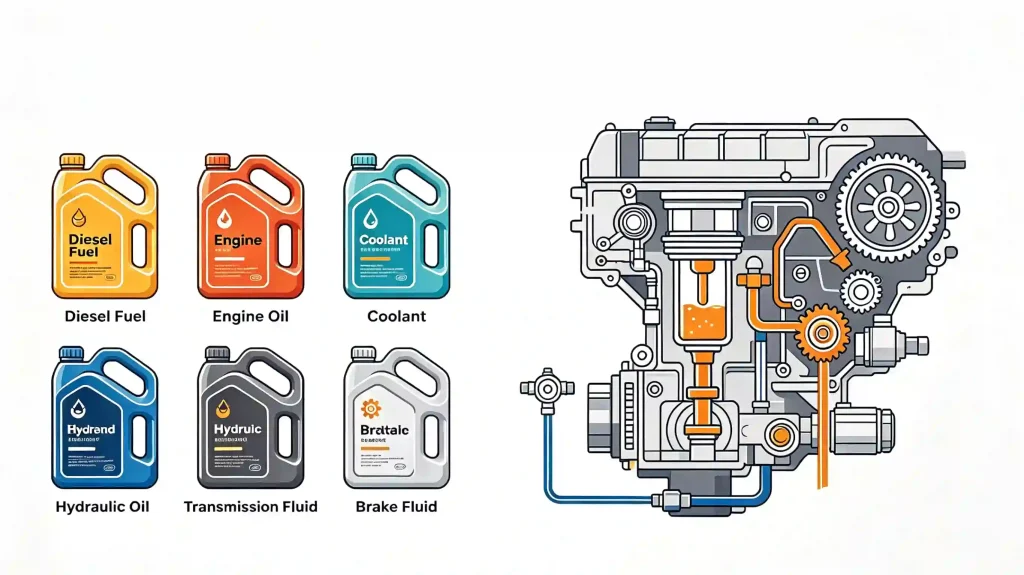
1. Diesel Fuel
Diesel fuel supplies the energy that powers a diesel engine. Unlike gasoline engines, which use spark plugs to ignite the air-fuel mixture, diesel engines rely on compression ignition. Diesel fuel must therefore meet the requirements of the engine’s fuel injection system.
Fuel cleanliness is particularly important. Dirt and water can damage precision fuel injectors and high-pressure pumps, affecting combustion and engine performance. Contaminated fuel may also cause corrosion, filter blockage, difficult starting, or unexpected downtime.
To reduce these risks, use diesel that meets the engine manufacturer’s specifications. Drain water from the fuel-water separator when required, and replace fuel filters according to the recommended maintenance schedule. If a diesel generator is stored for long periods, check the fuel condition and storage arrangements before starting it again.
2. Engine Oil (Lubricating Oil)
Engine oil is one of the most important fluids in a diesel engine. It forms a protective film between moving components, reducing friction and wear. It also helps carry heat away from engine parts, suspends contaminants, protects metal surfaces against corrosion, and supports sealing between the piston rings and cylinder walls.
Choosing the right engine oil involves more than selecting a familiar brand. Two specifications matter most: viscosity and performance classification.
Viscosity grades, such as SAE 15W-40, describe how the oil flows at different temperatures. Performance classifications indicate whether the oil meets certain engine lubrication requirements. Diesel engines may require specific API categories or manufacturer approvals, depending on their design, emissions equipment, and operating conditions.
Oil change intervals also vary. A diesel generator running continuously under heavy load may need more frequent oil changes than equipment used occasionally. Follow the maintenance manual and consider operating hours, ambient temperature, load, and oil analysis results where applicable.
Avoid mixing oils with different specifications unless the manufacturer confirms they are compatible. Check the oil level regularly and investigate any unusual oil consumption, leaks, or changes in oil appearance.
3. Coolant (Antifreeze)
Coolant is not an oil, but it is essential to engine maintenance. It circulates through the cooling system, carrying heat away from the engine and helping maintain a suitable operating temperature.
Depending on its formulation, coolant also provides freeze protection, raises the boiling point of the cooling mixture, and helps prevent corrosion inside the radiator, water pump, cylinder block, and other cooling system components.
Coolant should be checked at the intervals specified by the manufacturer. The correct type and concentration depend on the engine and its operating environment. Different coolant technologies may contain different corrosion inhibitors, so mixing incompatible products can reduce protection.
Adding plain water may be acceptable as a temporary measure in certain circumstances, but it is not a substitute for the correct coolant mixture. Water alone does not provide adequate freeze protection or the same corrosion protection, and unsuitable water can contribute to scale formation. Never remove the radiator cap while the engine is hot, as pressurized coolant can cause serious burns.
4. Hydraulic Oil
Hydraulic oil is commonly used in construction machinery, lifting equipment, and auxiliary systems that rely on hydraulic power. Some generator installations also include hydraulic equipment, although hydraulic oil is not normally a lubricant circulating inside the engine itself.
Its primary function is to transmit pressure through the hydraulic system, allowing pumps, cylinders, and motors to operate. Hydraulic oil also lubricates components, helps dissipate heat, and protects system surfaces against wear and corrosion.
Cleanliness is critical because small particles can damage hydraulic pumps and control valves. The oil must also have the correct viscosity for the equipment’s operating temperature and pressure.
Check oil levels, inspect hoses and connections for leaks, and replace hydraulic filters as recommended. When topping up or changing the oil, keep containers and filling equipment clean. Using the wrong viscosity or an incompatible hydraulic fluid can affect system response and shorten component life.
5. Other Common Fluids
Several additional fluids may be found in vehicles, industrial equipment, or machinery powered by diesel engines.
Gear oil lubricates gearboxes, differentials, and other gear-driven components. It must provide suitable protection under the loads and operating temperatures involved. Transmission and axle systems may require different specifications, so do not assume that one gear oil suits every application.
Brake fluid transfers hydraulic pressure in braking systems. It must meet the specified classification, such as DOT 3 or DOT 4 where applicable. Brake fluid can absorb moisture over time, which may reduce braking performance. Follow the vehicle or equipment manufacturer’s replacement instructions, and never substitute engine oil or hydraulic oil for brake fluid.
Power steering fluid is used in some hydraulic steering systems. The required fluid depends on the system design, and certain vehicles use a specified automatic transmission fluid or dedicated steering fluid. Many modern vehicles have electric power steering and do not require steering fluid.
These fluids serve different systems, so always confirm the correct product before topping up or carrying out maintenance.
6. Important Fluid Maintenance Tips
Correct fluid selection is only part of engine maintenance. Handling, storage, and regular inspection also affect reliability.
First, never mix fluids simply because they look similar. Diesel fuel, engine oil, hydraulic oil, coolant, and brake fluid have different chemical properties and operating requirements. Using one in place of another can cause serious damage.
Second, prevent contamination during filling and replacement. Keep caps, funnels, storage containers, and filling points clean. For diesel engines, pay particular attention to water separation and fuel filtration because modern injection systems can be sensitive to contamination.
Third, check fluid levels and condition at the recommended intervals. Unexplained drops in oil or coolant levels may indicate a leak or an internal problem. Follow the manufacturer’s instructions for checking levels safely, including whether the engine should be cold, warm, running, or switched off.
Finally, use the engine model and operating conditions to guide fluid selection. A diesel generator operating for long periods under a high load may have different maintenance requirements from a vehicle engine used for short trips. The owner’s manual or service documentation should take priority over general recommendations.
Conclusion
Diesel fuel, engine oil, coolant, hydraulic oil, and other equipment fluids each perform a different function. Using the correct product and following the recommended inspection and replacement schedule can help reduce wear, prevent avoidable breakdowns, and maintain reliable engine performance.
For Cummins diesel engines and generator sets, check the specifications for the exact engine model before selecting oil, fuel filters, or other maintenance parts. If you need help identifying compatible Cummins components or reviewing fuel system maintenance requirements, please feel free to contact Longshine.