Cummins School Bus Engine: Models and Parts Buying Guide
When a school bus engine malfunctions, worn components need replacement, or you are planning to source a complete replacement engine, how can you quickly locate the exact Cummins engine and compatible parts? For school bus operators, maintenance service providers, and engine parts distributors, accurately identifying the engine model and verifying part compatibility is a crucial step in reducing procurement risks and ensuring uninterrupted fleet operations.
This guide explores common Cummins school bus engine models, key replacement parts, and critical purchasing considerations to help you source complete Cummins engines and spare parts more efficiently.
Mainstream Cummins School Bus Engine Models
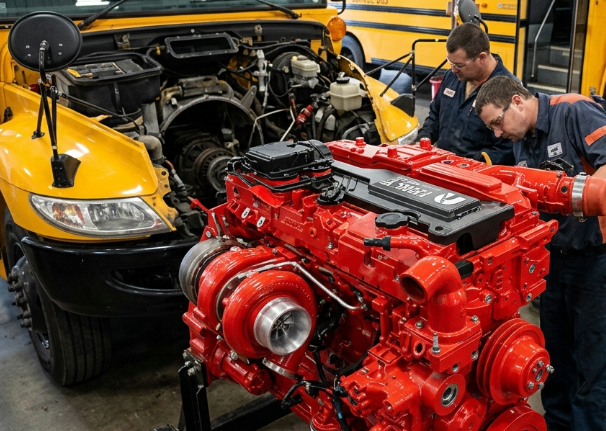
The school buses (especially Type C and Type D buses) have very high requirements for torque at low engine RPMs, reliability at repeated starts and stops, and winter start-up performance. The mid-to-heavy-duty Cummins diesel engines, namely, the B6.7 and L9, provide the core for North American school buses.
Key Technical Specifications Comparison
| Specifications | Cummins B6.7 / ISB 6.7 | Cummins L9 |
| Primary Applications | Type C & Type D standard and high-capacity school buses | Type D heavy-duty, steep grade/mountainous, and high-altitude route school buses |
| Displacement | 6.7 L (408 cu in) | 8.9 L (543 cu in) |
| Cylinder Configuration | In-Line 6 | In-Line 6 |
| Horsepower Range | 200 – 325 hp | 260 – 380 hp |
| Peak Torque | 520 – 750 lb-ft | 860 – 1,250 lb-ft |
| Fuel System | High Pressure Common Rail (HPCR) | High Pressure Common Rail (HPCR) |
| Aspiration | VGT™ Variable Geometry Turbocharger | VGT™ Variable Geometry Turbocharger |
| Aftertreatment System | EGR + DPF + SCR (Requires DEF) | Single Module™ Aftertreatment System (Integrated DPF + SCR) |
Cummins B6.7 / ISB 6.7: The School Bus Industry Benchmark
Frequent Stop-and-Go Performance & Quiet Operation:
Cummins B6.7 (previously known as ISB 6.7) diesel engine is one of the most popular in North America among school buses. The HPCR fuel injection technology ensures multiple injections during the combustion cycle, decreasing noises from the combustion process (creating more comfortable cabin environment and enhancing safety for children) while ensuring perfect fuel economy.
Low-RPM Responsiveness:
This diesel engine combined with VGT™ Variable Geometry Turbocharger ensures high torque output at low RPMs, therefore it’s suitable for stop-and-go driving cycles and low speed cruising in school zones during rush hours.
Maintenance & Economy:
Low cost of maintenance and increased oil drain interval will help to reduce TCO.
Cummins L9: Built for Heavy Loads & Demanding Routes
Reinforced Structure & Heavy-Duty Durability:
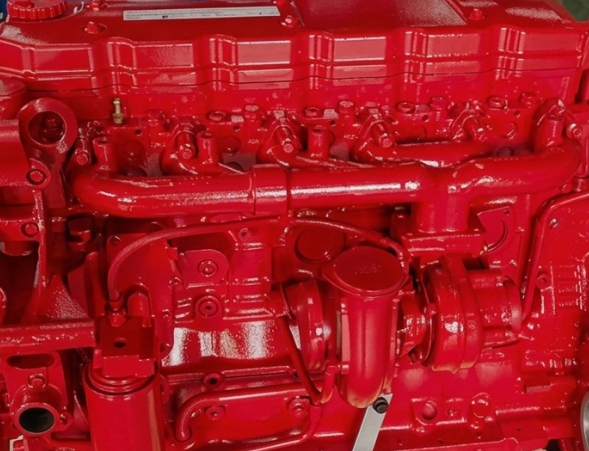
Engineered to operate in the harsh operating environment, the Cummins L9 has wet cylinder liners that are easy to replace. This construction provides excellent heat dissipation and increased durability, ensuring longer overhauls and making the engine easy to use in continuous high loading conditions.
High Power Reserves & Gradeability:
With a maximum horsepower of 380 hp and torque of 1,250 lb-ft, the Cummins L9 is the ideal choice for a large Type D front-engine/rear-engine bus or any vehicle that operates on steep slopes, hills, or even at high altitudes.
Compact Single Module™ Aftertreatment:
The L9 makes use of the Cummins Single Module™ aftertreatment system that is 60% smaller and 40% lighter when compared with the traditional two-part aftertreatment system.
Common Cummins School Bus Replacement Parts & Functions
During normal maintenance of buses and overhaul of their engines, proper replacement of worn-out and old parts is very important in order to minimize unforeseen breakdowns. The following parts are among the commonly asked OEM Cummins parts by fleets and repair shops:
1. Fuel System Components
High Pressure Common Rail Fuel Injectors: Deliver fuel with micron-level precision. Frequent idling and stop-and-go driving can lead to carbon buildup or wear; genuine injectors ensure complete combustion, lower fuel consumption, and reduced black smoke emissions.
High-Pressure Fuel Injection Pump / Lift Pump: Maintain stable high pressure across the fuel line, ensuring reliable ignition and consistent power output even in extreme cold weather.
Fuel Filters & Water Separators: Filter out fine particulates and moisture from diesel fuel to safeguard sensitive HPCR system components.
2. Aftertreatment & Sensor Systems
DPF & SCR Assemblies: Filter exhaust particulate matter (PM) and nitrogen oxides. Genuine aftertreatment assemblies integrate seamlessly with the Cummins Single Module™ architecture.
Nitrogen Oxides Sensors & Exhaust Pressure Sensors: Provide real-time monitoring of exhaust gases and DPF backpressure. Accurate sensor readings prevent engine protection mode (derate) triggers.
DEF Injectors & Supply Modules: Ensure uniform atomization of Diesel Exhaust Fluid (DEF) to prevent nozzle crystallization and clogging.
3. Air Intake & Turbocharging System
VGT™ Variable Geometry Turbocharger: It is a key patented technology which provides enough intake air at low RPM, making throttle responsiveness sharp.
EGR Valve & EGR Cooler: These are two key elements of the Exhaust Gas Recirculation system. Genuine EGR coolers offer excellent resistance to cracks and corrosion, thus ensuring no coolant leakage from the intake manifold.
4. Cooling & Lubrication Systems
Water Pump & Fan Clutch: Ensure efficient temperature control in high-stress conditions to avoid engine overheating and piston damage.
Oil Pump & Oil Cooler Core: Ensure oil temperature control and stable oil pressure to increase the longevity of the crankshaft and other bearings.
5. Engine Overhaul Kits & Gasket Sets
Inframe / Outframe Overhaul Kits: Genuine liners, pistons, piston rings, main bearings, and rod bearings that are engineered to micron tolerance levels. This will restore original performance after the overhaul process.
Full Gasket Sets & Oil Seals: Includes the head gaskets, front and rear crankshaft oil seals to eliminate the possibility of oil and coolant leaks.
Core Technical Advantages for School Bus Fleets
In order to satisfy the needs of the fleet with regard to safety, high availability, and low operation cost, Cummins employs exact fuel injection, environmental hardiness, and advanced diagnostics.
Optimized Total Cost of Ownership (TCO):
High pressure common rail fuel injection along with intelligent idling reduce fuel consumption. The high B10 durability rating along with longer maintenance intervals make it less costly to operate.
Cold-Start Reliability & Thermal Management:
The combination of the integrated intake grid heater and highly efficient cooling system provides trouble-free cold starting along with rapid heating of the aftertreatment system.
QuickServe® Remote Diagnostics:
This feature works using J1939 standard protocols for monitoring the status of the engine, reading fault codes (DTCs), and conducting predictive maintenance.
Common Troubleshooting & Preventive Maintenance SOP of School Bus
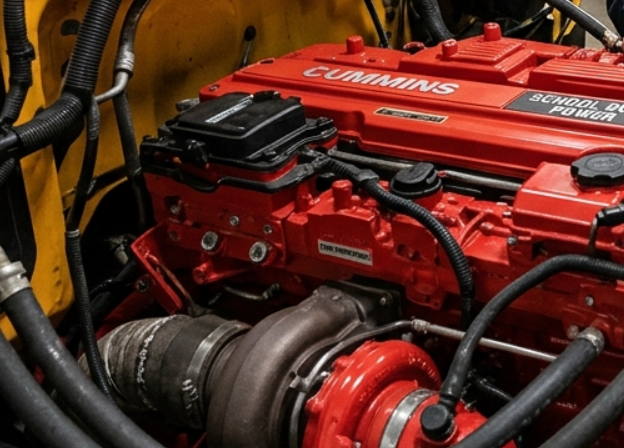
Establishing structured troubleshooting workflows and rigorous preventive maintenance SOPs is vital for ensuring student transport safety and on-time performance.
1. Troubleshooting Guide
Issue A: Aftertreatment System Crystallization & Clogging (SCR / DPF Faults)
Symptoms: MIL / DPF warning light, engine power derate or speed limiting, frequent DPF active regeneration failures.
Causes & Diagnostics: Extended idling or low-speed driving keeps exhaust temperatures too low, or low-quality/contaminated DEF was used. Inspect DEF injectors for crystallization, check exhaust backpressure sensors, and verify DEF concentration (must meet 32.5% standard).
Issue B: Poor Low-End Acceleration & Sluggish Power
Symptoms: Slow acceleration from a stop, insufficient power on hills or under full load, black smoke, or intake whistle noises.
Causes & Diagnostics: Check the VGT™ turbocharger actuator for binding, inspect the Charge Air Cooler (CAC) and piping for leaks or cracks, and check if the EGR valve is stuck open due to carbon buildup.
Issue C: Hard Cold Starts or Stalling After Ignition
Symptoms: Extended cranking, battery drain, or rough idling in cold morning weather.
Causes & Diagnostics: Verify the grid heater relay and wiring, check the fuel lines for air intrusion or fuel gelling, and test the HPCR system rail pressure build-up.
2. Preventive Maintenance SOP
Here is the complete, professional English translation formatted for direct inclusion into your technical guide or SOP documentation:
Daily Pre-Trip Inspection
Fuel-Water Separator Draining: Manually drain accumulated water from the fuel-water separator before every daily route. This prevents water ingress into the High Pressure Common Rail (HPCR) system, which can cause severe damage to precision fuel injectors.
Fluid Level & Leak Checks: Check the engine oil dipstick, coolant expansion tank fluid level, and Diesel Exhaust Fluid (DEF) level. Inspect the area under the engine for any signs of oil, coolant, or fuel leaks.
Dashboard & Fault Code Pre-Check: After starting the engine, check the instrument cluster for active Diagnostic Trouble Codes (DTCs) or warning lights. Listen closely for any abnormal noises while the engine is idling.
Scheduled & Seasonal Maintenance
Fuel System Maintenance (Every 15,000 – 20,000 miles or every academic semester): Strictly replace primary and secondary fuel filters, as well as fuel-water separator elements, on schedule to maintain maximum fuel cleanliness.
Aftertreatment System Maintenance:
DEF System: Use only certified DEF that complies with ISO 22241 standards. Clean the DEF filler neck screen regularly, and replace the DEF supply module/pump filter element every 150,000 to 200,000 miles.
DPF Cleaning: Avoid prolonged, unnecessary idling. For school buses operating on frequent stop-and-go routes, schedule periodic highway runs or have service technicians perform a stationary active regeneration (parked regen). Perform regular DPF ash cleaning at recommended intervals.
Cooling System & Thermal Management: Use Extended Life Coolant (ELC) according to factory specifications. Test coolant concentration and Supplemental Coolant Additive (DCA/SCA) levels every six months. Inspect the viscous fan clutch, water pump seals, and drive belt tension to prevent engine overheating during high-load summer driving.
Electrical & Sensor Cleaning: Export engine health reports via the QuickServe® diagnostic system. Periodically clean or replace the Closed Crankcase Ventilation (CCV) filter element, and remove carbon/sludge buildup from intake Manifold Absolute Pressure (MAP) and temperature sensors to ensure accurate ECU data collection.
When Should You Replace a Cummins School Bus Engine?
If the engine becomes badly worn or fails mechanically, two choices are available to the fleet manager. These include either carrying out an inframe/outframe overhaul or fitting a new engine.
1. Five Critical Warning Signs Indicating Replacement
Catastrophic Mechanical Failure: Thrown connecting rods, cracked cylinder blocks, broken crankshafts, or melted pistons make rebuilding the original block unviable.
Severe Cylinder Wall Scoring: Deep cylinder wall damage caused by overheating, oil starvation, or debris ingress that cannot be restored via honing or standard sleeves.
Severe Oil/Coolant Cross-Contamination: Milky “coffee-colored” oil resulting from internal block fractures. Prolonged operation destroys main and rod bearings, camshafts, and crankshaft journals.
Excessive Blow-By & Chronic Overheating: Significant blow-by gas through the oil fill cap along with oil consumption (quarts within hundred miles) are clear signs of complete failure of the piston ring seal.
Cost-to-Repair Threshold Exceeded: In high mileage engines (for example over 300,000 miles), repair cost that includes replacement of turbocharger, injectors, high pressure pump, cylinder head and crankshaft crosses the cost of buying a new engine.
2. Overhaul vs. Replacement Decision Matrix
| Evaluation Dimension | Inframe / Outframe Rebuild | Complete Engine Replacement |
| Ideal Scenario | Cylinder block/crankshaft intact; standard wear on rings, bearings, and gaskets | Cracked block, broken crankshaft, catastrophic damage, or multiple system failures |
| Vehicle Downtime | Longer (requires disassembly, cleaning, machining, and reassembly; several days to weeks) | Minimal (drop-in replacement; hours to 1–2 days) |
| Labor Costs | High (requires extensive skilled technician labor hours) | Lower (primarily straightforward removal and installation) |
| Reliability & Warranty | Dependent on technician craftsmanship; existing unreplaced parts retain fatigue risks | Highest (factory dynamometer tested, fully sealed, backed by comprehensive warranty) |
3. Purchasing Advice for Replacement Engines
In the case of purchasing the engine, it is necessary to select an engine supplier who will be able to work individually, supply you with a genuine OEM engine and deliver it globally.
While requesting a quote from the supplier, you need to give him the 8-digit Engine Serial Number (ESN) of your engine. It will allow the provider to check the exact configuration of your engine.
Precise Procurement Process for Cummins Engines & Parts
To avoid incorrect orders, fitment issues, or unnecessary vehicle downtime, follow this standardized procurement workflow:
[Locate 8-Digit ESN] ──► [Specify Part Numbers / Specs] ──► [Select Verified OEM Supplier]
Locate the Engine Serial Number (ESN): The Cummins engine is equipped with a unique 8-digit number known as an ESN which is found on either the cylinder head cover nameplate, the side of the engine block or the ECM data plate. The engine serial number (ESN) unlocks access to the Cummins EPC.
Specify Requirements and Part Numbers: When submitting an inquiry, provide:
The 8-digit ESN.
Specific Part Numbers (or descriptive names such as Cummins B6.7 Fuel Injector, Water Pump, DPF Sensor, Cylinder Head Gasket, or Turbocharger).
Clear photographs of component nameplates (especially for older engines or custom applications).
Select a Dedicated OEM Supplier: Look for suppliers offering:
- 100% Genuine Quality: Genuine OEM components lower failure rates and safeguard passenger transport.
- Flexible Order Quantities (MOQ): Support for single-piece emergency replacement orders as well as bulk fleet replenishment.
- Efficient Logistics: Fast customs processing and global freight options for quick delivery.
Looking for Reliable Cummins Engines and Spare Parts? Partner with Longshine
As a specialized supplier of Cummins engines and genuine replacement components, Longshine is committed to delivering authentic Cummins complete engines and spare parts to global customers.
- 100% Genuine Guarantee
- Flexible Purchasing (Single-Piece Orders Welcome)
- Fast Worldwide Shipping
Contact Longshine for a Fast Quote: Send us your inquiry today! Our technical specialists will promptly assist you with expert selection guidance and competitive quotes.
Conclusion
Procuring and maintaining Cummins school bus engines requires matching vehicle specifications with real-world maintenance demands. Whether sourcing a complete replacement engine or stock service parts, accurate identification is your best protection against downtime and procurement errors.
Longshine provides complete Cummins engines and genuine spare parts. If you are looking for Cummins engines or replacement components, contact us today!