
Open Frame vs. Silent Generator Set: Which Type Is Right for Your Application?
Choosing between an open frame and a silent generator set sounds straightforward until you factor in installation costs, local noise regulations, and how often your team needs to service the unit. The two types look similar on a spec sheet, but they behave very differently once they’re on-site. Getting this decision wrong doesn’t just create noise complaints, it can trigger compliance issues or add unexpected civil construction costs that weren’t in the original budget.
Here’s what actually separates them, and how to match the right type to your application.
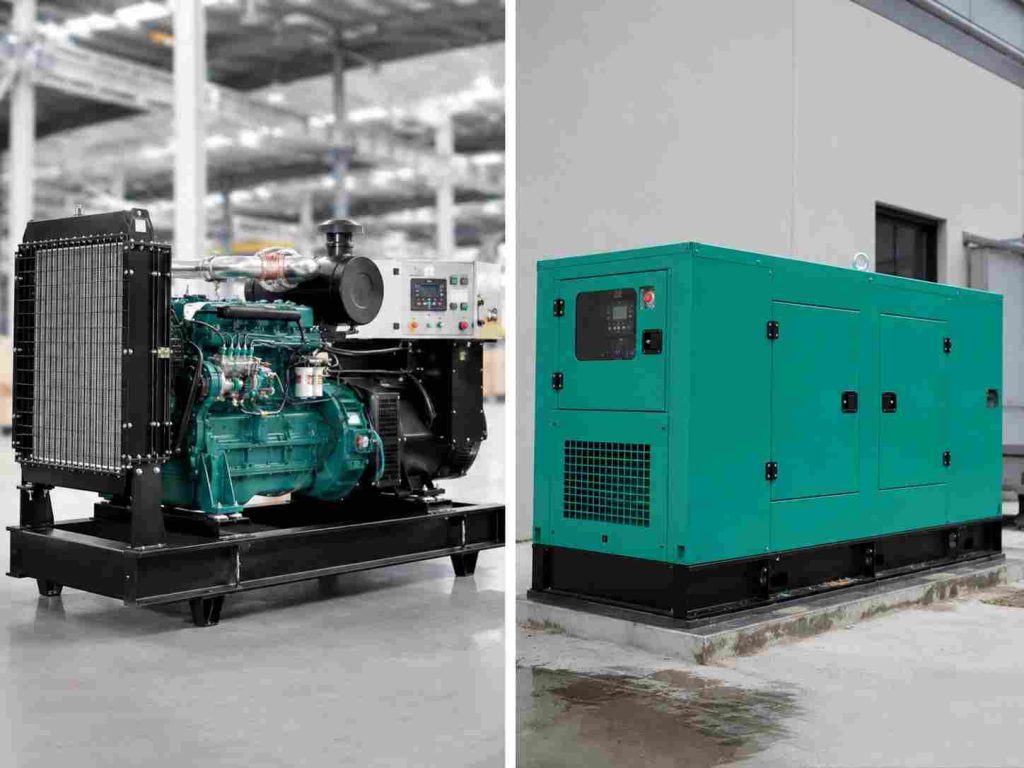
What Is the Difference Between Open Frame and Silent Generator Sets?
The difference comes down to one thing: the enclosure.
An open frame generator set mounts the engine, alternator, and cooling system directly on a steel base frame with no surrounding housing. Everything is exposed. Air flows freely around the components, access is unrestricted, and there’s nothing between the engine and the environment.
A silent generator set encloses those same components inside a sound-attenuated canopy typically a steel housing lined with acoustic foam, fitted with baffled air intake and exhaust channels, and sealed against weather. The engine itself is often the same Cummins unit; the difference is what surrounds it.
That structural distinction is what drives every performance difference covered below.
Noise Levels and Site Compliance
Open frame units typically produce between 85 and 110 dB measured at one meter. To put that in perspective, sustained exposure above 85 dB is classified as hazardous to hearing by OSHA occupational noise standards, and most urban noise ordinances set limits well below what an open frame unit produces at the boundary line.
Silent generator sets, by contrast, generally operate in the 65–75 dB range measured at seven meters. That’s within or close to the permissible limits for commercial and light industrial zones in most markets.
In practical terms: if your project site is in an urban area, near a residential zone, or on a campus with noise bylaws, an open frame unit will almost certainly fail compliance before it runs its first hour. Many countries in Southeast Asia, the Middle East, and Africa have adopted noise regulations for stationary power equipment that effectively require enclosed units for anything outside a dedicated industrial estate.
Before finalizing the generator type, check the local environmental or building authority’s permissible noise levels for your zone. The WHO Environmental Noise Guidelines provide a useful international reference point for what’s considered acceptable in different settings.
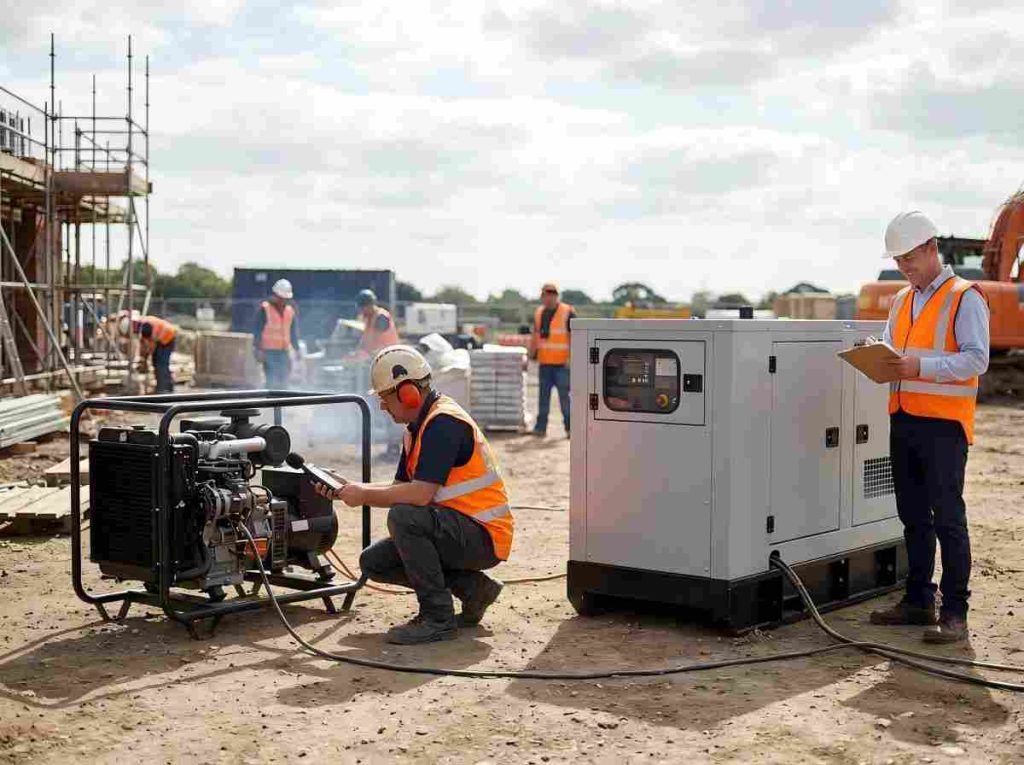
Real Installation Cost: Initial Price vs. Total Spend
Open frame units carry a lower purchase price typically 15 to 30 percent less than a comparable silent unit. That gap is real, and for projects with tight capital budgets, it’s tempting to stop the analysis there.
The problem is what happens next.
If an open frame generator is installed in any noise-sensitive or weather-exposed location, it needs a dedicated generator room: concrete or masonry construction, fire-rated walls, mechanical ventilation, exhaust routing, acoustic lining, and drainage. Depending on site conditions, that civil work can cost as much as the generator itself.
A silent generator set, on the other hand, is designed for direct outdoor installation. The canopy handles weather protection, sound attenuation, and in most cases, basic security. No additional structure is required beyond a level concrete pad and proper exhaust clearance.
For projects where a generator room doesn’t already exist, the silent type frequently delivers a lower total installed cost, even though the unit price is higher. The open frame option only wins on total cost when an existing, properly equipped generator room is already part of the facility.
Cooling and Heat Management in the Field
Open frame generators cool themselves passively. Ambient air circulates freely around the engine, which makes thermal management simple and highly effective, particularly in high-temperature climates or high-altitude sites where air density is lower.
Silent generators rely on engineered airflow paths: air enters through baffled intake panels, passes over the engine, and exits through a separate exhaust channel. This design keeps sound in, but it also means the cooling system depends on those channels staying clear. A blocked intake grille or a poorly ventilated installation space can lead to overheating under sustained load.
For operations running generators at high duty cycles, the installation placement of a silent unit deserves more attention than it sometimes gets. Manufacturer guidelines on minimum clearances and airflow volumes should be followed strictly, not treated as conservative estimates.
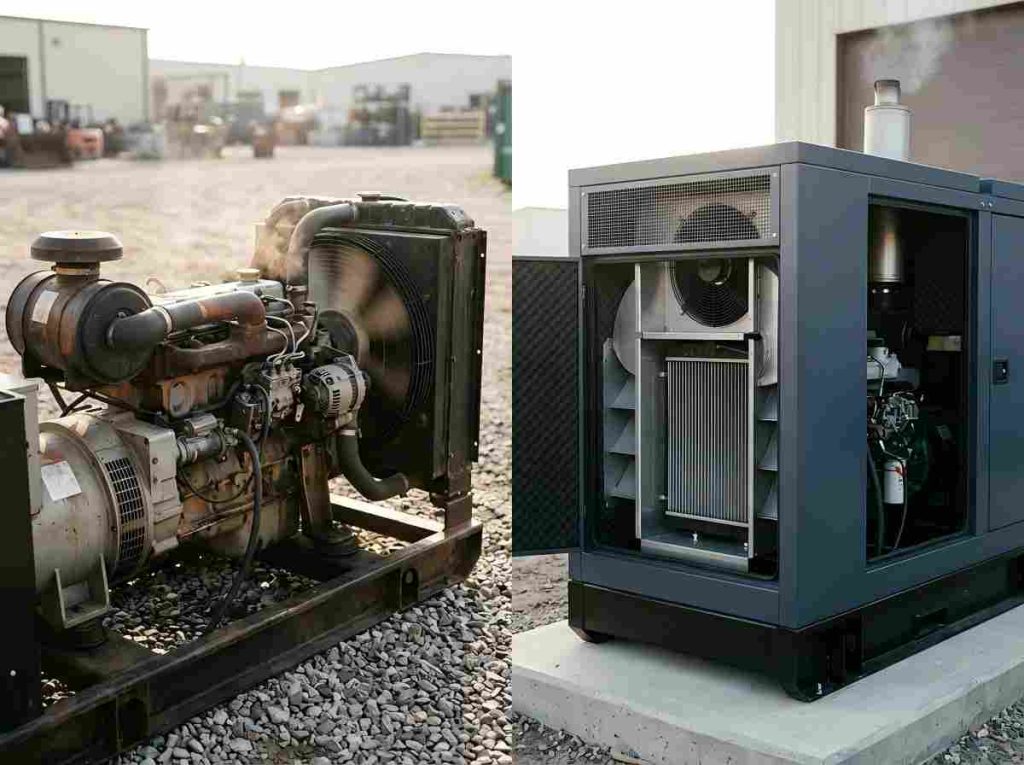
Maintenance Access and Servicing
Open frame generators are straightforward to service. Filters, injectors, belts, and coolant lines are all visible and reachable without opening any panels or removing enclosure components. Routine maintenance takes less time, and in remote locations where a technician might be working alone, that accessibility matters.
Silent generators require opening the canopy panels to reach internal components. For standard service items like oil and filter changes, this adds a few minutes and no real complexity. For deeper work — fuel system components, alternator inspection, or injector replacement, the enclosed layout can make the job more involved, depending on the canopy design.
This doesn’t make silent generators difficult to maintain. It does mean that whoever is servicing the unit should be familiar with the specific canopy configuration and have the right access tools. For Cummins-powered units, standard service intervals and genuine Cummins replacement parts apply regardless of generator type — the engine itself doesn’t change.
Open Frame or Silent Generator Set: Which One Is Right for Your Application?
There’s no universal answer, but the pattern is fairly consistent across projects:
Open frame units make sense when:
- The site is a remote industrial location, mining operation, or offshore facility where noise is not a regulatory concern
- A dedicated, properly ventilated generator room is already part of the facility design
- Maintenance frequency is high and technician access time is a real cost factor
- Capital budget is constrained and the infrastructure for noise/weather management already exists
Silent generator sets make sense when:
- The site is urban, peri-urban, or near any residential or commercial area with noise limits
- There is no existing generator room and no budget or space to build one
- The generator will be installed outdoors and needs to handle weather without additional structure
- The application is a hospital, data center, hotel, office building, or school where noise affects operations directly
For mixed-use industrial parks or sites where the generator location is close to staff accommodation, the silent type is usually the lower-risk choice even if noise compliance alone doesn’t mandate it.
How to Choose Between an Open Frame and Silent Generator Set
Run through two questions before finalizing the type:
First, does the installation site have a noise limit, and if so, what is it? If the answer is yes and the limit is below 75 dB at the boundary, an open frame unit is not a practical option regardless of price.
Second, is there an existing generator room that meets ventilation, fire, and exhaust standards? If yes, an open frame unit can be a cost-effective and serviceable choice. If no, factor in the full civil construction cost before comparing prices.Longshine supplies both standard open frame Cummins generator sets and silent generator sets across a range of output capacities. If you’re working through the selection for a specific project, the application details including site location, load requirements, duty cycle, and installation conditions are the most useful starting point for a recommendation.