
How Much Horsepower Does a 5.9 Cummins Have? HP Specs Explained
So, you’re asking: How much horsepower does a 5.9 Cummins have? Well, it depends. Really. From the factory, these engines land anywhere between 160 and 325 horses. That’s a big spread, I know. But here’s the deal – the exact number isn’t fixed. It shifts with the version, the fuel system, and how the manufacturer tuned it for that specific truck, machine, or boat.
Think about it: that wide range isn’t an accident. It’s exactly why this engine became so famous. Because it didn’t just live in pickups. It powered excavators. It ran generators. It even pushed boats. Each job needed a different power level, and the 5.9 delivered. If you want to dig into why it earned that reputation, check out what made it so popular.
Of course, emissions rules kept changing. So Cummins kept tweaking. New valve trains. New fuel injection systems. That’s part of why the horsepower crept up over the years.
Now, if you run a fleet, or you’re a mechanic, or you sell diesel parts – pay attention. Knowing these exact specs isn’t just trivia. It’s how you order the right injectors. The right overhaul kit. The right pump. And it’s how you avoid expensive screw-ups.
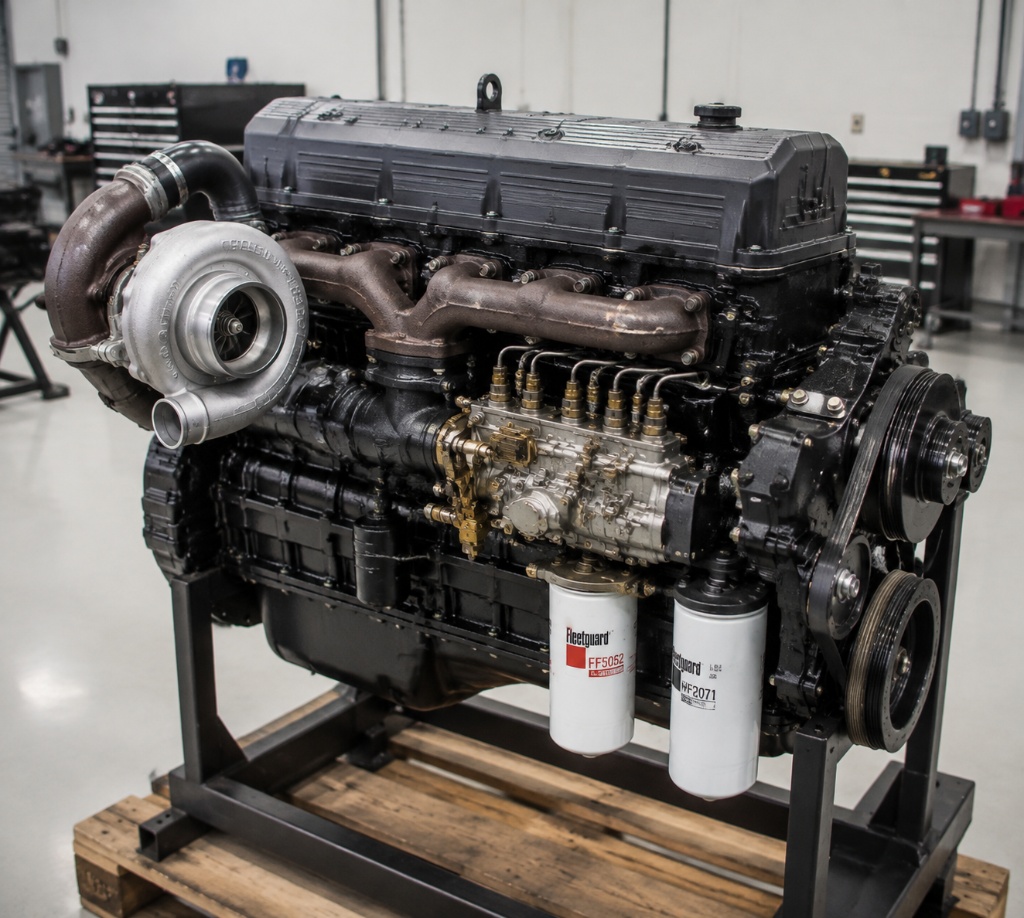
How Much Horsepower Does a 5.9 Cummins Have: Typical 5.9 Cummins Horsepower and Torque Specs
Let’s make it simple. Here’s a quick table. Three main generations. Stock factory tuning. Numbers you’ll actually see in the real world.
| Version | Typical Horsepower | Typical Torque | Primary Application |
| 12V 6BT | 160–215 HP | 400–440 lb-ft | Truck / Industrial / Agricultural |
| 24V ISB VP44 | 235–245 HP | 460–505 lb-ft | Medium-Duty Truck / Bus / Pickup |
| Common Rail ISB | 305–325 HP | 555–610 lb-ft | Pickup / Commercial Transport |
One quick note – industrial and commercial ratings can vary. Depends on the job. Depends on the calibration. So treat these as solid baselines, not gospel.
5.9 Cummins Horsepower by Generation
Let’s walk through each generation. Not just the numbers – the technology behind them.
12 Valve 6BT (1989–1998): 160–215 HP
1989–1993 (160 HP): These early 12-valve engines used a Bosch VE rotary mechanical pump. All mechanical. No computers. That made them bulletproof and dead simple to fix.
1994–1998 (175–215 HP): Then came the upgrade – the legendary Bosch P7100 inline pump. The “P-Pump.” It used plungers to ram fuel in at way higher pressure. That gave it more grunt and even better durability. And it became a legend in the performance world later on.
Here’s the catch with mechanical systems: they don’t meet tight emissions standards easily, and they’re not flexible for quick tuning changes. But durability? Off the charts. That’s why the 12-valve platform is still worshipped in repair shops, heavy-towing circles, and hot-rod diesel garages. It’s a tank. Plain and simple.
- Valve ISB VP44 (1998.5–2002): 235–245 HP
235–245 HP: This one switched to a 4-valve-per-cylinder head – hence “24-valve.” Better airflow. Better breathing. And the fuel side got the Bosch VP44 electronic rotary pump. Computer-controlled timing and delivery. - So what did that give you? More power off the showroom floor, and way better low-end torque. But – and it’s a big but – the VP44 relies entirely on diesel fuel for cooling and lubrication. If the lift pump doesn’t keep up pressure, that VP44 overheats. And then you’re in limp mode. It’s a known headache with this generation.
Common Rail 5.9 Cummins (2003–2007): 305–325 HP
305–325 HP: Enter the Bosch CP3 high-pressure common-rail system. Game changer. It builds sky-high rail pressure before the fuel even hits the injectors. That pushed factory output to 325 HP and 610 lb-ft. Pretty impressive for a stock engine.
Why does that matter? Because high pressure means finer atomisation, multiple injections per cycle, less smoke, less noise, better combustion. That’s why the common-rail 5.9 is still the gold standard for late-model Dodge Rams and a ton of commercial trucks. It set the bar.
4 Parts That Affect 5.9 Cummins Horsepower and Performance
If you work on these engines, you already know: power loss usually points to fuel system wear. Replace the right parts – injectors, pump, or overhaul kit – and you get that power back.
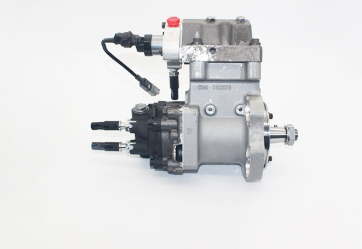
1. Fuel Injection Pumps (VE, P7100, VP44, CP3):
The pump builds pressure. When its internal plungers or rotors wear out, pressure drops. Result? Sluggish acceleration. Flat power under load.
2. Fuel Injectors (Mechanical & Common Rail):
Injectors atomise the fuel. Carbon buildup or worn needle valves ruin that spray pattern. Poor atomisation = incomplete burn = lost horsepower.
3. Turbochargers & CHRA Cartridges:
Turbo forces air in. If the wastegate sticks or the CHRA bearings leak, boost falls. Engine feels starved when you stomp on it.
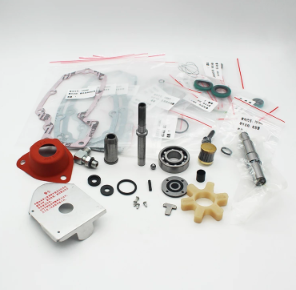
4. Engine Overhaul Kits (Pistons, Rings, Liners):
Cylinders need a tight seal. Worn rings cause blow-by and compression loss. Fuel energy can’t turn into crankshaft power. Simple as that.
How Much Horsepower Can a 5.9 Cummins Make?
Now for the fun part. With the right upgrades, the 5.9 can blow past its factory numbers. Why? Because the cast-iron block and forged steel crank are tough. That’s directly tied to how much the engine weighs, but more importantly, it means the bottom end can handle serious cylinder pressure.
Depending on your goal, you’ve got a few tiers.
Stock Internal Engine (400–500 HP):
Leave the crank, pistons, and rods alone. Upgrade injectors, turbo, and get a good ECU tune. You’ll safely hit 400-500 HP. Perfect for heavy towing.
Built Engine (600 HP+):
Beyond 600 HP, you need ARP head studs. Otherwise, high boost lifts the head and blows the gasket. Add compound turbos and a high-flow CP3 pump too.
Competition Builds (1000 HP+):
Extreme guys push over 1,000 HP. But that takes forged rods, block girdles, fire-ring gaskets – the whole nine yards. Not for daily driving.
5.9 Cummins Horsepower in Marine and Industrial Applications
Marine and industrial versions are a different beast. Ratings change with duty cycle, cooling setup, and operating RPM. Pickup trucks care about quick acceleration. Industrial and marine care about steady running, all day long. Heat dissipation and reliability come first. Common configurations include 6BT, 6BTA, and ISB 5.9.
Industrial & Construction Equipment (140–175 HP):
Found in excavators and loaders – including those powered by the Cummins 6BT5.9. Conservative tuning. They focus on low-end torque for hard, slow work.
Marine Applications (210–370 HP):
Marine 6BT/6BTA engines range from 210 to 370 HP. Depends on duty cycle and configuration. They come with water-cooled turbos and seawater heat exchangers to stay cool.
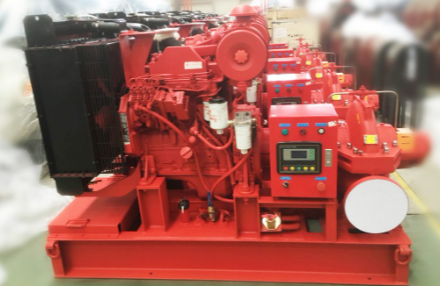
Generator Sets (150–200 HP):
Generator engines run at constant 1500 or 1800 RPM. Calibration is all about stable, continuous prime power. That’s what the numbers reflect.
Why Is My 5.9 Cummins Losing Horsepower?
Feeling sluggish? Loss of power usually comes down to fuel supply, injectors, turbo, or compression. When you’re pulling a hill and it just won’t go – or EGTs are climbing too high – start checking these. They’re the usual suspects, based on our experience with common 5.9 issues.
Clogged Fuel Filter or Restricted Fuel Supply:
Dirty filter or air in the low-side starves the pump. Power drops suddenly under load.
Killer Dowel Pin (KDP) Failure (12V Engines):
That little steel pin in the timing gear housing can vibrate loose. If it falls into the gears – boom. Catastrophic timing damage. It’s got a scary nickname for a reason.
VP44 Pump Overheating (24V ISB Engines):
Low lift-pump pressure means the VP44 loses its fuel cooling and lube. Electronics overheat. Engine goes into limp mode.
CP3 Pump & Injector Wear (Common Rail Engines):
Worn injectors or a tired CP3 leak high-pressure fuel back to the tank. Rail pressure drops. Computer cuts fuel. Top-end power disappears.
Blown Head Gasket or Boost Leaks:
Too much boost or loose head bolts can blow the gasket. Also, split intercooler boots let boosted air escape. Either way, you lose power.
How to Diagnose Low Horsepower on a 5.9 Cummins
Tracing power loss? Go simple to complex. Cheap to expensive. Here’s a step-by-step that actually works.
Step 1: Check Fuel Filter and Fuel Pressure:
Look at the filter. If it’s dirty, swap it. Then use a mechanical gauge to check lift-pump pressure. Make sure the injection pump gets enough fuel.
Step 2: Test and Inspect Fuel Injectors:
Run a return-flow test or a cylinder cut-out test. That’ll show you an injector that’s leaking, returning too much, or just dead.
Step 3: Inspect Turbocharger and Boost Intake:
Check the turbo shaft for play. Make sure the wheel isn’t rubbing. Pressure-test the intercooler pipes and boots – find those leaks.
Step 4: Check Cylinder Compression Pressure:
Run a compression test on each hole. Low numbers mean worn rings or liners. Time for a full overhaul kit.
Step 5: Scan Engine Codes and Check Sensors:
Plug in and read the codes. Pay attention to MAP, crank/cam position, rail pressure, and (on VP44) fuel control signals. Sometimes it’s just a bad sensor fooling the ECU.
Conclusion: Keep Your 5.9 Cummins Running at Full Horsepower
So, bottom line: knowing exactly how much horsepower a 5.9 Cummins has – and how it changes across years and applications – gives you a huge leg up. For diagnostics. For maintenance. For ordering the right parts. Keep fuel pressure up. Keep airflow steady. Keep cylinders sealed. That’s how you keep this legendary diesel pulling hard for hundreds of thousands of miles.
Longshine supplies Cummins engines and replacement parts for shops and distributors. Whether you’re rebuilding or just maintaining, we’ve got what you need.