Cummins vs Caterpillar: Which Engine Brand is Right for You?
In the fields of heavy machinery, commercial transportation, and industrial power generation, Cummins and Caterpillar (commonly referred to as Cat) are the undisputed industry giants. Whether you are procuring long-haul trucks, purchasing heavy equipment, or selecting backup generator sets for a data center, choosing between these two brands directly impacts your equipment performance, operational expenditures, and long-term maintenance.
So, which is truly better: Cummins vs Caterpillar? What are their core differences? This article provides a comprehensive analysis across performance, fuel economy, durability, and maintenance costs.
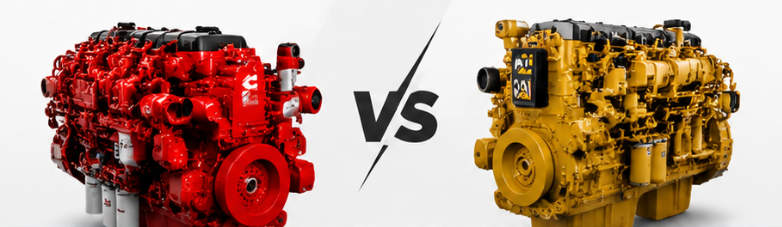
Brand Profiles: Cummins vs. Caterpillar
Cummins:
An independent company with worldwide influence that focuses on producing power systems and engines. Known for its open system architecture, cost effectiveness, and adaptability, Cummins’ engines are extensively used in leading trucks, commercial vehicles, agricultural tractors, and generators.
Cummins’ advantages include fuel efficiency, advanced emission control, and high modularity with extensive worldwide independent services. These advantages make it ideal for companies that focus on low total cost of ownership (TCO).
Caterpillar (Cat):
Unquestioned world leader in engineering and mining equipment. Cat is specialized in providing an all-inclusive industrial ecosystem involving machines, energy, and service. Built to endure extremely tough conditions, the engines produced by Cat are well-known for their unique low torque capability, durability, and high resale price.
With its vertically integrated and highly reactive distribution system, Cat is unparalleled in offering reliability in mining, mega-infrastructure, and heavy industry.
Cummins vs. Caterpillar: Core Comparison
| Comparison Dimension | Cummins | Caterpillar (CAT) | Decision Guidance |
| Core Brand Positioning | Independent power system specialist focused strictly on engine design & manufacturing | Global heavy machinery giant offering fully integrated machine and power solutions | Choose Cummins for flexibility & adaptability; Choose CAT for single-brand machine integration |
| Displacement & Power Range | 2.8L – 95L (Covers light commercial vehicles to massive industrial generators) | 0.5L – 300L+ (Extends to ultra-large mining machinery and marine propulsion) | Full coverage by both; CAT offers broader options in ultra-large displacements (>100L) |
| Power Output Characteristics | Agile response, swift high-RPM acceleration, smooth overall delivery | Exceptional low-end torque and high torque rise with strong anti-stall capability | Choose CAT for frequent heavy loads/pushing; Choose Cummins for highway cruising/stable power |
| Fuel Economy | Superior (XPI high-pressure common rail + optimized combustion, 3%–8% lower fuel burn) | Good (Tuned for power priority; slightly higher fuel burn under extreme continuous loads) | Choose Cummins for lower long-term fuel expenditure |
| Durability & Design Life (B50) | On-highway trucks: ~1.2 million miles; Industrial equipment: ~12,000–15,000 hours | Heavy off-highway equipment: 15,000–20,000+ hours | CAT holds an edge in extreme, harsh, or overloaded operating conditions |
| Block Structure & Overhaul | Modular/lightweight casting; wet cylinder liner design for easy, routine overhauls | Ultra-heavy duty cast iron block with thick walls, engineered for 2–3 factory-grade rebuilds | Choose CAT if planning to run a single machine for decades |
| Emissions Strategy | Early adopter of SCR (urea) technology; exceptional compliance cost and fuel control | Early reliance on EGR; later transitioned to ACERT technology for off-highway applications | Cummins has a stronger historical track record in highway emissions compliance |
| Parts Availability & Ecosystem | Open Ecosystem: Abundant OEM and high-quality aftermarket parts; easy procurement | Closed Ecosystem: Highly reliant on official Cat Dealers; fewer aftermarket options | Choose Cummins for affordable, widely available parts |
| Maintenance & Labor Costs | Moderate repair complexity; serviceable by most independent diesel shops; lower cost | High OEM parts and dealer labor costs; strict access barriers to diagnostic software (Cat ET) | Cummins offers significantly lower overall maintenance expenditures |
| Service & Support Network | Dense global network of partner service centers; easy integration with multi-brand fleets | Elite, highly responsive global dealer network (Cat Dealer Network) for field rescue | CAT excels in fast, on-site emergency support in remote job sites or mines |
| Resale Value | Excellent (High market compatibility, fast liquidity, broad buyer base) | Highest (Strong brand premium; industry-leading resale value for construction equipment) | CAT is best for construction machinery retention; Cummins is easier to liquidate globally |
| Primary Domain | Highway trucks, data center/building gensets, buses, commercial marine vessels | Mining equipment, bulldozers/excavators, remote primary power, specialized engineering | Select based strictly on your specific operational environment |
Deep Dive: Core Differences Between Cummins and CAT
1. Power Output & Torque Characteristics
Although both companies make excellent horsepower and torque outputs, the way they deliver power is vastly different:
CAT (King of Low-End Torque):
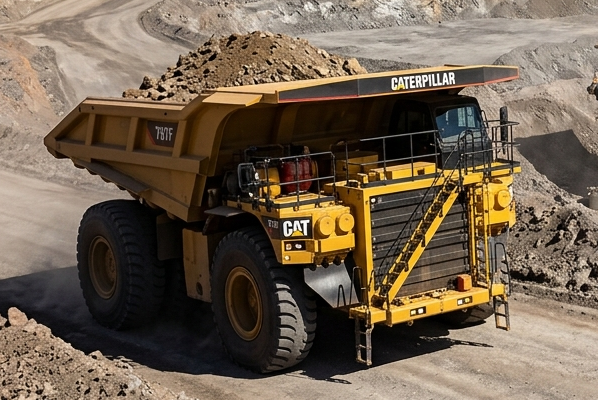
CAT engines have excellent low-end torque and torque rise capability. The engines have a high level of torque output at lower RPMs and provide the maximum pulling and pushing force. Whenever a heavy bulldozer needs to push through hard rocks or when the haul trucks climb an inclined plane with a full load, CAT provides anti-stall torque output.
Cummins (High Output Band and Instant Response):
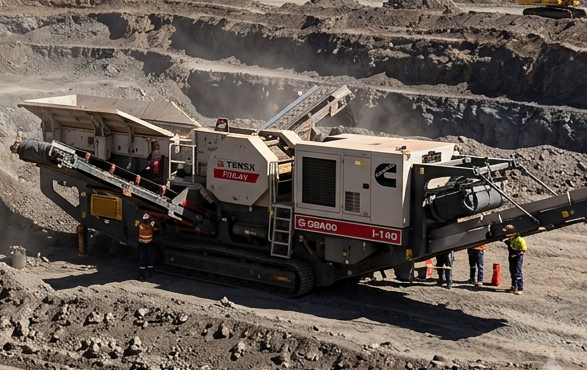
The engines made by Cummins (X15 or QSK) are known for their excellent smoothness and instant response in power output. Using proprietary Holset Variable Geometry Turbochargers (VGT), the Cummins engines provide quick acceleration and immediate response at mid-high RPMs and consistent speed at highway speeds.
2. Fuel Efficiency & Emissions Control
Fuel makes up 60% to 70% of the TCO of the engine, thus it is a crucial deciding factor when choosing an engine for fleets.
Cummins Fuel Advantage:
Cummins has been ahead of its competition in terms of fuel injection systems. XPI ultrahigh-pressure common rail system injects multiple micro-injections during the combustion process ensuring complete burning efficiency of the fuel. Moreover, thanks to SCR application, Cummins engines comply with emission regulations but use 3% to 8% less fuel compared to CAT.
CAT Power-First Engine Tuning:
The old CAT engines used to use HEUI (Heavy Duty Hydraulic Electronic Unit Injector). The engines used to give large power bursts but were quite fuel-guzzling. However, despite using the newer generation of injectors in modern CAT engines, the tuning of these engines is power-first under heavy loads, and that’s why they are fuel guzzlers compared to Cummins.
3. Durability, Design Life (B10/B50), and Rebuildability
Industrial engine life is measured by B10 or B50 life expectations (the point where 10% or 50% of engines require a major overhaul).
| Metric | Cummins | Caterpillar |
| Block Design | Die-cast construction emphasizing modularity and weight reduction | Ultra-heavy cast-iron block with thick walls and exceptional tensile strength |
| Design Life (B50) | Highway trucks: ~1.2M miles (1.9M km); Industrial: 12,000–15,000 hours | Heavy off-highway equipment: 15,000–20,000+ hours |
| Rebuildability | Replaceable wet cylinder liners and bearings for easy, cost-effective overhauls | Extremely rugged block design supporting 3–4 full factory-grade rebuilds |
CAT’s Infinite Rebuild Philosophy: CAT engine blocks and crankshafts are over-engineered for extreme longevity. Through the official Cat Reman program, a 3500-Series engine block can undergo 2 to 3 complete overhauls, restoring it to 100% factory specifications.
Cummins’ Efficient Maintenance Approach: Cummins engines offer long operational life with wet-sleeve liner designs that simplify routine overhauls. While lighter than CAT blocks, their life cycles fully satisfy demanding commercial operations at lower maintenance costs.
4. Parts, Repair Costs, and Ecosystem Dynamics
The ecosystem model defines long-term logistics and serviceability for both brands:
Cummins — Open Commercial Ecosystem
Aftermarket Support: As an independent engine supplier, Cummins powers diverse machinery brands.
Parts Availability: A vast global aftermarket provides access to both original equipment parts (Fleetguard/Cummins) and high-quality independent alternatives.
Serviceability: Standardized diagnostic tools (Cummins Insite) allow independent diesel technicians to service these engines easily, keeping labor and parts costs manageable.
Caterpillar — Closed OEM Ecosystem
Aftermarket Support: Fully tied to the official Cat Dealer Network.
Parts Availability: Proprietary components are predominantly sourced through official dealer channels, with limited aftermarket alternatives.
Serviceability: Proprietary Electronic Control Modules (ECMs) and software (Cat ET) restrict deep repairs to authorized dealers. While service and parts carry a premium, Cat Dealers offer world-class, 24/7 field service and emergency support.
5. Electronics, Telematics, and System Integration
CAT Integrated Control Systems:
CAT systems have their own integrated control system that includes communication between Cat Product Link™ and Engine Control Unit (ECU). The engine adjusts its power supply to the hydraulic loads with milliseconds’ accuracy, providing outstanding machine reaction.
Cummins Multi-Platform Integration:
Cummins Connected Diagnostics™ is designed for a multi-brand fleet. Cummins electronic systems fit perfectly with other telematics providers’ solutions for efficient fleet digital management.
6. Head-to-Head Model Comparison
Scenario A: Highway Heavy Duty Trucks
Cummins X15 vs. Caterpillar C15 (C15 is discontinued on-highway but popular in secondary markets)
Comparison: The CAT C15 (especially the single-turbo 6NZ era) remains legendary for low-end torque. Following CAT’s exit from the on-highway emissions market, the Cummins X15 became the clear leader, offering superior fuel efficiency, lighter overall weight, and full regulatory compliance.
Scenario B: Industrial Generator Sets
Cummins QSK60 vs. Caterpillar 3516
Comparison: Both are top-tier choices in the 2000 kW power class. The Cummins QSK60 offers fast block load acceptance (meeting ISO8528 G3 standards), making it ideal for critical backup power in data centers and healthcare facilities. The CAT 3516 excels in continuous prime power applications, demonstrating high load-impact resilience.
Scenario C: 15–20L Off-Highway Equipment
Cummins QSK15 vs. Caterpillar C18
Comparison: In mining, drilling, and high-pressure pumping, the CAT C18 provides higher displacement and superior heat dissipation under continuous heavy load. The Cummins QSK15 delivers an impressive power-to-weight ratio and tighter fuel management.
Cummins vs. Caterpillar: How to Choose?
Selecting the ideal engine does not come down to brand reputation alone; it depends on your operating environment, capital budget, maintenance capabilities, and target Total Cost of Ownership (TCO).
1. Based on Work Conditions & Operational Severity
Choose Caterpillar (Cat) if:
Severe Environments: Your equipment operates in heavy dust, high altitude, extreme temperatures, or continuous overload conditions (e.g., open-pit mines, quarries, major earthmoving).
Heavy Low-End Torque Demands: Your work requires immediate breakout force at low speeds (e.g., bulldozing, trench excavation, heavy crushing).
24/7 Continuous Operation: Machinery runs non-stop under full load (Prime/Continuous Power), where unscheduled downtime causes severe operational losses.
Choose Cummins if:
General Industrial Applications: The process is organized like long-distance hauling via highways, construction work within cities, or emergency power for business premises and data centers.
Consistent Power and Efficient Functioning: The process involves the need for steady power at medium to high speeds.
2. Based on Budget & Total Cost of Ownership (TCO)
Cummins if:
Optimized Initial Investment (ROI): You want to deploy equipment efficiently within a structured capital budget.
High Sensitivity to Fuel Costs: Long running hours mean fuel accounts for a large portion of TCO; Cummins’ 3%–8% fuel savings directly lowers operating expenditures.
Lower Ongoing Maintenance Expenses: You plan to leverage independent service technicians and broad aftermarket parts availability to keep routine maintenance costs low.
Choose Caterpillar (Cat) if:
Capital Depth: You prioritize total lifetime asset value and high equipment resale value over initial purchase costs.
Premium Maintenance Strategy: You are prepared to invest in OEM parts and dealer service in exchange for maximum durability, extended service life, and factory-backed rebuild programs.
3. Based on Service Ecosystem Preference
Open Aftermarket / Independent Mechanics → Choose Cummins (Flexible, cost-effective, open ecosystem)
Direct Cat Dealer Support / Dedicated Field Service →Choose Caterpillar (Turnkey service, integrated support)
Cummins: If you have your own repair crew or you are operating in an area where there are independent diesel service providers already present. Open Cummins ecosystem offers the freedom to source your parts and maintenance.
Caterpillar: If you are working in an area where there is already an established Cat dealer who can provide you 24/7 on-site service and complete OEM diagnostics.
Summary
Cummins and Caterpillar are both top-notch diesel engines manufacturers, and no one can be said to be better than the other. The choice that will suit you better will only depend on the application and environment you intend to use the engine as well as your financial plan.
When you want to purchase Cummins engines, Cummins generator sets or any other Cummins parts, it is suggested to select a company that has vast industry experience like Longshine and excellent technical assistance. For all your power solutions needs in highway transportation, construction equipment, power generation, marine or oil & gas industries, Longshine will help you with best Cummins products at competitive prices.