
Cummins PT Fuel Pump vs Traditional Fuel Injection Pump: What’s the Differences?
When working with Cummins engines, it is common to see the terms PT fuel pump and fuel injection pump used interchangeably. They are not the same, however. The two systems use different methods to meter and deliver fuel, which affects engine operation, maintenance, and parts selection.
Cummins introduced the PT fuel system in the early 1950s, and it became widely used on engines such as the NT855, K19, K38, and M11. Later Cummins engines adopted different fuel systems, including conventional plunger-type injection pumps and, eventually, high-pressure common rail systems.
The basic purpose is the same: deliver the correct amount of fuel to the engine at the required time. The main difference is how fuel quantity and injection timing are controlled. Understanding this distinction is important when identifying replacement parts or troubleshooting a Cummins fuel system.
How the PT Fuel Pump Works
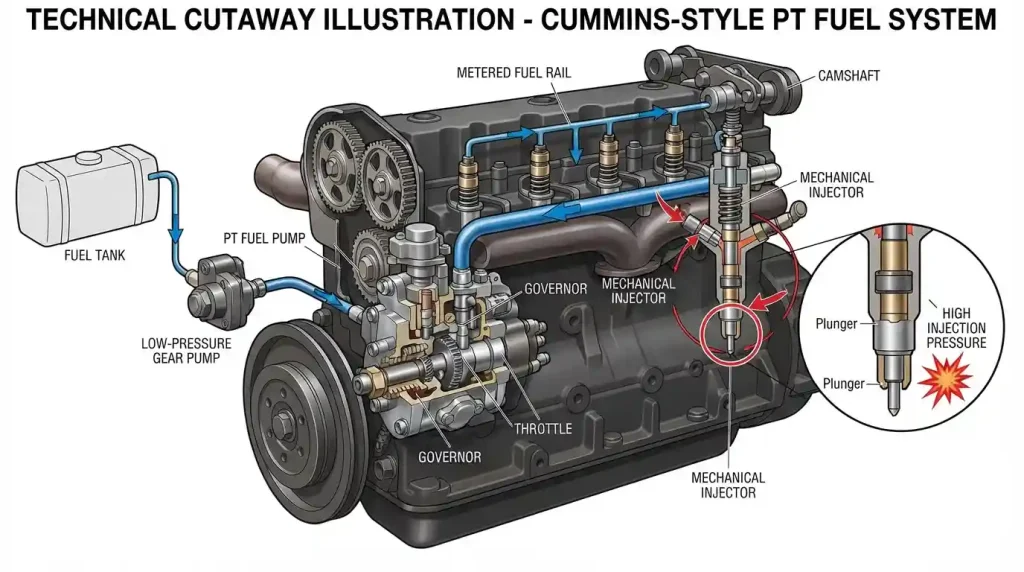
The name PT comes from Pressure-Time, which describes how the system controls fuel delivery. The PT fuel pump operates at relatively low pressure, usually around 0.8 to 1.2 MPa. It draws fuel from the tank, regulates the supply pressure, and delivers a controlled amount of fuel to the injectors.
Unlike a conventional injection pump, the PT pump does not create the high injection pressure itself. The injector does that job. As the engine camshaft moves the injector plunger, fuel pressure rises inside the injector and can reach approximately 100 to 140 MPa at the nozzle.
A large portion of the fuel supplied to the injector does not enter the combustion chamber. In many PT systems, roughly 80% returns to the fuel tank. This continuous flow helps cool and lubricate the injector and also helps remove air from the fuel system.
Because the injection pressure is generated inside the injector, the PT system does not need a separate high-pressure line from the pump to each cylinder. Instead, a common low-pressure fuel line supplies the injectors. Injection timing is also controlled at the injector, which makes the overall fuel system relatively simple.
How Traditional Fuel Injection Pumps Work
Traditional diesel fuel systems use a different arrangement. Inline plunger pumps and distributor-type injection pumps generate high fuel pressure inside the pump. The pump controls the fuel quantity and injection timing, then sends the fuel to each injector through individual high-pressure lines.
Depending on the engine and pump design, injection pressure is commonly in the range of 10 to 40 MPa. The high-pressure lines carry the fuel from the pump to the injectors, so the condition of both the pump and the lines can affect fuel delivery.
Most of the fuel delivered by a traditional injection pump is intended for injection, with much less continuous return flow than in a PT system. This means the pump and fuel lines play a more direct role in maintaining the required injection pressure.
Pump timing is also important. When a pump is installed or replaced, it normally needs to be set correctly in relation to the engine timing. If the timing is incorrect, the engine may experience hard starting, poor combustion, increased smoke, or reduced power.
How Common Rail Systems Differ
Modern high-pressure common rail systems use another approach. A dedicated high-pressure pump supplies fuel to a shared rail, where pressure can reach 1600 bar or more depending on the system. Electronic injectors then control when and how much fuel is injected based on signals from the engine control unit.
This arrangement allows several injection events during a single combustion cycle. It provides much finer control over fuel delivery and helps improve combustion efficiency and emissions performance.
The trade-off is greater system complexity. Common rail systems rely on electronic controls, high-pressure components, and strict fuel cleanliness requirements. Diagnosis and repair also require equipment that is different from what is normally used for older mechanical PT or inline injection systems.
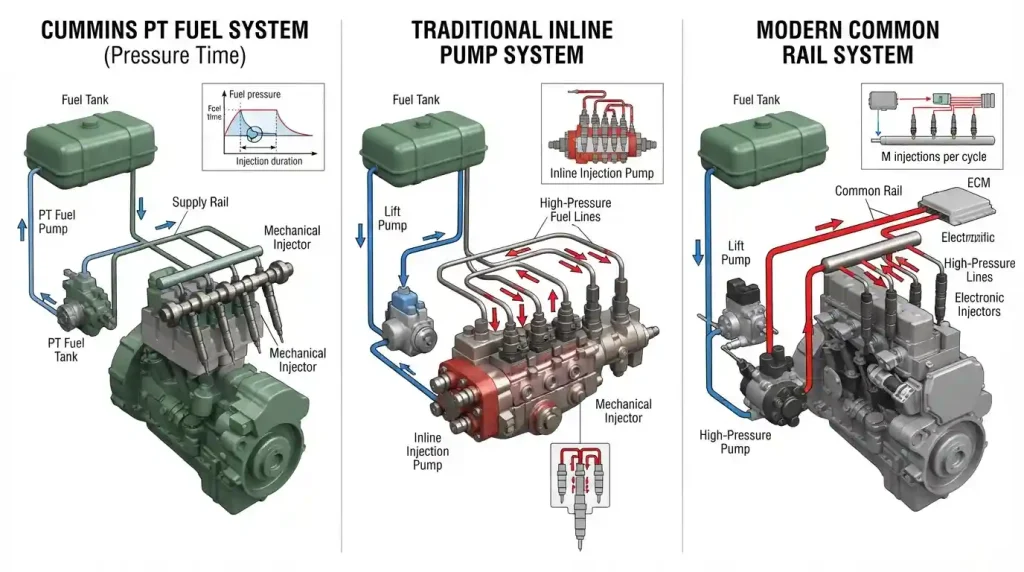
In simple terms, the main difference is where the injection pressure is created. A Cummins PT system supplies fuel to the injector at controlled pressure and relies on the injector to create the final injection pressure. A traditional injection pump generates high pressure in the pump and sends that fuel through high-pressure lines to the injectors. Common rail systems use a high-pressure pump and shared rail, with electronically controlled injectors handling the final injection event.
PT Fuel Pump vs Fuel Injection Pump: Side-by-Side Comparison
The main differences become easier to understand when the three fuel systems are compared directly.
| Aspect | PT Fuel System | Traditional Plunger Pump | High-Pressure Common Rail |
| Pump operating pressure | Low, typically 0.8–1.2 MPa | High | Very high |
| Injection pressure | Generated inside the injector | Generated by the pump | Generated through the common rail |
| High-pressure lines | None | One for each cylinder | None; fuel is supplied through a shared rail |
| Timing adjustment | Controlled at the injector | Controlled at the pump | Controlled electronically |
| Fuel return | Relatively high, also helps cool the system | Relatively low | Electronically controlled |
| System complexity | Mainly mechanical and relatively simple | Mechanical, with more timing adjustments | More complex, with sensors and electronic controls |
| Typical engines | NT855, K19, K38, M11 | Some older B and C Series engines | QSB, ISF, QSX, ISX and later models |
Each system has its own advantages. The PT system uses a relatively simple mechanical design and can handle a range of operating conditions with fewer electronic components. Traditional plunger pumps also rely mainly on mechanical control, but correct pump timing is important for proper injection performance.
Common rail systems provide more precise control over fuel delivery and injection timing, which helps meet modern performance and emissions requirements. However, their electronic controls and high-pressure components also make fuel cleanliness and system maintenance more important.
For older Cummins engines equipped with PT fuel systems, understanding these differences is important when selecting replacement parts or troubleshooting fuel delivery problems. A PT fuel pump is not simply a lower-pressure version of a conventional injection pump; the two systems use different approaches to control the amount and timing of fuel delivered to the injector.
Which Fuel System Is Right for Your Engine?
The PT system is still common on many older heavy-duty engines. Mining equipment, marine vessels, and generator sets powered by NT and K-series engines may continue to use the original PT fuel system because it is durable and relatively easy to service in the field. In areas where fuel quality is inconsistent, its simpler design can also make maintenance more manageable.
Common rail is more common on newer engines developed to meet stricter emissions requirements. It allows the engine to control injection timing and fuel quantity more precisely, which can improve fuel economy, reduce noise, and support better emissions control. Traditional plunger pumps are still used on some industrial engines, particularly models that were designed before PT or common rail systems became standard.
The fuel system must always match the engine it was designed for. PT injectors, plunger-type injection pumps, and common-rail injectors are not interchangeable. Before ordering replacement parts, check the engine model, serial number, and CPL to make sure the component matches the original fuel system.
Common Issues and Practical Maintenance Notes
PT pumps can gradually lose pressure as the gear pump or governor wears. Operators may notice hard starting, unstable engine performance, or increased black smoke. Wear in the injector metering orifice or plunger can cause similar symptoms. In many cases, basic pressure checks, along with a visual inspection, can help narrow down the problem before the pump or injector is removed for repair.
Traditional plunger pumps have their own common wear points, including the camshaft, rollers, and delivery valves. Injection timing can also change after extended use, particularly when components have been rebuilt or replaced. These issues usually require checking the pump timing and inspecting the worn parts rather than simply adjusting fuel delivery.
Common-rail systems are more sensitive to fuel contamination. Dirt or water in the fuel can damage the high-pressure pump and affect injector performance. Once electronic components or sensors are involved, a diagnostic tool is usually needed to identify the fault accurately.
For fleets running different engine generations, it is useful to keep the correct PT fuel system parts and common-rail components available separately. Having reliable sources for Cummins PT fuel system parts and matching injectors can reduce repair delays when a machine is down. For detailed torque values, pressure specifications, and overhaul procedures, always follow the applicable Cummins service documentation. If you need help identifying the right PT fuel system parts for your engine, you can also contact Longshine for parts information and support.
Choosing the Right Fuel System Parts
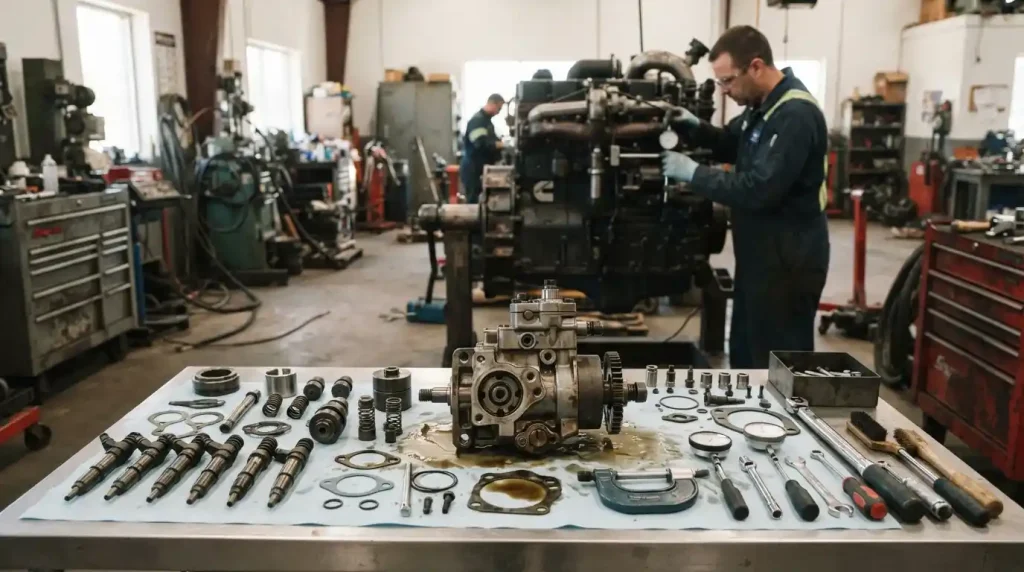
Choosing the correct fuel system starts with identifying the system used on the engine. PT pumps, traditional injection pumps, and common-rail systems use different designs and components, so the pump and injector should always be matched to the original engine configuration.
If you need help identifying the correct Cummins PT pump, injector, or related fuel system component, contact Longshine with your engine model or part number. Our team can help you find the appropriate parts for your application.