
5.9 vs 6.7 Cummins Injectors: What are the Key Differences?
Considering the effect of fuel injectors on combustion efficiency, power, and engine lifespan, we present a question that many users or prospective buyers would have in mind:
What are the differences between 5.9 vs 6.7 Cummins injectors? Are they interchangeable?
The short answer? No. But the why matters more than the answer itself. Pick the wrong injector, and you’ll know it. Combustion goes sloppy. The ECU throws fits. Worst case? You’re buying a new engine.
This isn’t just a spec sheet exercise. Let’s break it down. No fluff. Just what actually matters when you’re ordering parts or troubleshooting a rough idle. Here we go!
Overview of Cummins 5.9 and 6.7 Engines
1. Cummins 5.9L (Classic & Reliable)
Production Years: 1989–2007
The 5.9 was built from 1989 to 2007 and unlike so many other automobiles, it succeeded on its own terms. Mile after mile. Job after job.
Early trucks? Mechanical injection. Crude by modern standards. But they just kept running. More modern trucks from 2003 to 2007 enjoyed the common rail. Upon such improvements, however, the systems remained refreshingly simple. You could still figure things out without a degree in computer science.
In one fleet maintenance operation I’m familiar with, the shop manager kept a single shelf of 5.9 injector cores. That was enough. Why? Failures were rare. And when they did happen, a reman unit solved the problem in an afternoon.
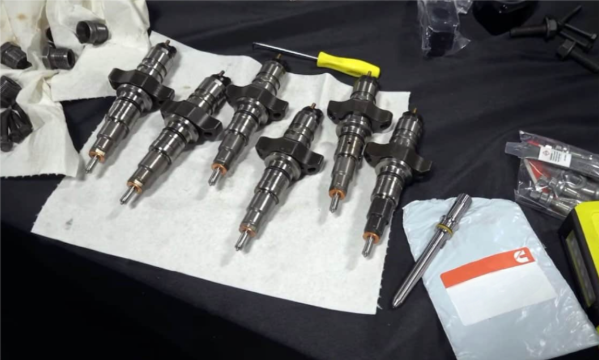
2. Cummins 6.7L (Modern Upgrade)
Production Years: Mid-2007–Present
Higher injection pressure. Tighter emissions control. An ECU that monitors everything. The 6.7 delivers more power and cleaner exhaust, but it also demands more from its fuel system. Injectors operate under extreme stress.
Fuel quality matters—a lot. Skip a filter change on a 6.7, and the injectors will remind you. Loudly. And expensively.
The trade-off is real. More performance, less margin for neglect.
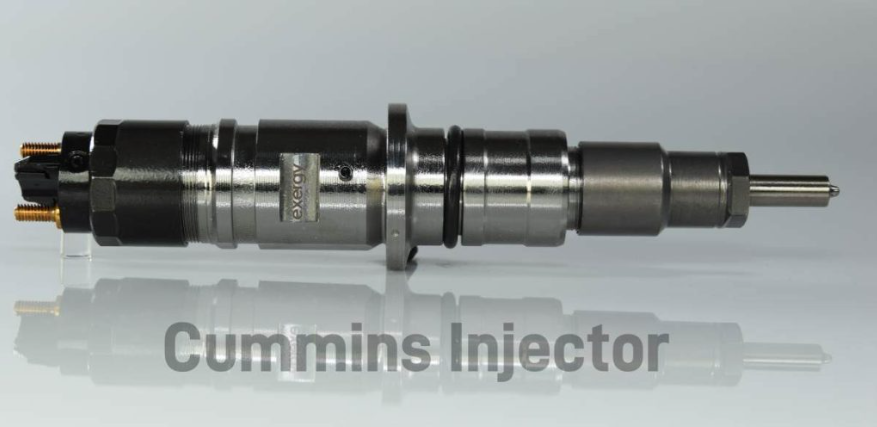
5.9 vs 6.7 Cummins Injectors: Key Differences
Before diving into the details, let’s first take a quick look at a simple comparison table to clearly understand the key differences between the two injector systems at a glance.
| Comparison Item | 5.9 Cummins Injectors | 6.7 Cummins Injectors |
| Fuel Injection System | Mechanical / Early Common Rail | High-Pressure Common Rail |
| Injection Pressure | Lower | Higher |
| Control System | Simple ECU / Mechanical Control | Advanced ECU Precision Control |
| Injection Strategy | Mainly Single Injection | Multiple Injection (Pilot Injection) |
| Emissions Support | No complex emissions system | EGR + DPF equipped |
| Structural Complexity | Simple | Complex |
| Cost | Lower | Higher |
Based on the table above, here’s where things get specific. Some differences are obvious. Some hide in plain sight—you won’t notice them until diesel starts seeping past a connector tube you forgot to replace injectors on a 5.9 Cummins and 6.7 Cummins.
Fuel System? The 5.9 runs on mechanical injection or an early common rail setup—solid, uncomplicated. The 6.7? Full-on high-pressure common rail. Advanced. And a whole different animal.
Injection Pressure? This is where the 6.7 flexes. A higher pressure leads to finer atomization, thereby igniting the fuel more thoroughly and having the power of the engine derivable from the same amount of fuel. So, how about the trade-off? Crank up the pressure, and every part in the fuel path feels it. Injector internals wear quicker. Tolerances get tighter. There’s no free lunch.
Control Method? The 5.9 ECU is like a reliable calculator. It does the job. The 6.7 ECU doesn’t just spray fuel. It manages combustion. Timing, duration—constantly tweaked. Load changes, temperature shifts, a dozen other variables. The ECU chases the perfect burn every millisecond.
Bottom line? You can’t fool a 6.7 computer with a 5.9 injector. The timing signals don’t line up. The flow curve is off. The ECU knows something’s wrong immediately.
Injection Strategy? Single injection event. That’s the 5.9 playbook. Multiple events—pilot, main, sometimes post—that’s the 6.7 approach. Pilot injection—think of it as a little squirt just before the main spray—takes the edge off combustion. Quieter engine. Cleaner burn.
Emissions Support? The 5.9 was born before emissions got aggressive. Most versions don’t rely heavily on EGR or DPF. The 6.7, however, carries the burden of modern compliance. EGR routes exhaust back into the intake. DPF traps soot. Both systems depend on precise fueling. If injectors drift, regen cycles fail. Soot piles up. The DPF plugs.
Structural Complexity? Inside a 6.7 injector: needle valves, control chambers, orifices machined to absurd tolerances. You don’t rebuild one of these on a greasy workbench. You need a cleanroom. Specialized calibration gear. This isn’t a Saturday project.
Cost? No surprise. Simpler design equals lower cost. The 5.9 injector market is mature, with plenty of options. The 6.7 injector commands a premium. Advanced materials. Higher precision. You pay for the technology.
Can They Be Interchanged? The Answer Is Clear No
Cummins 5.9 and 6.7 injectors are not interchangeable.
I’ve seen the aftermath of attempted swaps. Fuel in the oil. Misfire codes. One case where a tech forced a 6.7 injector into a 5.9 head and cracked the injector bore. Expensive mistake.
Here’s why interchange fails every time:
Pressure mismatch. A 5.9 injector can’t handle 6.7 rail pressure. It’ll leak internally or fail outright.
ECU incompatibility. The 6.7 ECU expects specific injector response. A 5.9 injector sends the wrong signals.
Physical fitment. Connectors differ. Sealing surfaces differ. Even if it looks like it fits, it doesn’t seal properly.
Emissions chaos. The 6.7’s emissions strategy collapses with incorrect fueling. DPF regen fails. Codes pile up.
Picture this. A fleet manager sees a shelf of leftover 5.9 injectors and thinks, “Why not?” He stuffs them into a 6.7. Within 500 miles, the truck’s limping. Derated. Fuel economy nosedives. The money he thought he saved? Gone in downtime and DPF headaches.
Original vs Remanufactured vs Rebuild Kit of Cummins Injectors
When it’s time to replace injectors, you’ve got three paths. Each has its place.
Genuine Injectors (OEM / Original)
These are the gold standard. Built to factory specs. Tested to meet original performance criteria.
Yes, OEM injectors cost more. Sometimes a lot more. But if the engine’s new, or downtime would hemorrhage money, OEM is the smart play. The data backs this up: OEM injectors typically outlast everything else under normal conditions.
Remanufactured Injectors (Reman)
A quality reman injector starts with a used core. It’s disassembled, cleaned, fitted with new wear components, and calibrated to spec.
A common mistake? Focusing only on price. Cheap reman units often skip critical calibration steps or reuse marginal components. The result is inconsistent performance and early failure. Choose a supplier with documented testing procedures.
Injector Rebuild Kit
For shops with the right equipment and expertise, rebuild kits offer the lowest parts cost. They contain seals, o-rings, and wear items.
But rebuilding modern injectors isn’t like rebuilding a carburetor. You need a clean environment. Calibration equipment. Exact torque specs. Many shops find that the labor cost outweighs the parts savings unless they’re doing high volume.
Longshine: Genuine Cummins Injector Supplier
Longshine is a professional supplier specializing in genuine Cummins fuel injectors. They are committed to providing high-quality, fully traceable fuel injection system components for the global diesel engine market. Their main products include original genuine injectors and other Cummins parts, which are widely applicable to various Cummins engine models.
With a stable supply chain and a strict quality control system, Longshine ensures that every injector delivers precise fuel injection performance and long-term reliability, dedicated to becoming a trusted long-term partner for genuine Cummins fuel injectors worldwide.
FAQs about Cummins 5.9 and 6.7 Injectors
Q: How many injectors does a 5.9 Cummins and 6.7 Cummins have?
Both are inline six-cylinder engines. Six injectors. One per cylinder.
Q: Can I put 6.7 injectors in a 5.9 Cummins (or vice versa)?
No. Spray angles differ. Rail sizes differ. Electronics are incompatible. A 6.7 injector may physically snap into a 5.9 head, but it won’t seal. Don’t try it.
Q: Do 6.7 Cummins injectors need to be programmed after replacement?
Generally no. They’re plug-and-play. But always verify compatibility with your specific engine calibration.
Q: Should I replace connector tubes when changing 6.7 injectors?
Yes. Cummins recommends new connector tubes every time. Reusing old tubes is a leading cause of persistent fuel leaks after injector replacement. Don’t skip this step.
Q: How to test 5.9 Cummins injectors and 6.7 Cummins injectors?
Start with symptoms. Hard starting. White smoke. Fuel in oil. The 6.7 may also exhibit a distinct fuel knock.