
5.9 Cummins Oil Capacity: Chart, Specs & Service
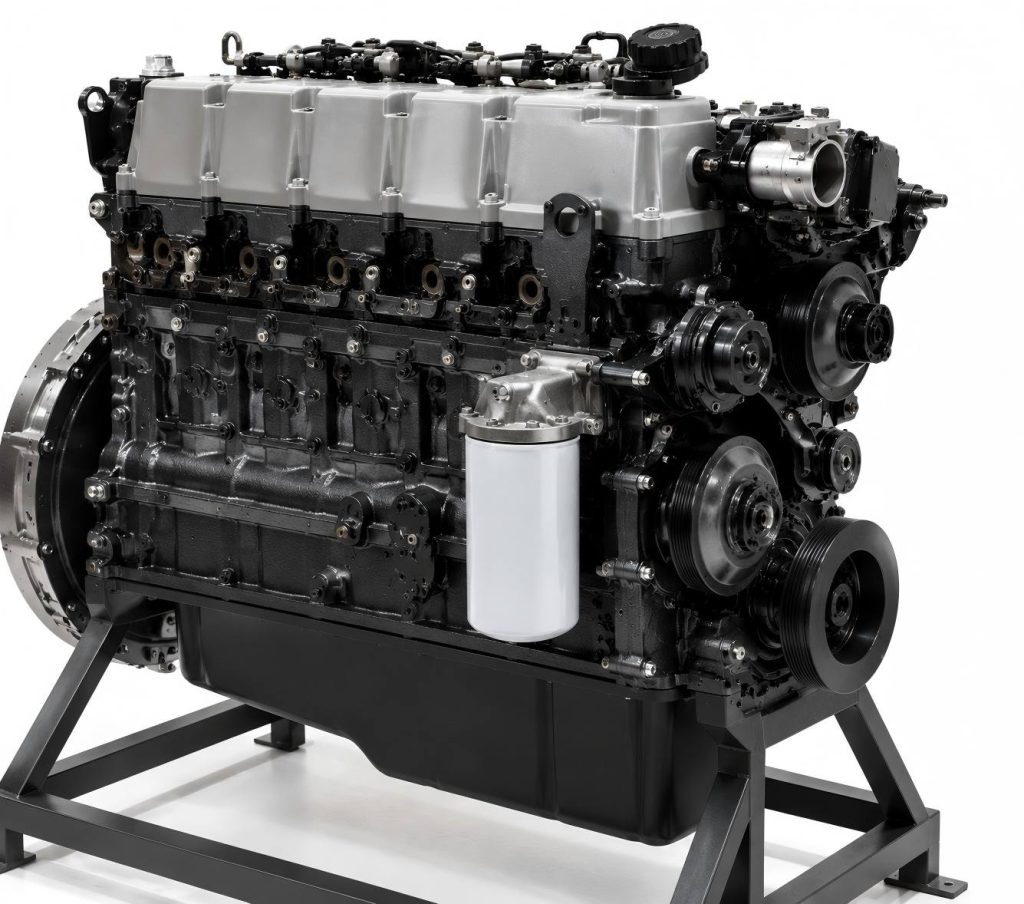
If you’re wondering the 5.9 cummins oil capacity for your Dodge Ram, here’s the short answer: most standard pickup trucks require 11 to 12 quarts (roughly 10.4 to 11.4 liters), depending on whether or not a filter needs replacing. However, industrial and marine setups typically need more – up to 15 or more.
Problematic isn’t only determined by engine size; the amount of oil your 5.9L Cummins requires depends on two main factors: oil filter shape and filter size. Get this wrong, and you risk too little or too much oil being present – either of these scenarios could leave your engine vulnerable to loss of lubrication protection; too little may mean loss of protection while too much could result in foaming oil, high crankcase pressure, leaks or foamed engine components; neither are desirable outcomes!
5.9L Cummins engines have long been revered within the diesel world. From towing with your Dodge Ram truck or managing an excavator fleet with ISB engines to maintaining marine 5.9 units, knowing your oil capacity is key for long engine life. Let’s break it down by year, by application, and by the little details that actually matter.
5.9 Cummins Oil Capacity: How Much Oil Does It Need?
Capacity Chart by Engine Generation and Application
Dodge Ram applications typically use 5.9 Cummins engines with factory oil capacity of 11-12 quarts when using an oil pan and filter change, while industrial and marine versions depend on oil pan configuration and engine design.
Keep in mind that these numbers are just a starting point; design of oil pan, filter selection and equipment configuration all impact final numbers. Once filled up, always double-check with a dipstick as this is your true answer.
If you’re performing routine maintenance on a road vehicle, purchasing a 3-gallon jug (roughly 12 quarts) should usually suffice. When dealing with heavy machinery or boats however, specific oil pan specifications will need to be reviewed first. Those environments are just different.
Here’s a quick reference table by engine generation and application (includes filter capacity):
| Application | Engine Version | Years | Oil Capacity with Filter |
| Dodge Ram | 12-Valve 5.9L | 1989–1998 | Approx. 11 qt (about 10.4 L) |
| Dodge Ram | 24-Valve VP44 | 1998.5–2002 | Approx. 11–12 qt (about 10.4–11.4 L) |
| Dodge Ram | Common Rail 5.9L | 2003–2007 | Approx. 12 qt (about 11.4 L) |
| Industrial | ISB 5.9 | Varies | Depends on configuration |
| Marine | QSB / Marine 5.9 | Varies | 15+ qt possible |
Why Your Dipstick Reading May Differ from Specification
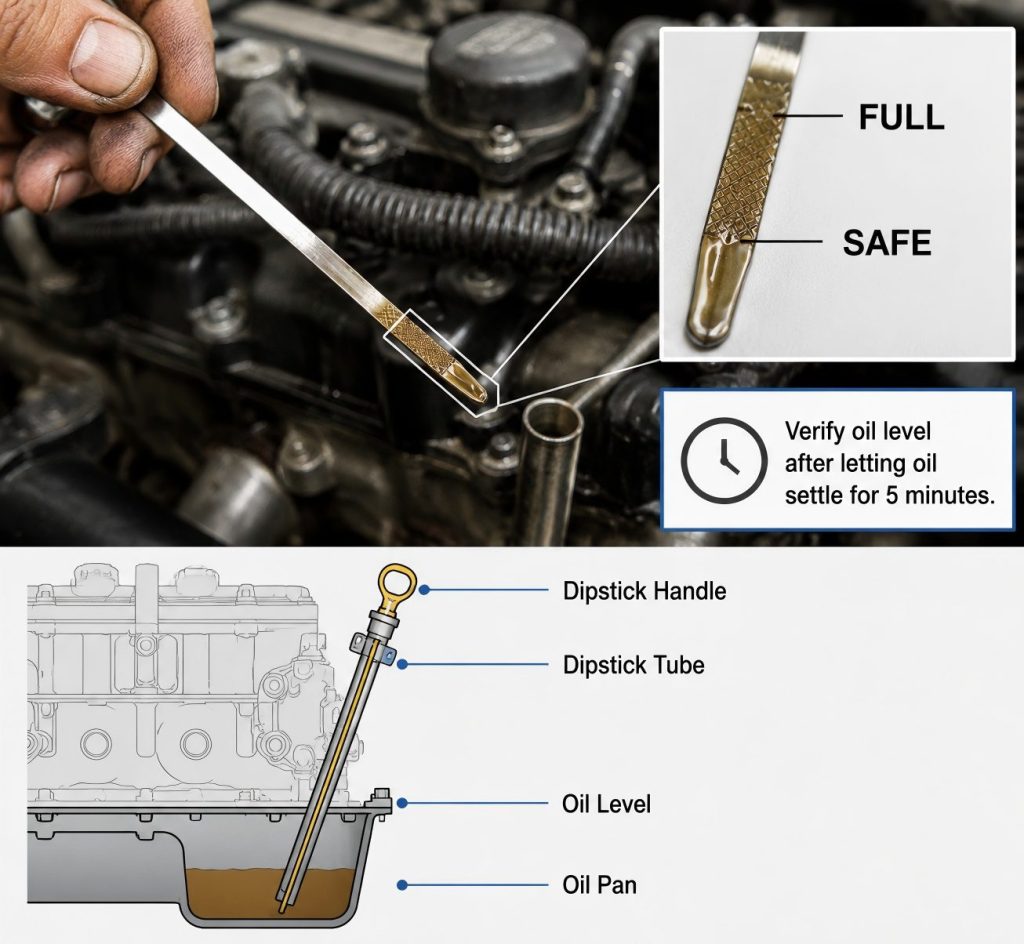
Here’s a common question: you put in exactly 12 quarts, just like the manual says, but the dipstick tells a different story. It happens a lot with older diesels. And a lot of owners panic, thinking they’re burning oil or leaking. Most of the time, though, it’s just a measurement hiccup.
So before you go adding more oil and overfilling, consider these possibilities:
Incorrect dipstick tube or aftermarket dipstick – The 5.9L Cummins has been around for years. The original dipstick tube can bend over time, or someone might have swapped in a non-standard aftermarket dipstick. Either way, your readings get thrown off.
Oil remaining in filter and engine passages – A standard heavy-duty diesel filter holds nearly a quart of oil by itself. If you skip the filter change or don’t let the oil drain long enough, that old oil stays in the system. Add the full 12 quarts on top of that, and you’re overfilled.
Vehicle parking angle during draining – Diesels have a sump at the bottom of the pan. Park on a slope and you’ll leave nearly a quart of old oil sitting in the back of that pan. It just won’t come out.
Why 5.9 Cummins Oil Capacity Is Different Between Models
Factors That Change Oil Capacity
So why does one 5.9L Cummins take 11 quarts while another takes 15? It’s not magic. It’s about the environment and installation space.
The engine block itself is the same 5.9 liters at its heart. But the lubrication system gets customized depending on whether it’s going into a pickup, an excavator, a generator, or a boat. That’s why when you buy parts like oil pan gaskets or oil pumps, you have to match the exact application. No shortcuts.
Engine Generation & Block Design – From the early 12-valve engines to the later common rail models, the internal oil galleries changed. Small differences, but they add up.
Oil Pan Design & Capacity – Road trucks use a deep-sump pan that fits around the front axle. Industrial generators or modified setups often use bigger pans that hold several extra quarts.
Vehicle & Equipment Application – A Dodge Ram needs to drive on highways. An industrial engine runs at high RPM for hours. That extra oil helps with cooling.
Marine vs. Automotive Configuration – Marine 5.9L engines, like the QSB series, use oversized pans with extra capacity to prevent oil starvation in rough seas. Some even have dual filter setups. You’re looking at 15 quarts or more.
Duty Cycle & Operating Conditions – Engines that work hard under heavy towing see faster oil degradation. A larger oil capacity helps dilute soot and keep temperatures down.
5.9 Cummins Oil Type, Viscosity and Change Interval
Recommended Oil Viscosity Guide
15W-40 heavy-duty diesel oil should always be the go-to choice for 5.9L Cummins engines, so no need to overthink your selection.
Viscosity refers to how easily oil flows. Choose the wrong viscosity and you might experience difficulty starting up in cold temperatures or risk bearing wear due to extreme heat. For optimal performance in any given climate, select viscosities tailored specifically for that environment.
15W-40 Conventional or Synthetic Blend – 15W-40 is suitable for most diesel engine applications at temperatures above -18degC (0degF), providing excellent protection for crankshaft bearings under high loads and heat. When selecting an API diesel rating such as CK-4 or CJ-4 for your engine.
5W-40 Full Synthetic – If your operation involves operating in temperatures that fall below -18degC, choose 5W-40 Full Synthetic. It provides fast cold starts, builds pressure instantly, and reduces wear from dry start wear.
Recommended Oil Change Intervals
Regular oil and filter changes are one of the biggest factors in long-term engine durability. It’s not just about lubrication – the oil also absorbs soot from combustion. Once that soot load saturates the oil, it stops protecting.
Standard Highway Driving – Follow the manufacturer’s guidelines. Most owners change oil every 5,000 to 7,500 miles depending on driving conditions.
Heavy Towing & Commercial Duty – Change every 3,000 to 5,000 miles (about 5,000 to 8,000 km) or every 250 hours of operation.
Marine & Stationary Industrial – Change every 250 hours or annually, whichever comes first.
How to Change Oil on a 5.9 Cummins Step by Step
Step 1: Prepare Oil and Filter
Grab about 12 quarts of quality diesel oil and a heavy-duty filter that meets the specs (like LF3894 or LF16035). Before you drain, run the engine at idle for 3 to 5 minutes. Warm oil picks up more of the suspended contaminants and flows out easier.
Quick tip: if your filter mounts vertically, pre-fill it with fresh oil before installation. That way, oil pressure builds fast at startup and you reduce dry start wear. If it’s mounted at an angle, skip the pre-fill – you’ll just make a mess.
Step 2: Drain Old Engine Oil
Park the vehicle on level ground and slide a drain pan under the oil pan. Make sure it holds at least 15 quarts. Remove the drain plug – careful, the oil is hot. Let it drain for a solid 15 minutes. That gives the old oil and any metal particles time to flow out completely.
Step 3: Replace Oil Filter
Remove the old filter from the housing. Take your new diesel-rated filter and smear a bit of clean oil on the rubber gasket with your finger. Install it by hand, turning clockwise until the gasket contacts the mounting surface. Then tighten another 3/4 turn. No wrenches needed – over-tightening just makes it a nightmare to remove later and can crush the seal.
Step 4: Refill and Check Oil Level
Add 11-12 quarts of new oil through the fill port on top of the valve cover and securely fasten its cap. Run your engine at idle for several minutes at idle speed while checking for leaks around filters and drain plugs, before stopping to wait 5 minutes while oil settles back into its pan before pulling your dipstick out and wiping clean before reinserting – and ensure that its level matches either “SAFE” or “FULL”.
Common 5.9 Cummins Oil Problems and Warning Signs
Low Oil Level Symptoms
Low oil means low oil pressure. The first sign you’ll notice is a metallic tapping noise from the valve tappets. That’s not good.
If the oil drops below the minimum mark, the oil pump might start sucking air. That triggers the oil pressure warning light on your dash. Ignore it and your turbocharger’s floating bearings will wear out fast from lack of lubrication. Expensive repair.
Overfilled Oil Symptoms
Too much oil is just as bad. The crankshaft whips it into foam, and foam doesn’t create oil pressure. That’s a recipe for lubrication failure.
On top of that, overfilling raises crankcase pressure. That pushes oil out through the front and rear seals, and you might even see blue smoke coming out of the blowby tube. Not a good look.
Fuel Dilution in Engine Oil (Critical Common Rail Issue)
If you’re running a 2003–2007 common rail 5.9L, pay attention to this one: fuel dilution is a known issue.
Worn injectors, seal problems, or fuel system issues can allow diesel to leak into the crankcase. Here’s the warning sign: your oil level actually goes up instead of down. And if you pull the dipstick and it smells like diesel, that’s confirmation. Diesel thins out the oil, kills its viscosity, and leaves your engine unprotected. If you catch this, address the fuel system problem immediately and change the oil.
5.9 Cummins Replacement Parts for Maintenance and Repair
All engines eventually require replacement parts due to wear-and-tear, use, and environmental conditions. Fluid changes won’t suffice when wear-and-tear is taken into consideration.
Longshine offers genuine Cummins 5.9L engine parts to meet maintenance and overhaul needs: Longshine offers genuine Cummins 5.9L engine parts at longshine for your maintenance and overhaul needs.
Heavy-Duty Oil Filters & Mounts – High-efficiency diesel filters that match common specs.
Oil Pumps & Oil Coolers – Including high-flow pumps and cooler elements to restore proper oil pressure and keep temperatures under control.
Complete Gasket & Seal Kits – Oil pan gaskets, valve cover gaskets, and full overhaul kits to stop leaks for good.
Fuel System & Injector Components – Quality replacement injectors and high-pressure lines to resolve fuel system issues.
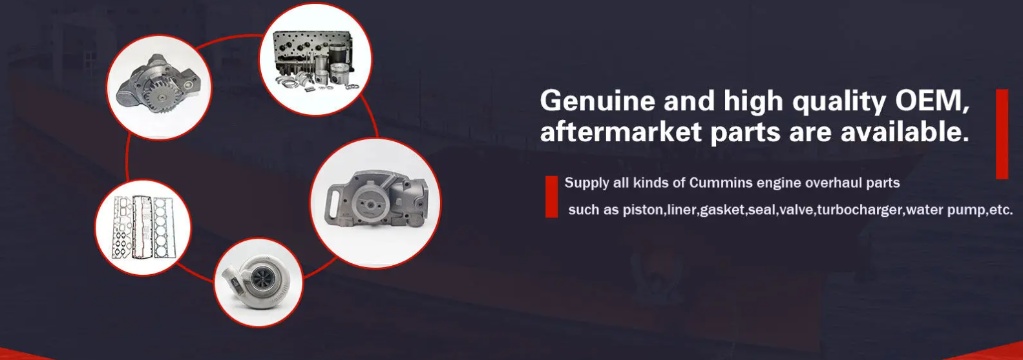
Longshine offers replacement parts for the 5.9 series Cummins engine, covering both maintenance and major overhaul needs. If you’re sourcing parts for your shop, your fleet, or a distribution business, the technical team is there to help.
Final Thoughts
Finding the appropriate 5.9L Cummins oil capacity shouldn’t be too difficult; combine that with an established service schedule for optimum performance of this diesel.
No matter where it resides – whether in a pickup, heavy equipment or marine vessel – take the time to review your oil pan setup and operating environment, select quality filters and seals, and make use of quality oil pan accessories. By adhering to this routine maintenance strategy your engine should provide reliable power for years.