
Cummins Construction Engines: Everything You Need to Know
In the construction and heavy equipment industries, every single hour of unplanned downtime translates directly into thousands of dollars in financial losses. Whether it is an excavator, bulldozer, crane, or wheel loader, on-time project delivery hinges entirely on a highly reliable “heart” within the machinery.
Among the myriad of powertrain brands available, Cummins construction engines have become the premier choice for fleet managers and equipment buyers worldwide, thanks to their exceptional durability, robust high-torque output, and a global parts support network.
This comprehensive guide deeply analyzes the core technical advantages and flagship models of Cummins construction engines, while sharing scientific maintenance strategies to maximize your equipment’s service life.
What Are Cummins Construction Engines?
Founded in 1919, Cummins is a world-leading manufacturer of diesel engines, with products widely utilized across construction, mining, agriculture, power generation, marine, and the oil and gas sectors.
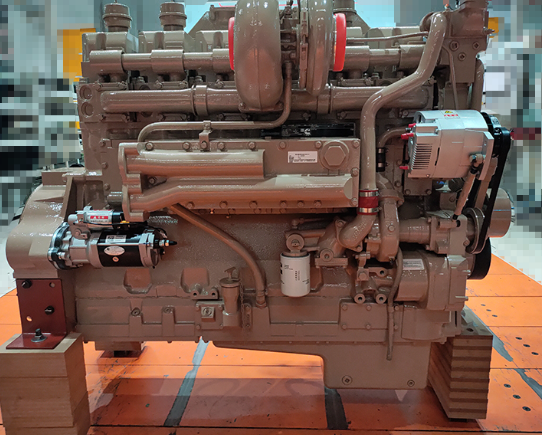
Cummins Construction Engines specifically refer to diesel engines engineered and manufactured for heavy machinery. These engines are purpose-built to operate reliably under high-load, harsh environmental conditions over extended periods, meeting the strict power, durability, and fuel economy demands of modern construction.
Why Heavy Equipment Fleets Choose Cummins?
Where harsh construction conditions are concerned, such as high concentrations of dust, freezing cold weather, excessive heat, and constant heavy-duty cycles, Cummins Heavy Equipment Engines are unrivaled by their engineering design.
Power Output in Terms of Low-RPM/High-Torque Delivery:
The construction machinery like, for example, an excavator working on hard earth or crane hoisting heavy materials needs instant explosive power. With Cummins engines’ help, this is achieved through advanced turbocharging and fuel injection systems, which result in high torque and low RPM delivery.
Emission Standards Compliant & Fuel Efficiency:
With increasing standards across the world for protecting the environment, construction equipment requires conformity to stringent standards like EPA Tier 4 Final and EU Stage V. Cummins meets such emission compliance standards by virtue of having advanced after treatment technologies including Exhaust Gas Recirculation (EGR), Diesel Particulate Filters (DPF), and Selective Catalytic Reduction (SCR) without compromising on fuel efficiency.
Environmental Tolerance:
Construction sites are well known for their difficult environments. Cummins builds its construction equipment with advanced fuel filter system that helps separate water and particulate matter along with tough engine block and pistons. It ensures effortless starting and efficient performance of Cummins engines between -30°C to 50°C temperatures.
Core Application Sectors for Cummins Construction Engines
With superior power performance and environmental adaptability, Cummins engines seamlessly power almost all types of modern construction machinery. Below are the five primary application scenarios:
1. Excavators
Excavator work cycles are repetitive and high intensity, requiring superior low-speed high torque operation, as well as excellent coordination with the hydraulic system.
Technical Advantage: The Cummins engine produces maximum torque at lower speeds, thus improving the digging capabilities of the machine while ensuring efficient fuel injection, resulting in reduced fuel costs.
Common Applications: Large, medium and heavy-duty mining crawler excavators and wheeled excavators (usually fitted with Cummins’ top-range engines such as the QSB6.7 or the QSL9).
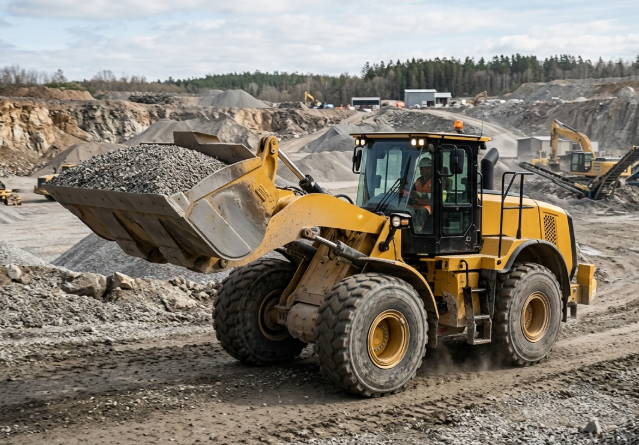
2. Wheel Loaders
During loading, hauling, and stacking operations, wheel loaders repeatedly execute “forward-dig-reverse-lift” cycles, heavily testing the engine’s transient response and endurance.
Technical Advantage: Features excellent transient response, delivering ample power the moment the throttle is pressed. High thermal dissipation capabilities and superior fuel efficiency allow loaders to comfortably handle 24/7 continuous operations in ports, aggregate yards, and mines.
Typical Equipment: 5-ton and larger heavy-duty wheel loaders, underground mining scoop trams.
3. Bulldozers
In situations where bulldozers need to operate in high-resistance, maximum load states to perform heavy-duty pushing and stripping of earth, the engines must be strictly protected against overload states.
Technical Advantage: Has a high torque rise factor with strong impact load resistance capability. Working with a special industrial cooling system, it guarantees continuous operation in dusty environments and extreme heat without shutting down.
Typical Machinery: Heavy duty crawler bulldozers, desert/mine bulldozers (for example, the heavy-duty giant powered by the Cummins QSX15).
4. Cranes
Large equipment for lifting purposes (for example, truck cranes, crawler cranes) requires operation in low-speed idle mode with occasional sudden loads that pose a great challenge to the stability and safety of the power supply.
Technical Advantage: Low carbon formation capacity even when idling at low speeds. HPCR fuel injection system enables ultraprecise control through synergy with hydraulic controls.
Typical Machinery: All-terrain cranes, truck cranes, crawler cranes, and port gantry cranes.
5. Road Machinery (Rollers, Pavers, etc.)
The construction of roads requires that the machines work smoothly for several hours or even days consecutively; hence, the sensitivity to precision in operation, noise level, and maintenance cycles is very high.
Technical Advantage: The low noise and low vibration systems prevent operator fatigue. The exhaust gases meet the Tier 4 F / Stage V requirements, while the extended maintenance intervals of oils and filters will reduce costs for the project manager.
Typical Equipment: Tandem Vibratory Rollers, wide asphalt pavers, cold planers, and soil stabilizers.
Flagship Cummins Construction Engine Models
To assist procurement teams with equipment selection or tracking down precise Industrial Engine Replacement parts, the table below outlines the core Cummins power matrix for the construction sector:
| Engine Model | Displacement | Power Range | Typical Applications | Key Strengths |
| Cummins QSF2.8 / QSF3.8 | 2.8L / 3.8L | 49 – 130 hp | Mini excavators, skid steer loaders, aerial work platforms, compact rollers | Ultra-compact footprint with high power density. Features a maintenance-free aftertreatment design, simplifying installation space and lowering maintenance costs. |
| Cummins QSB4.5 / QSB6.7 | 4.5L / 6.7L | 121 – 310 hp | Medium excavators (industry standard), premium wheel loaders, heavy forklifts, rotary drilling rigs | The benchmark model of the industry. The High-Pressure Common Rail (HPCR) system delivers superb response, low noise, and massive global parts availability. |
| Cummins L9 / QSL9 | 8.9L | 230 – 430 hp | Heavy excavators, rotary piling rigs, large cranes, concrete pump trucks | Engineered for continuous heavy-duty applications. Boasts immense torque backup capability, maintaining a long service life under the most punishing workloads. |
| Cummins QSX15 | 15.0L | 500 – 675 hp | Heavy mining bulldozers, large mining trucks, ultra-large scrapers | A pure heavy-duty powerhouse. Features exceptional engine braking technology and structural rigidity, serving as the absolute core of large-scale, all-weather opencast projects. |
Core Technical Features of Cummins Engines
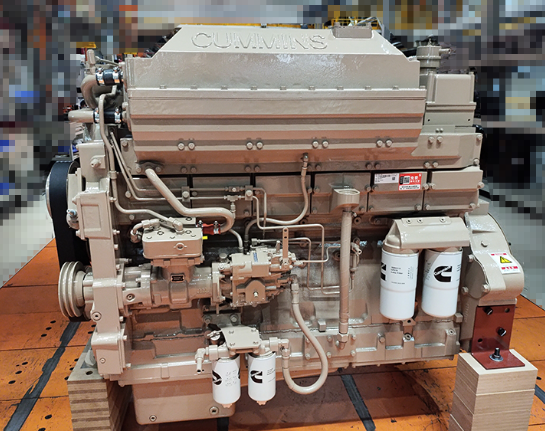
Cummins’ long-standing technological leadership in global construction machinery stems from its deep component integration across air handling, fuel systems, electronic controls, and aftertreatment:
Advanced Turbocharging:
Cummins utilizes proprietary Holset® turbochargers (including wastegate and VGT™ Variable Geometry Turbocharger systems). VGT™ technology adjusts airflow in real-time based on engine speed—providing high airflow at low speeds to boost low-end torque, and optimizing intake efficiency at high RPMs. This allows an excavator or loader to deliver instant power when encountering sudden resistance.
High Pressure Common Rail (HPCR) Fuel System:
With the Cummins HPCR system, several fuel injections are performed in one combustion cycle under high pressure. Atomized and thoroughly mixed fuel provides the best energy extraction from any diesel drop possible, as well as reducing the level of combustion noise.
Advanced Electronics Control:
Equipped with the powerful CM-series Electronic Control Module (ECM), the brain of the engine processes hundreds of sensor data points (pressure, temperature, etc.) within microseconds. Using CAN-bus electronics interface with the hydraulic system of the machinery, it ensures perfect “mechanics-electronics-hydraulics” power tuning.
Optimal Fuel Economy:
Improving the shape of the combustion chamber and minimizing internal friction, the new line of Cummins construction engines reduces the BSFC value by 5% to 10% compared to its predecessor.
Global Stage V / Tier 4 Final Compliance:
Integrating EGR, DPF, and SCR, Cummins’ emissions solutions achieve near-zero particulate matter (PM) and nitrogen oxide (NOx) emissions. Crucially, its innovative “no-heat” passive regeneration technology ensures the DPF clears during operation without requiring machine downtime, maximizing uptime.
Intelligent Connected Diagnostics™:
This telematics technology sends fault codes and expert troubleshooting recommendations to fleet managers within seconds of an engine anomaly. This “predictive maintenance” helps catch minor issues early, preventing catastrophic mechanical failures.
How to Select the Right Cummins Engine for Your Equipment?
When purchasing a replacement engine or selecting power options for new equipment, choosing the right model directly impacts your Return on Investment (ROI). You should evaluate six key dimensions:
Horsepower & Power Curve:
Look beyond peak horsepower; focus heavily on the torque curve. Since construction equipment requires sustained heavy-duty output, ensure the engine’s continuous power and peak torque comfortably cover the equipment’s peak loads under extreme conditions.
Equipment Type & Envelope Size:
Machinery can be highly sensitive to physical engine dimensions and weight. Compact machinery like skid steers or mini excavators demand high power density within tight spaces (making the QSF2.8/3.8 series ideal), whereas heavy crawler cranes prioritize structural rigidity and heavy-duty longevity.
Working Conditions:
Will the machine operate at high altitudes, in dusty quarries, or in freezing northern climates? High-altitude sites require electronically controlled engines with automatic altitude compensation. High-dust zones necessitate custom three-stage fuel pre-filtration and specialized air intake systems.
Fuel Efficiency & Total Cost of Ownership (TCO):
Evaluate the engine’s full lifecycle cost. Combine hourly fuel consumption, Diesel Exhaust Fluid (DEF) consumption rates, and the engine’s optimal economic RPM range to pick a model that aligns with your primary operating speeds.
Target Market Emission Regulations:
To avoid regulatory risks, equipment exported to or operated within the US or EU must feature Tier 4 Final / Stage V electronically controlled engines with aftertreatment. Conversely, for non-regulated or lesser-regulated markets, simpler, lower-emission-stage engines with higher tolerance for lower-quality diesel can be selected.
Budget vs. Lifecycle Value:
The budget allocated for procurement cannot only be concerned with the initial purchase cost. Although Cummins engines could cost more than the second-hand engines or even other brands because of their high quality, the time period between overhaul is long, and therefore the cost of ownership per hour will be very low.
Conclusion: High-Quality Power Solutions
Cummins construction engines are not simply power sources; they are essential business elements, providing that projects meet their timelines and asset ROIs are realized. From the QSF2.8 to the QSB6.7 and QSX15 engines, getting the right model and pairing it with high-quality OEM components is the best way to achieve fleet success.
Looking for a Reliable Cummins Engine & Parts Partner?
As a specialized manufacturing and supply service provider deep-rooted in the industrial and heavy machinery powertrain sector, Longshine supplies authentic, brand-new Cummins complete engine assemblies alongside an extensive catalog of genuine Cummins engine parts.
Whether you need a rapid replacement part to minimize unexpected downtime or are seeking a dependable, long-term wholesale partnership, our technical experts deliver precise component matching backed by robust engineering expertise.
Don’t let downtime cost you another project. Contact Longshine today!