
5.9 Cummins Lift Pump Failure Symptoms: How to Fix It
Let’s talk about something every 5.9L Cummins owner needs to know. We’re talking about 5.9 Cummins lift pump failure symptoms. Whether you have a 6BT or an ISB engine, the lift pump is basically the heart of your whole fuel system. It pulls diesel from the tank and sends it steadily to the high pressure pump, like a VP44 or CP3. Think of the high pressure pump as the “big water user.”
When the lift pump starts having fuel delivery issues, the high pressure pump doesn’t get enough to drink. Less fuel means less flow, and that leads to poor cooling. Then things overheat inside the high pressure pump and wear out fast. The end result? You might hear a funny noise, but then you’re stuck paying $2,000+ for a new high pressure pump. This is especially true of the VP44 injection pump, which you find on 24 valve engines. That pump really hates low fuel pressure. If the pressure stays low for too long, the VP44 will burn up completely.
So in this article, I’ll help you spot the 5 most common warning signs. You’ll learn how to test your system with a pressure gauge, decide whether to repair or upgrade, and what to do for daily prevention.
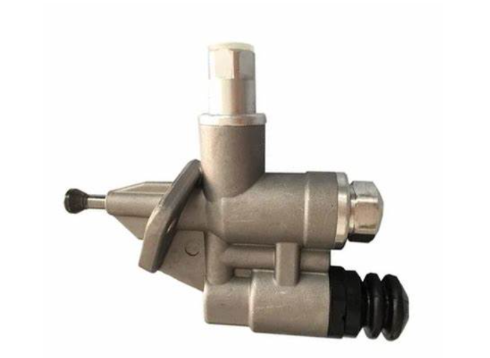
Top 5.9L Cummins Lift Pump Failure Symptoms You Must Know
Below are five classic symptoms of a bad lift pump. If you notice even one of these, don’t wait. Go check it out.
1. Hard Start
You turn the key and the engine turns over for five seconds or more before it finally catches. This is worst on the first start of the day after the truck has been sitting overnight. During the day when everything is warm, it might start fine. Here’s what’s happening. The bad lift pump can’t keep diesel in the fuel lines. Over time, the fuel drains back into the tank. Air gets in, so the engine has to push out that air before it can pull fuel again. That’s why starting takes forever.
2. Power Loss Under Load
Driving empty on a flat road feels okay. But then you step on the gas hard, and the truck just feels weak. The RPMs climb slowly. You really notice this when towing a camper, climbing a long hill, or trying to pass someone on the highway. Under heavy load, the power just isn’t there.
When the lift pump is weak, it might keep up at idle or light throttle. But once the high pressure pump (VP44 or CP3) asks for a lot of fuel, the lift pump can’t deliver. It’s like a runner suddenly running out of breath. Right when you need power the most, your truck feels sluggish. These power issues are also tied to common 5.9 Cummins Engine Problems, so you have to look at the big picture.
3. Rough Idle
You are stopped at a red light. The engine doesn’t idle smooth but shakes, stumbles or the rpms go up and down by themselves. This is more obvious when the engine is hot, or when you are driving in stop and go city traffic. The lift pump sends over fuel pressure that jumps around. The high pressure pump can’t work steadily, and the idle quality goes bad right away.
4. Stalling
You’re driving normally, no warning, and then the engine just dies. Sometimes you can restart it right away. Other times you have to crank it several times. This tends to happen when you’re slowing down for a turn, or after a long idle when you try to pull away. The lift pump cuts out for a second. The high pressure pump gets no fuel, and the engine stops.
5. Unusual Noise or Complete Silence
Turn the key to ON, but do not turn the engine over. You should normally hear a short “whoosh” for maybe two to five seconds. But if you hear a high pitched whine, or clicking or completely nothing then there is something wrong. You’ll hear this most when the engine is cold and you first turn the key. And don’t ignore it if the noise suddenly gets way louder or just stops completely. That’s a big clue.
How to Test Your 5.9L Cummins Lift Pump
Don’t just guess. Here are three tests, from simple to more advanced. They’ll help you pin down any fuel supply problem.
1. Listen for the Key On Prime Cycle
What to do: Get in the truck. Turn the key to ON (don’t start). Listen near the fuel tank or along the frame rail.
What the results mean:
A normal two to five second “whoosh” sound means the pump is running. But that doesn’t guarantee the pressure is high enough.
No sound means the pump isn’t getting power, or it’s dead.
A sharp or weird sound means internal wear.
2. Check Voltage with a Multimeter
If the pump doesn’t run, don’t buy a new one yet. It might not be getting electricity.
What to do: Use a multimeter to measure voltage at the lift pump electrical connector (key ON). Also check the relay and fuse.
What the results mean:
You see 12V but the pump is silent. Then the pump itself is bad.
No voltage means the issue is in the wiring harness, relay, fuse, or the ECM control side.
One more thing. On 2003 to 2007 common rail trucks, the battery voltage must be above 9V while starting. Otherwise the ECM won’t trigger the lift pump.
Pressure Test (This is the most important one)
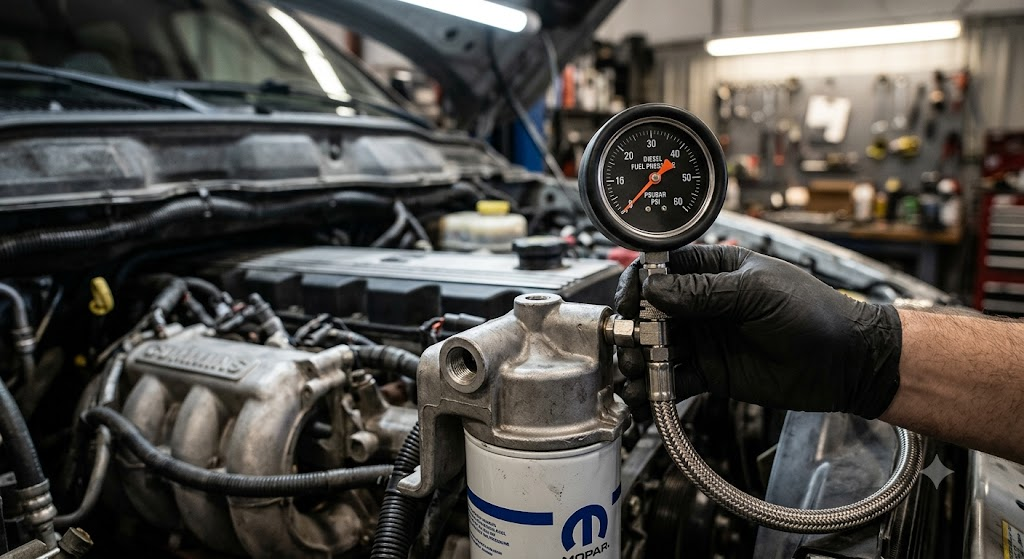
You need a 0 to 30 PSI fuel pressure gauge. That’s about $30 to $50.
Where to connect it: After the fuel filter, but before the high pressure pump. The common spot is the test port on the filter housing. Or you can use a tee in the inlet line.
How to do it: Hook up the gauge. Turn the key ON and note the initial pressure. Start the engine and note the idle pressure.
Here’s the critical step. You have to drive the truck. Hit the throttle hard, climb a hill, or add some towing load. Watch what the pressure does under load.
A big warning: Testing only at idle will fool you. A lot of bad lift pumps show 15 PSI at idle. But as soon as you hit the road and stomp on it, the pressure drops below 5 PSI.
Why Fuel Pressure Matters And How to Check It
You might be wondering, does the exact fuel pressure number really matter that much? Yes, it matters a lot. Whether you have a VP44 or a CP3, the high pressure pump creates a lot of heat while it works. The only thing that cools it down is the diesel fuel flowing through it. If the lift pump doesn’t provide enough pressure, then the fuel flow through the high pressure pump is too low. Heat builds up. Electronic parts or mechanical components slowly burn out. And trust me, the 5.9 Cummins Injector Replacement Cost in that situation is way more than just swapping a $200 filter on time.
Here’s an easy way to think about it. The lift pump is like your heart. It pumps fuel (blood) to the system. The high pressure pump is like your brain. It does fine control. If your heart is weak, your brain starves, overheats, and fails.
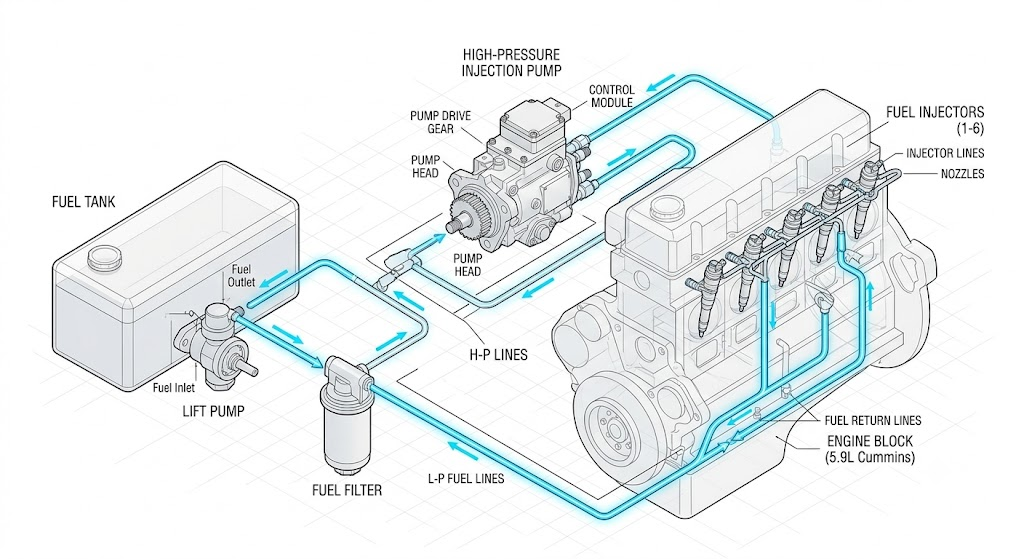
Cummins Fuel Pressure Standards Comparison Table
| Engine Model | Idle Pressure | Minimum Safe Pressure Under Load | Danger Sign |
| 24 Valve VP44 (1998.5 2002) | 14 20 PSI | 10 PSI or higher | Drops below 10 PSI under load |
| Common Rail CP3 (2003 2007) | Stable, usually 8 15 PSI | 8 PSI or higher | Pressure plunges when you floor it |
If the pressure under load falls below 5 PSI, the lift pump can no longer provide effective supply. Injection pump damage is already happening. For VP44 trucks, once pressure under load drops below 10 PSI, you should plan to replace the lift pump soon.
How to check it: Connect a pressure gauge behind the filter housing. Then compare readings at idle, cruising, and heavy load. If heavy load pressure is clearly below the standard, you have a lift pump failure.
Why Your 5.9L Cummins Lift Pump Failed
A lift pump doesn’t just break for no reason. You need to find the root cause. Otherwise a new pump will fail again quickly. From shop experience, over 90% of failures come from these three causes.
1. Clogged Fuel Filter (This is the most common one)
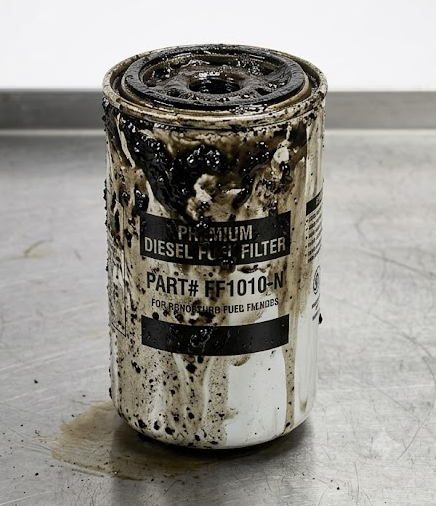
When the filter gets restricted, the lift pump has to fight hard to push fuel through. That creates back pressure. The pump is constantly overworked and wears out fast.
How to stop it: Change your fuel filter every 10,000 to 15,000 miles. Run a good brand like Fleetguard or Baldwin or other OEM.
2. Old Wiring or Bad Connections
Here’s something that happens a lot. Corroded wires, burned up relay sockets, or loose ground wires. They cause voltage to bounce around or cut in and out to the lift pump. Think of it as a slow poison. It doesn’t kill the pump overnight, but over time it damages the motor or the solenoid coil inside.
Let me give you a real example. One guy went through three lift pumps in two years. Every new pump lasted just a few months. Turns out the real problem was a rusty ground wire. Once we fixed that wire, the same pump ran for three years without a single issue.
So how do you avoid this? Simple. Before you bolt on a new pump, always grab a multimeter and test the voltage right at the lift pump connector. If the voltage is wrong, don’t skip it. Fix the wiring harness first.
3. Contaminated Fuel (Water or Dirt)
Water contamination: Diesel with water has no lubricity. Water running through the lift pump wears out internal parts fast. It also causes rust.
Debris or sand: This acts like sandpaper. It grinds the plunger and seals inside the pump. That leads to internal leakage and pressure drop.
How to avoid it: Buy fuel from high volume stations. Add a diesel fuel additive to every tank. Look for one with lubricity improver and water dispersant. For heavy duty users who tow a lot, just upgrade to a FASS or AirDog system. Those come with a built in water separator.
Key reminder: Don’t just replace the pump without finding the root cause. If you do, the new pump might fail again in a month.
Repair vs. Upgrade: Choosing the Right Path
Once you know the lift pump is bad, you have two choices. Go with a direct replacement, or upgrade to a complete aftermarket system. Before you order parts, check The Parts For 5.9 Cummins Engine to match the right parts for your specific engine. Different build years have small differences in the fuel system.
Option 1: OEM Replacement (For daily driving and basic maintenance)
Pressure performance: 10 to 15 PSI. It may drop under heavy load.
Filtration: Only the stock fuel filter.
Who it’s for: Stock trucks, daily driving, light towing (under 3,000 lbs occasionally), and budget conscious owners.
Option 2: Upgrade System (FASS or AirDog)
FASS stands for Fuel Air Separation System. AirDog is another top brand. They are complete systems with a high flow pump, high efficiency filter, water separator, and pressure regulator.
Pressure performance: Very stable from idle to full throttle.
Filtration: Includes a water separator. Filtration precision is much better than stock.
Who it’s for: Heavy towing (over 5,000 lbs regularly), tuned trucks, bigger injectors, or anyone who just wants to protect their VP44 or CP3.
How to Prevent Lift Pump Failure
Do these four things. Your lift pump and the whole fuel system will last many more years.
Change your fuel filter on time, every time. Do it every 10,000 to 15,000 miles. This is the single most important habit.
Add a diesel additive to every tank. Pick one with lubricity and water dispersion. Good options include Opti Lub, Hot Shot’s Secret, or Power Service (white bottle).
Get into the habit of checking fuel pressure. Spend $30 on a pressure gauge. Every six months, or before a long towing trip, hook it up and take a drive. Confirm that pressure under load stays above the minimum standard.
Don’t ignore early symptoms. A slightly harder cold start. A little power loss when loaded. These are early warning signs. Check them out before you end up broken down on the side of the road.
FAQ
Q1: Will a diesel run with a bad lift pump?
Yes, it might run. But you really shouldn’t drive it. A completely failed lift pump means the truck won’t start at all. A weak lift pump might let the truck move, but it will starve the high pressure pump (VP44 or CP3) of fuel flow and cooling. Eventually, you’ll be looking at a several thousand dollar high pressure pump failure. As soon as you notice any symptoms, get it repaired.
Q2: How to tell if the FCA is bad instead of the lift pump?
The FCA (Fuel Control Actuator) is an electronic valve mounted on the high pressure pump. It controls rail pressure.
Lift pump failure symptoms: Low fuel pressure (under 10 PSI under load), hard starting, power loss under load.
FCA failure symptoms: Fuel pressure is normal, but idle is rough and unstable. Rail pressure jumps around. You might see trouble codes P0087 or P0088.
How to tell them apart: First connect a fuel pressure gauge and check lift pump pressure. If that pressure is normal, then suspect the FCA.
Q3: Which year Cummins to stay away from?
Looking only at lift pump and injection pump reliability:
1998.5 to 2002 (24 valve VP44): These are the most sensitive to low fuel pressure. The factory lift pump location on the cylinder block gets hot. If you buy a used truck from these years, check the fuel pressure first thing. Better yet, upgrade to a FASS or AirDog right away.
2003 to 2007 (common rail CP3): These are more reliable overall. The lift pump lasts longer. Many people prefer these years.
Q4: Do I need a lift pump on my Cummins?
Yes, you absolutely do. The 5.9L Cummins is designed with a lift pump as the feeder for the high pressure pump. Without it, the high pressure pump will suffer fuel starvation, run dry, and get permanently damaged in seconds. If you’re asking whether you can remove it, the answer is no. Definitely not.