Tier 4 Final vs. Stage V: Which Emission Standard Applies to Your Generator Purchase
If you’re sourcing a generator set or replacement engine for a project outside your home market, emission compliance is what decides whether that equipment can be legally imported, registered, or put into service in the first place. Buyers who overlook this often find out the hard way — at customs, or worse, after the unit has already shipped and landed on site.
The two systems buyers run into most often are the U.S. EPA’s Tier 4 standards and the EU’s Stage V regulation. Both target the same pollutants: particulate matter, nitrogen oxides, hydrocarbons, carbon monoxide. But meeting one doesn’t guarantee meeting the other, and the equipment each one covers isn’t identical either. An engine that clears Tier 4 on paper can still fall short of Stage V, and that’s the detail most spec sheets gloss over.
What EPA Tier 4 Final Actually Requires
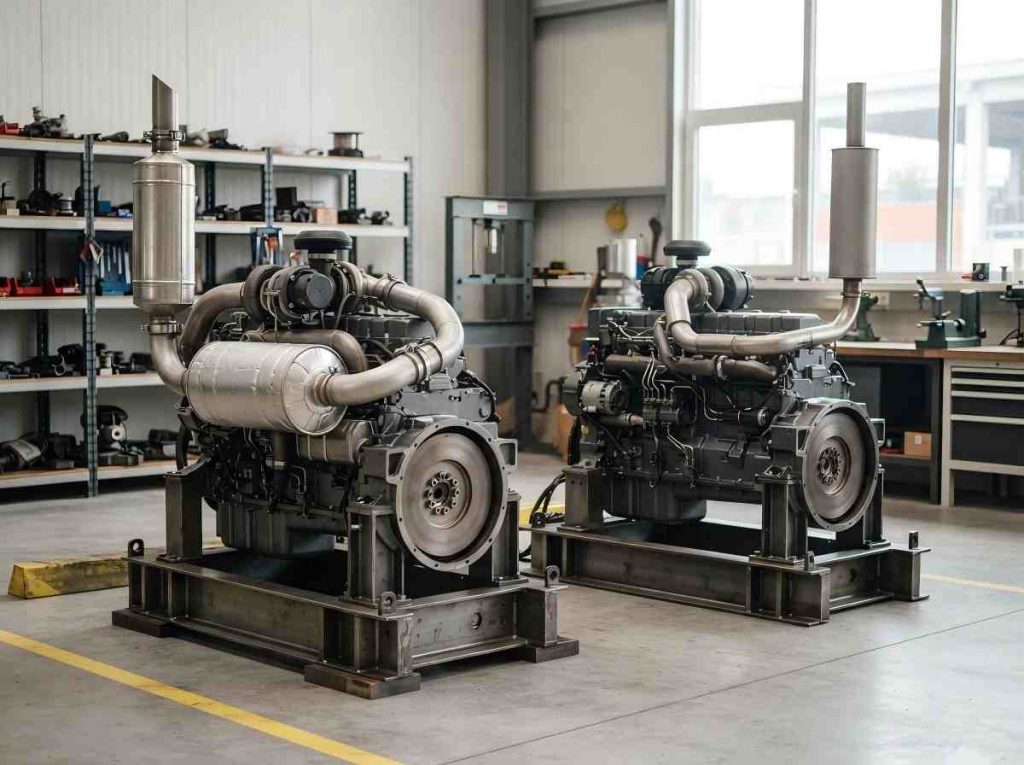
Tier 4 Final is the EPA’s current benchmark for new off-highway diesel engines sold in the U.S. It rolled out in stages between 2008 and 2015, with different deadlines depending on horsepower bracket. By the time it was fully phased in, particulate matter and NOx from covered engines had dropped by roughly 99% compared with 1996 levels. Most of that reduction comes from selective catalytic reduction, and on many models, a diesel particulate filter — though unlike Stage V, the filter isn’t required across every power band.
A couple of exceptions matter here. Engines under 24 horsepower don’t fall under Tier 4 at all, and marine engines, locomotives, and underground mining equipment are governed by separate rules — MSHA oversees mining equipment, for instance, rather than the standard EPA nonroad framework. If you’re importing a generator set for one of these specific applications, it’s worth double-checking which rule actually governs the unit before assuming Tier 4 is the relevant standard.
What EU Stage V Requires and Where It Diverges from Tier 4
Stage V, formally Regulation (EU) 2016/1628, took effect in stages starting January 2019, with the final power bands phased in through 2020. It replaced the older Stage IIIA/IIIB/IV directives and extended coverage to engine categories that had never been regulated at the EU level before, including very small engines under 19 kW and large engines above 560 kW.
The practical difference that trips up a lot of buyers is the particle number limit. Stage V introduced a PN cap that, in effect, forces the use of a diesel particulate filter on nearly every engine category it covers — unlike U.S. Tier 4 standards, which can be met without a filter in some configurations. Earlier stages on both sides of the Atlantic were harmonized to a fair degree, but at Stage V that alignment mostly disappeared. An engine built to satisfy Tier 4 Final on paper won’t automatically clear Stage V unless the filter and the surrounding emissions system were designed with the EU limits in mind from the start.
One exemption is worth flagging for anyone buying standby power equipment specifically: stationary emergency generator sets are excluded from the Stage V scope, since the regulation targets mobile and non-stationary machinery. If your project involves a permanently installed backup genset rather than a mobile or rental unit, the compliance path may look different than it would for construction or mining equipment.
Why This Distinction Actually Matters for a Purchase Decision
None of this is academic if you’re the one signing off on an order. Three situations come up constantly with buyers sourcing Cummins-powered generators and engines for cross-border projects:
Destination market determines the standard, not the manufacturer’s home country. An engine assembled in China or the U.S. still has to satisfy whichever regulation applies where it will actually operate. A unit heading to a project in Germany needs Stage V documentation regardless of where it was built or which standard the factory defaults to.
Resale and relocation plans change the calculus. Equipment bought for a project in one region sometimes ends up resold or redeployed elsewhere a few years later. A generator that only carries Tier 4 Final certification may need retrofitting — or may not be eligible for registration at all — if it later moves into an EU jurisdiction. Buyers planning for resale value should ask upfront whether the engine carries dual certification.
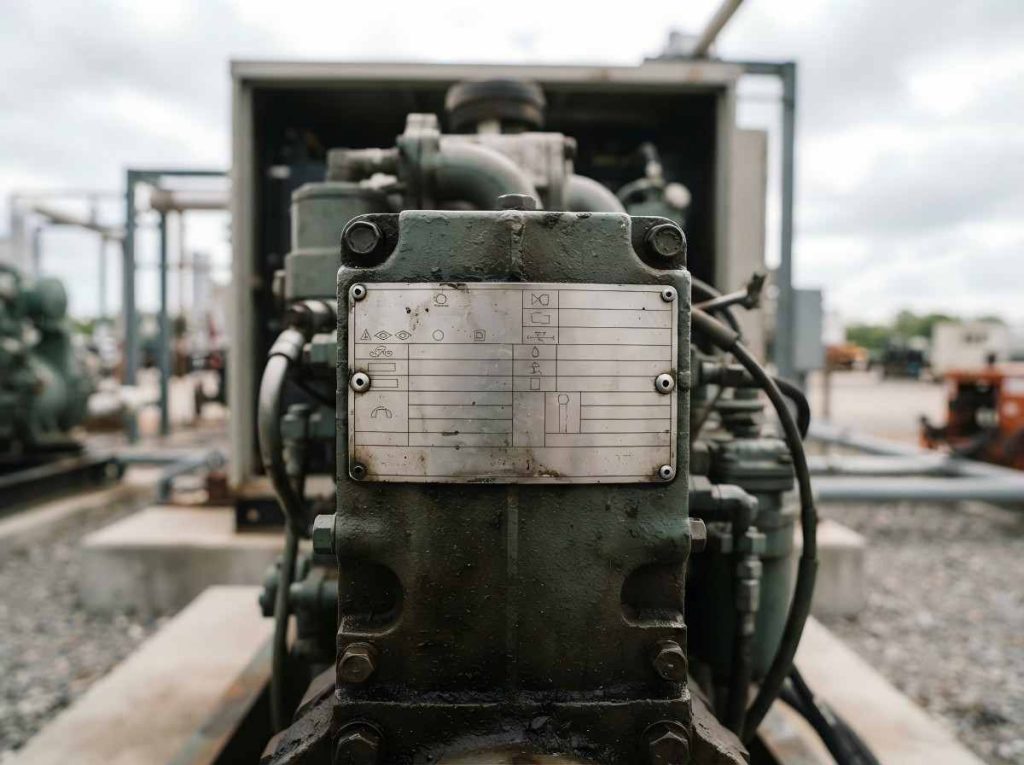
Mismatched paperwork causes real delays. Customs authorities and equipment registration bodies check for the emissions label or type-approval number on the engine itself, not just what’s written in the sales contract. A shipment held at port because the documentation doesn’t match the destination’s requirements is a cost nobody budgets for.
How to Confirm Compliance Before You Place an Order
A few checks, done before the purchase order goes out, save a lot of trouble later:
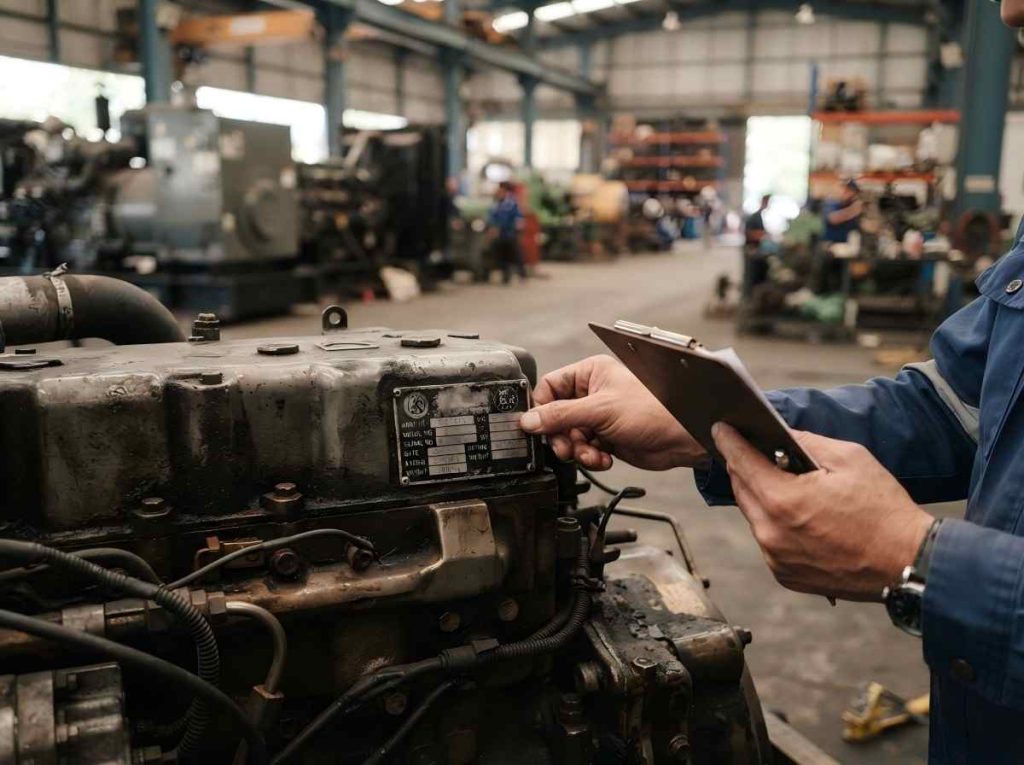
Step 1: Ask the supplier for the emissions label or plate data directly, not a general spec sheet. Stage V engines carry specific markings including the production date and type-approval number; Tier 4 Final engines carry EPA certification labeling. If a supplier can’t produce this, treat it as a warning sign rather than a formality to chase later.
Step 2: Confirm the power band. Both standards set different requirements depending on kW output, and an engine compliant at one power rating isn’t automatically compliant at another within the same model family.
Step 3: Check whether your equipment falls under an exemption, such as the stationary generator carve-out under Stage V. Buyers sometimes over-specify — and overpay for — compliance features their application doesn’t legally require.
Step 4: Request the statement of conformity where one applies, particularly for equipment moving through a transition period or replacement-engine provision. This document, not marketing material, is what customs and inspectors will ask for.
At Longshine, sourcing engines and generator sets that already carry the correct certification for a buyer’s destination market is part of how we handle procurement for international clients, it’s usually simpler to verify this before shipment than to resolve it after the equipment arrives.
A Note on Where Regulations Are Headed
The EPA hasn’t put out a formal Tier 5 proposal yet. There’s ongoing industry chatter about it, mostly because EPA and EU rules have historically tracked each other fairly closely over time. For buyers planning purchases with a long service life, ten years or more, it’s worth factoring in the chance that standards tighten further down the road, particularly around ultra-fine particulate control, before locking in an engine choice today.
FAQs
Does a Tier 4 Final engine automatically meet Stage V requirements?
Not necessarily. Tier 4 Final can be achieved without a particulate filter in some power ranges, while Stage V requires one across nearly all covered categories. Always verify against the specific engine’s type-approval documentation rather than assuming equivalence.
Are stationary backup generators subject to Stage V?
Generally no, permanently installed emergency generator sets fall outside Stage V’s scope, which targets mobile and non-road machinery. Mobile or rental units are a different matter and typically do fall under the regulation.
Is a Tier 5 standard coming?
Not officially. The EPA hasn’t proposed one, but given the pattern of EU and U.S. standards converging over the past two decades, it’s a reasonable factor to weigh for long-lifecycle equipment purchases.