
How Do You Test a Fuel Pump’s Flow & Pressure? Rely on Fuel Pump Test Benches
The car’s fuel pump is a core component—poor efficiency, stalling, or high fuel use often stem from flow/pressure issues. That’s why many ask: how do you test a fuel pump’s flow & pressure?Testing these metrics is key to avoiding engine problems, keeping the car running, and cutting fuel waste. The best way to check the fuel pump flow and pressure is to use a test bench that is made specifically for that. In this article, we will explore the options available and give you the best information on the subject.
Part 1. Understanding Fuel Pump Flow & Pressure
Before diving into how do you test a fuel pump’s flow & pressure, let’s get clear on what these terms mean—no fancy jargon, promise.
What is fuel pump flow
Fuel pump flow is how much fuel a pump discharges over a given time. Measured in gallons per minute (GPM) or litres per hour (LPH). It is the “volume” of fuel your engine receives. If flow is low, your engine gets starved of fuel (weak acceleration). If the flow is high, you are wasting fuel and risking damage.
What is fuel pump pressure
Fuel pump pressure is much force is used to push fuel through the pump to the engine and is measured in psi (pounds per square inch). Most car fuel pumps are in the 40 – 80 psi range, but check your car’s manual. If the pressure is low, fuel is not getting to the engine quickly enough. If pressure is too high, there is a risk of damage to fuel hoses and/or fuel injectors.
How flow, pressure, and fuel pump performance work together
For an engine to operate properly, it also requires an appropriate amount of flow and pressure. One way to visualise it is to imagine watering a plant; if you don’t give it enough water (low pressure/flow), the plant wilts, but if you give it too much water (high flow/pressure), it drowns. Pump performance ensures the engine gets the right pressure and flow to operate. This is the reason fuel pump test benches are so revolutionary for testing; they are able to measure this relationship with accuracy.
Part 2. Manual Testing vs. Fuel Pump Test Benches
| Aspect | Manual Testing | Fuel Pump Test Benches |
| Accuracy | Low (guesses and tool errors) | High (professional gauges/meters) |
| Time Taken | 30 – 60 minutes per test | 5 – 10 minutes per test |
| Human Error Risk | High (handwriting, calculations) | Low (auto – recording and display) |
| Ability to Simulate Work Conditions | No (can’t replicate real driving) | Yes (adjust speed/temp) |
Part 3. How Fuel Pump Test Benches Simplify Flow & Pressure Testing?
Fuel pump test benches are the answer if manual testing is too much trouble. They are made to make testing a fuel pump’s flow and pressure quick, straightforward, and precise. Let’s look at their main features without any technical jargon.
Main tasks for flow testing
With two important features, fuel pump test benches make it easy to quantify flow:
- Professional flowmeters built in: These gadgets measure fuel flow down to the last drop, so you don’t have to guess with a bucket anymore.
- Real-time flow monitoring: As soon as you start testing, the test bench shows flow numbers on a screen. You can see changes right now, without having to wait for calculations.
Basic tasks for pressure testing
It’s just as easy to do pressure tests with a test bench:
High-precision pressure gauges: These gauges are much more accurate than cheap manual ones; they can even detect very small changes in pressure.
Stable pressure control: The test bench keeps the fuel pressure steady while you test it, so you receive consistent readings (no changes because of shaking hands).
Other benefits of fuel pump test benches
In addition to measuring flow and pressure, these equipment provide extra capabilities that make testing easy:
The imported frequency conversion speed controller is simple to operate, saves energy, and enables you change the pump’s speed (0 to 4200 R.P.M.) to fit the circumstances of the road.
Standardized testing environment: The bench controls the temperature (38±2℃) and the fuel supply, so things like cold weather don’t screw up the results.
Auto-data recording: You don’t have to write down figures anymore; all flow and pressure values are saved automatically for subsequent use.
Part 4. Step – by – Step Guide: How Do You Test a Fuel Pump’s Flow & Pressure with a Test Bench?
Using a gasoline pump test bench is easy. Just follow these four procedures, and you’ll get results in a few minutes. You don’t need any skills to use a fuel pump test bench because they are made for beginners.
Step 1: Get ready before the test
First, make sure everything is ready so you don’t make any mistakes:
Look at the test bench: Check that it has the proper power (AC 380V 50Hz or DC 0–30V 3A, depending on the model) and is clean (no old fuel residue).
Get your stuff together: You need to have the fuel pump to test, the proper hoses to connect them, and the right fuel (the type that your car recommends).
Check the purity of the fuel: Use new fuel that meets the test requirements, as old or filthy fuel can affect the findings.
Step 2: Link the test bench to the gasoline pump
No leaks (and correct findings) if the connection is right:
Use the hoses that come with the test bench to connect the gasoline pump. The ports on the bench will be labeled “In” and “Out.”
Check for leaks and hand-tighten any connections (but don’t over-tighten!). A brief spray of soapy water can assist. If you see bubbles, there is a leak.
Step 3: Run the test and keep an eye on the data
Now it’s time to test, and this is where fuel pump test benches really shine:
Set the test parameters: Set the speed (0 to 4200 R.P.M.) and temperature (38±2℃) to what your car normally runs at (check the specs in your car’s manual).
Get the bench going: Press “Start” and observe the screen. The flow and pressure data will show up right away.
Record information at a variety of speeds: To get a full picture, test at idle (low speed), cruising (mid speed), and accelerating (high speed). The bench will save these readings automatically.
Step 4: Look at the facts and decide what it means.
After the test, it’s time to check the pump:
Check the test findings against standard values:
1. Find the factory specs for your gasoline pump, which are normally in the owner’s manual or online. If the normal flow is 5 GPM and your test reveals 3 GPM, there is a problem, for example.
2.Look for the usual range: The pump is working correctly if the flow and pressure are within the normal ranges. If not, make a note of the difference.
3.Find the problems: If the pressure is inconsistent, it could imply that the pump valve is broken. If the flow is insufficient, it could mean that the filter is blocked. It’s easy to find these problems because the test bench always gives the same data.
Part 5. Common Issues in Fuel Pump Testing (and How to Fix Them)
Even when you try your best, testing might go wrong. But fuel pump test benches fix the most typical difficulties. If you’ve ever had trouble figuring out how to check a fuel pump’s flow and pressure, these modifications will help.
Problem 1: Flow data that isn’t stable
Why it happens: Inconsistent fuel supply or unsteady hand movements are used in manual testing, which makes flow numbers change.
How test benches fix it: They have a built-in mechanism for a consistent fuel supply and the ability to change the flow in real time. The bench keeps the gasoline delivery stable, so the figures stay the same (no more wondering which reading is correct).
Problem 2: The pressure readings are wrong.
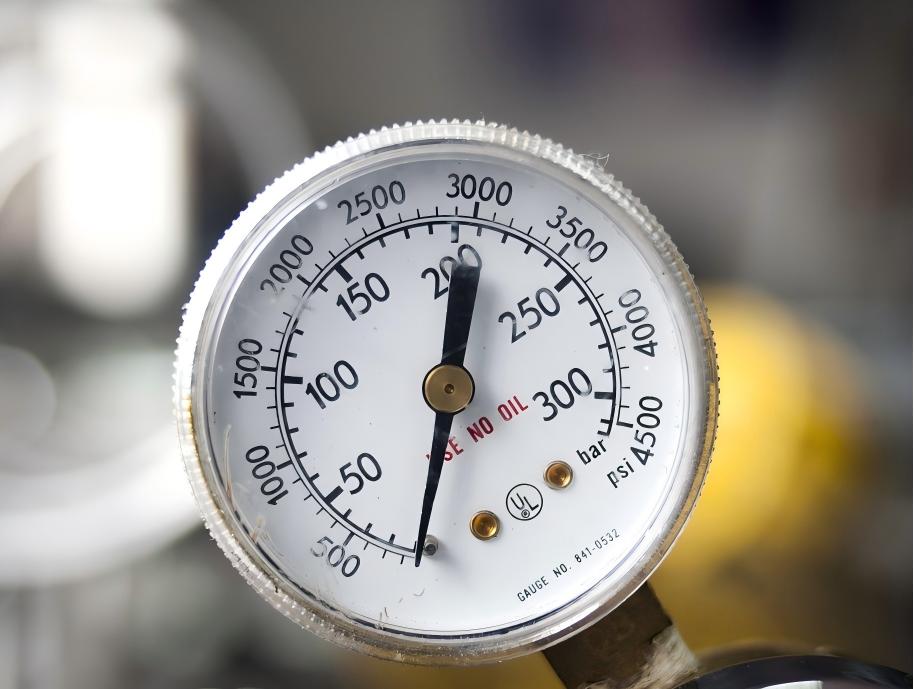
Why it happens: Inexpensive manual pressure gauges aren’t very accurate; they can be 10% to 15% off.
How test benches fix it: High-precision gauges and a function that stabilizes pressure make sure that readings are accurate. You’ll know the exact amount of pressure, not just an estimate.
Problem 3: Can’t recreate real-life driving situations
Why it happens: Manual testing can’t show how the pump performs at varied speeds or temperatures, such while you’re traveling on the highway or in hot weather.
How test benches fix it: You can drive like a pro with adjustable speed (0–4200 R.P.M.) and temperature adjustment (38±2℃). This means you’re testing the pump in the same way that it would be used on the road, so you can trust the results.
Conclusion
So, what is the right way to check the flow and pressure of a fuel pump? The answer is fuel pump test benches. They are accurate, quick, and simple to use, even for people who are new to them. Manual testing is prone to mistakes, takes a lot of time, and can cost a lot of money. But a test bench gives you accurate data, consistent settings, and results you can trust.
If you love cars, like to do things yourself, or work as a mechanic, you need a high-quality fuel pump test bench. It helps you save money on gas, avoid repairs that aren’t needed, and keep your car running well. Don’t just guess—get a gasoline pump test bench for testing that is accurate and stress-free.