
Cylinder Liner vs. Cylinder Sleeve: Are They the Same?
When looking for diesel engine parts, you may come across both the terms “cylinder liner” and “cylinder sleeve.” Some suppliers use one name, while others use the other. This can make it difficult to tell whether they refer to different components or simply describe the same part.
In most engine applications, a cylinder liner and a cylinder sleeve are two names for the same component. Both are fitted inside the engine block to form the cylinder wall, providing a smooth, wear-resistant surface for the piston and piston rings.
However, differences can exist in how manufacturers use these terms and how individual liners are designed. Understanding the terminology can help you avoid confusion when comparing engine parts or ordering a replacement.
Are Cylinder Liner and Cylinder Sleeve the Same Thing?
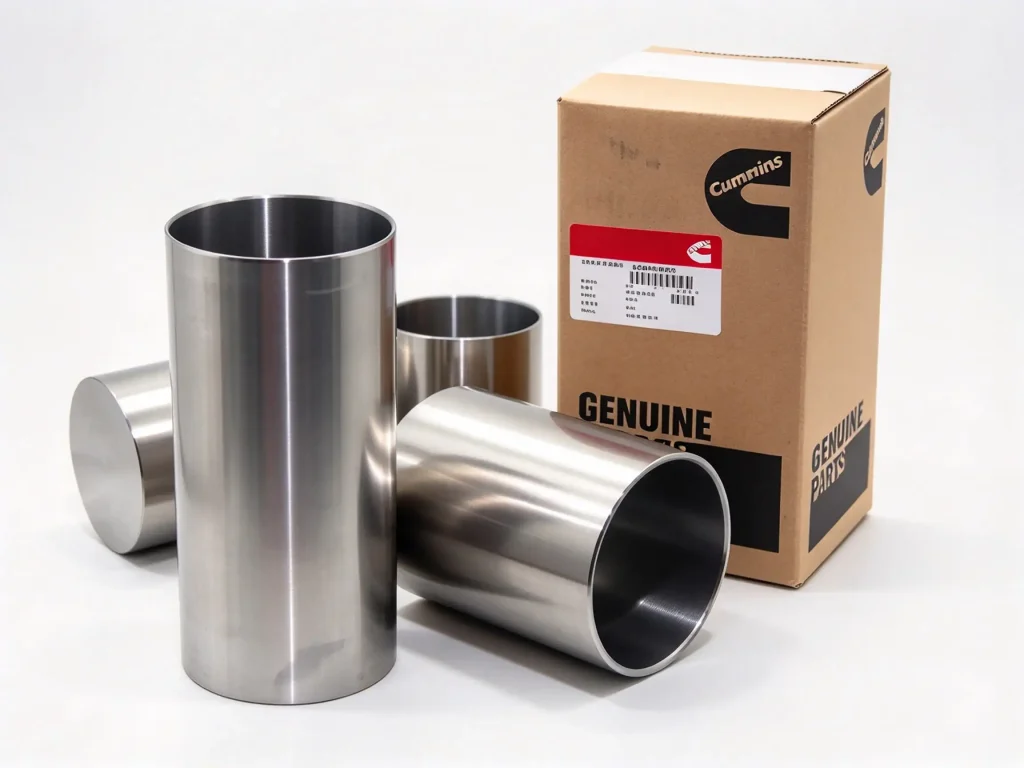
Yes, in most cases, a cylinder liner and a cylinder sleeve refer to the same engine component. Both are cylindrical metal inserts fitted into the engine block to form the inner wall of a cylinder.
During engine operation, the piston moves up and down inside this component. The liner or sleeve provides a suitable surface for the piston rings to move against while helping maintain compression and control oil consumption.
It also protects the engine block from direct wear. Instead of allowing the piston and rings to wear against the block itself, the liner provides a separate working surface that can be inspected and, in many engine designs, replaced when necessary.
The two terms are commonly used interchangeably in diesel engine repair and parts supply. For example, a supplier may list a component as a Cummins cylinder liner, while another may describe the same type of part as a Cummins cylinder sleeve.
Therefore, the difference is usually in the wording rather than the basic function of the component.
What Is the Difference Between a Cylinder Liner and a Cylinder Sleeve?
Although the two terms generally describe the same part, it is useful to understand why they sometimes appear separately in technical documents and product catalogs.
Differences in Terminology
The main difference is how manufacturers, suppliers, and repair professionals name the component.
” Cylinder liner” is widely used in engine manufacturing and technical documentation. “Cylinder sleeve” is also common, particularly in the automotive repair and aftermarket parts industries.
Neither term automatically indicates a different material, structure, or performance level. A cylinder sleeve is not necessarily a different or less advanced component than a cylinder liner.
When reading a parts catalog, it is best to check the product description and engine application rather than assume that the two names represent separate products.
Differences in Structure and Design
The actual design of a cylinder liner can vary between engines. Some have a relatively thin wall that fits closely inside the engine block, while others are designed to withstand combustion pressure with less support from the surrounding block.
The main structural differences may include:
- Inner and outer diameters.
- Overall length and wall thickness.
- Top flange design.
- Sealing groove positions.
- Cooling arrangements.
- Installation and fitting requirements.
These differences are related to the engine’s design, not simply whether the manufacturer calls the part a liner or a sleeve.
For this reason, two components described by different names may have a similar design, while two products carrying the same name may not be compatible with each other.
Differences in Function
A cylinder liner and a cylinder sleeve perform essentially the same job when they refer to the same type of engine insert.
Their main functions include providing a durable surface for piston movement, helping piston rings maintain an effective seal, and transferring heat away from the combustion area.
The material, surface finish, and manufacturing accuracy all affect how well the component performs. These specifications matter more than the terminology used in a product listing.
Why Are Cylinder Liners Also Called Cylinder Sleeves?
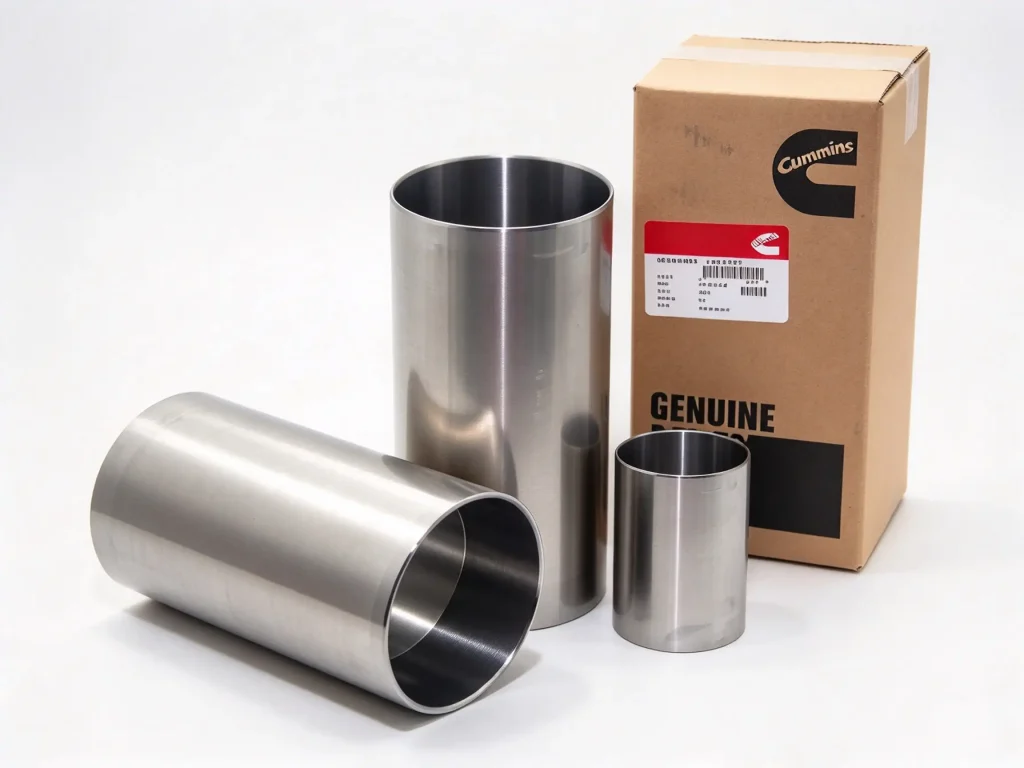
The two names developed through different industry and regional naming practices. Both describe a cylindrical component fitted into an engine block, but manufacturers and parts suppliers may prefer one term over the other.
In some technical documents, the word “liner” is used to describe the component that forms the cylinder’s inner working surface. The term “sleeve” emphasizes its form as a cylindrical insert fitted inside another structure.
This difference in wording does not necessarily indicate a difference in engineering design.
For diesel engine parts, you may see both terms used in product catalogs, workshop manuals, and aftermarket listings. Some suppliers also include both names in product descriptions to make their listings easier to find.
When sourcing a replacement for a Cummins engine, for example, searching for both “Cummins cylinder liner” and “Cummins cylinder sleeve” may help you find more relevant product listings.
However, the engine model and original part number should always be used to confirm whether a particular component is suitable.
Can You Replace a Cylinder Liner with a Cylinder Sleeve?
A cylinder liner and a cylinder sleeve can refer to the same type of component, so there is no need to replace one with the other simply because the name is different.
The important question is whether the replacement part matches the original engine design.
Even when two products look similar, differences in dimensions, flange design, sealing arrangements, or installation methods can prevent them from being used interchangeably.
Before ordering a replacement, check the following details:
Engine Model and Serial Number
Start with the engine model and serial number. Different engine series, and sometimes different versions within the same series, may use different cylinder liner specifications.
Original Part Number
Compare the replacement part number with the original OEM reference. This is one of the most reliable ways to confirm whether a component is intended for your engine.
Dimensions and Design
Check the inner diameter, outer diameter, overall length, wall thickness, and flange dimensions. Also pay attention to the position of sealing grooves and other design features.
Installation Requirements
Confirm whether the engine uses a wet or dry liner and check the manufacturer’s fitting requirements. A replacement must match the original installation design.
Checking these details before purchasing can reduce the risk of ordering an unsuitable part and avoid problems during engine assembly.
What Should You Know About Different Types of Cylinder Liners?
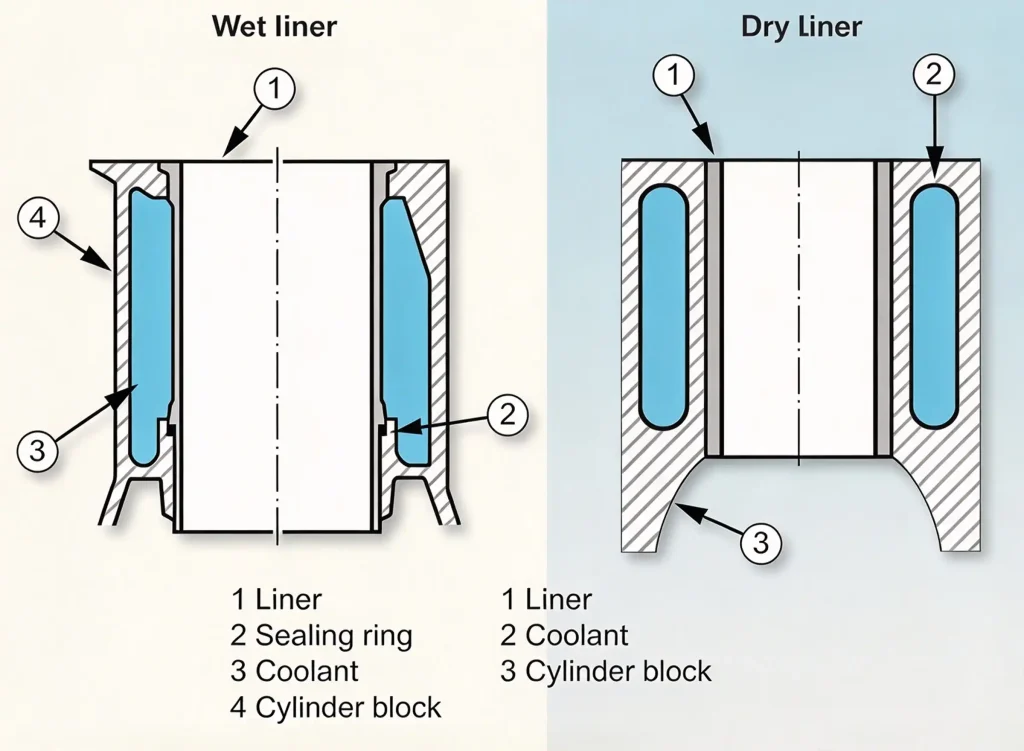
Although cylinder liner and cylinder sleeve are generally interchangeable terms, the components themselves come in different designs. One of the most common classifications is based on whether the outer surface comes into direct contact with engine coolant.
Wet Cylinder Liner
A wet cylinder liner has an outer surface that directly contacts the engine coolant. The coolant circulates around the liner, carrying heat away from the cylinder during operation.
Because the liner forms part of the cooling jacket, it needs a suitable sealing arrangement to prevent coolant from leaking into the crankcase. Many wet liners use sealing rings fitted into grooves near the lower section.
Wet liners are commonly found in medium- and heavy-duty diesel engines. Their design also allows the liner to be removed separately when replacement is required.
Dry Cylinder Liner
A dry cylinder liner is fitted inside the cylinder bore and does not directly contact the engine coolant. Its outer surface sits against the surrounding cylinder block, which provides additional support.
Heat passes through the liner and into the engine block before reaching the cooling system. Compared with a wet liner, a dry liner is generally more closely supported by the surrounding block.
The installation method and fitting requirements depend on the engine design. Some dry liners use an interference fit, while others require different fitting arrangements.
What Is the Main Difference Between Wet and Dry Liners?
The main difference is how each liner transfers heat to the cooling system.
A wet liner is directly exposed to coolant, while a dry liner transfers heat through the surrounding engine block. Their sealing arrangements, wall designs, and installation requirements are also different.
Neither type is universally better. The correct design depends on the engine manufacturer’s original specifications.
Conclusion
Cylinder liner and cylinder sleeve are generally two names for the same engine component. Both form the cylinder wall, provide a working surface for the piston and piston rings, and help protect the engine block from wear.
The more important differences are found in the actual design, such as wet and dry liner structures, dimensions, sealing arrangements, and installation requirements.If you are looking for a replacement cylinder liner or sleeve for a Cummins engine, checking the engine model, serial number, and original part number is essential to finding the right fit. Longshine supplies Cummins engine parts for different engine models, helping customers source the components they need for engine maintenance and replacement. Contact our team with your engine details to check part compatibility and find a suitable replacement.