
What Causes a Cummins Generator to Have Unstable Voltage?
A Cummins generator should normally provide a steady voltage while operating within its rated conditions. If the voltage keeps moving up and down, drops when equipment starts, or becomes unstable even with little load, there may be a problem with the generator set or the way it is being used.
The cause is not always a faulty AVR. Engine speed, load changes, electrical connections, and the voltage regulation system can all affect generator voltage. Finding the cause usually starts with identifying when the fluctuation happens and whether the frequency changes at the same time.
How Does a Cummins Generator Keep Voltage Stable?
A generator set has separate systems for controlling engine speed and output voltage. The engine speed or frequency control system adjusts fuel supply to keep the engine running at the required speed. The automatic voltage regulator (AVR), meanwhile, monitors the generator output voltage and adjusts alternator excitation to help maintain the set voltage.
These two systems work together, but they do different jobs. If engine speed is unstable, frequency can fluctuate. If the AVR or its sensing circuit has a problem, the output voltage may become unstable even when engine speed is normal. Cummins describes engine speed control and AVR voltage control as separate basic functions of a generator set.
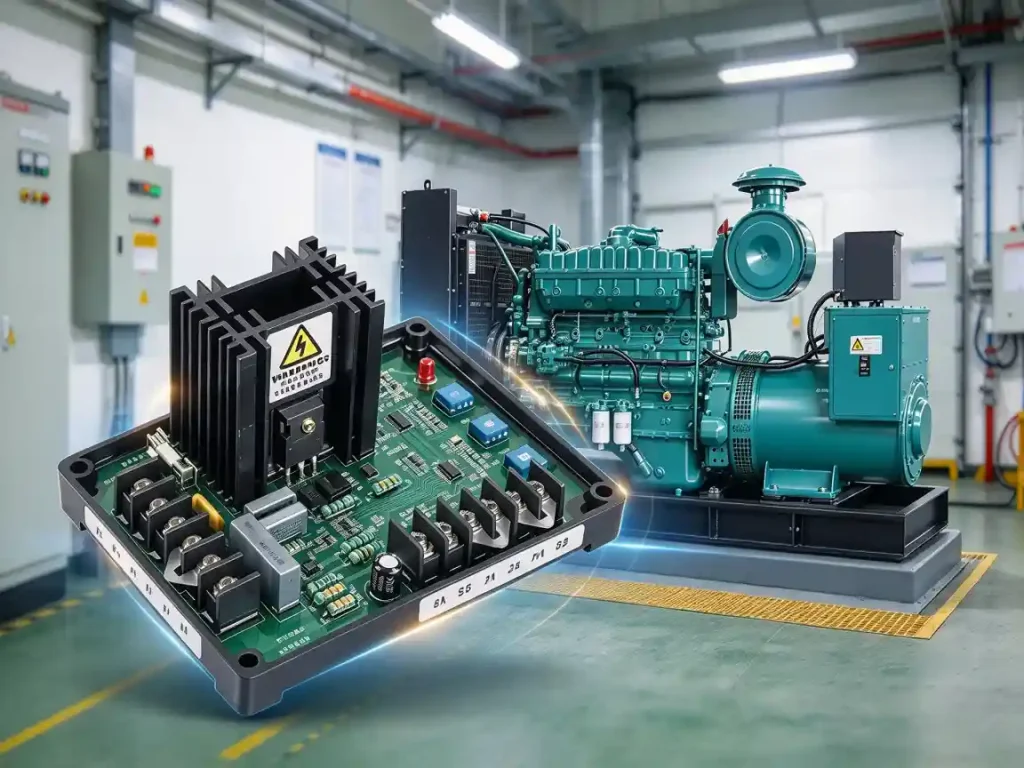
4 Common Causes of Unstable Generator Voltage
1. Unstable Engine Speed
One of the first things to consider is whether the engine is maintaining a steady speed.
A diesel generator produces electricity at a specific engine speed. If the engine speed repeatedly rises and falls, the generator frequency can change, and the output voltage may also become unstable.
Several issues can contribute to unstable engine speed, including governor problems, fuel supply issues, or changes in engine performance. If you notice that both voltage and frequency are fluctuating, the engine speed and governor should be checked rather than assuming that the AVR is the problem.
The relationship is particularly important when the generator is responding to a changing load. A healthy generator should be able to adjust its operating condition without repeatedly hunting up and down.
2. AVR or Voltage Regulation Problems
The AVR is another important part of voltage control. It continuously senses the generator output and adjusts excitation when the voltage moves away from its target value.
If the AVR is faulty, incorrectly adjusted, or receiving an incorrect voltage signal, the generator may have difficulty maintaining a stable output. Wiring or voltage-sensing problems can also affect the regulation system.
However, replacing the AVR should not automatically be the first response to unstable voltage. Cummins troubleshooting information lists several possible causes of voltage instability, including AVR problems, voltage regulator sensitivity, control issues, and changes in load.
AVR settings and internal components should generally be checked by a qualified technician, especially on larger industrial generator sets.
3. Sudden Load Changes
Sometimes the generator itself is working normally, but the connected equipment is causing the voltage to change.
Large motors, pumps, compressors, and air-conditioning equipment can require a high starting current. When one of these loads starts, the generator may experience a temporary voltage drop before recovering.
This is different from voltage that continues to fluctuate during normal operation. A brief dip during motor starting may be part of the generator’s transient response, while repeated or prolonged voltage instability needs further investigation.
Generator sizing also matters. The average running load may appear acceptable, but equipment with high starting requirements can place a much greater demand on the generator. Cummins notes that starting requirements and load stepping are important when evaluating generating-set performance and sizing.
4. Loose Connections or Electrical Load Problems
Electrical connections are another simple point that should not be overlooked. Loose, damaged, or corroded connections can interfere with power delivery or voltage sensing.
The type of load can matter as well. Some electronic equipment, including certain UPS systems and other non-linear loads, can affect the voltage waveform and make voltage regulation more difficult. Cummins has documented cases where non-linear loads and voltage waveform distortion contributed to generator voltage-regulation problems.
This does not mean that every generator supplying electronic equipment will have unstable voltage. It simply means that the load should be considered when the problem only appears with certain equipment connected.
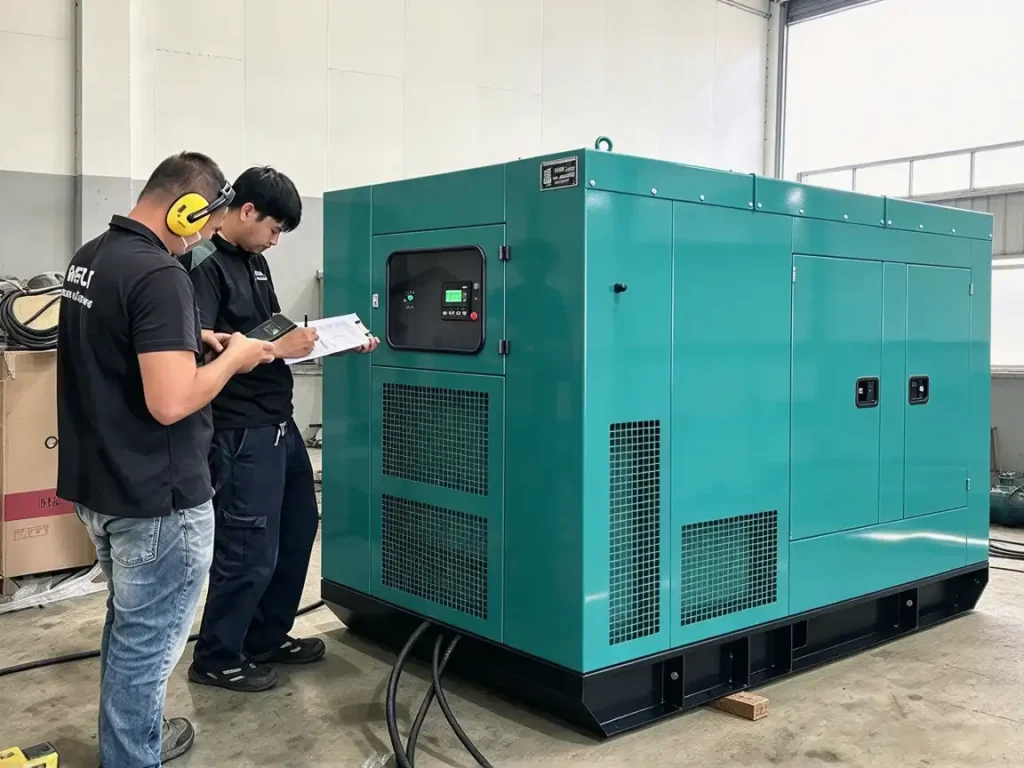
How Can You Tell What Is Causing the Voltage Fluctuation?
The way the voltage changes can often give you a starting point for troubleshooting.
For example, if the voltage is unstable even when the generator is running with little or no load, check the engine speed and AVR first. Loose connections or problems with the voltage sensing circuit can also cause this type of fluctuation.
A voltage drop that occurs when a large motor starts points to a different issue. In this case, check the motor’s starting current and whether the generator has enough capacity to handle the sudden increase in load.
It is also useful to look at frequency at the same time. If both voltage and frequency are changing, the problem may be related to engine speed, the governor, or the engine itself.
If the voltage only becomes unstable after a particular piece of electronic equipment is connected, the load should be checked as well. Some electronic equipment can affect generator voltage more than a simple resistive load.
These observations cannot identify the fault by themselves, but they can help you decide which part of the system to check first.
What Should You Check First?
First, look at when the voltage problem occurs. Does it happen when the generator is running with no load, during normal operation, or only when a particular piece of equipment starts? The answer can help narrow down the possible causes.
It is also worth checking the frequency at the same time. If the frequency changes with the voltage, the problem may be related to engine speed or the governor rather than the voltage regulation system alone.
Then take a look at the visible electrical connections. Loose terminals, damaged wiring, or a poor connection can cause unstable voltage. If the generator was recently serviced, rewired, or had components replaced, check whether the problem started around the same time.
If these basic checks do not reveal the cause, the AVR, alternator, engine control system, and overall generator performance may need to be tested by a qualified technician. For a more detailed diagnosis, the generator can also be tested under different load levels to see when the voltage becomes unstable. Cummins recommends load-bank testing for evaluating generator performance under controlled load conditions.
When Should You Stop Using the Generator?
A brief voltage change when the load starts or stops is not always a sign of a serious problem. The situation is different when the voltage keeps fluctuating or the changes are large.
Stop using the generator and have it checked if the voltage stays well outside the normal range, the generator keeps tripping, or connected equipment starts behaving abnormally. A burning smell, unusual electrical noise, or visible damage is also a reason to shut the generator down rather than continue running it.
Do not try to adjust the AVR or work on energized electrical components unless you have the proper training and equipment. If maintenance or electrical work is required, shut down the generator and isolate it from the power source first. Cummins also recommends following proper shutdown and isolation procedures before maintenance.
Conclusion
If troubleshooting points to a faulty component, do not choose a replacement based on the symptom alone. The generator model, engine model, part number, and the condition of the original component should be checked before placing an order. This is especially important for parts such as AVRs, controllers, and other electronic components, where similar-looking parts may not be interchangeable.
If you are looking for Cummins generator parts, Longshine supplies Cummins engine and generator spare parts, including AVRs, electronic controllers, fuel system components, and other engine parts. You can provide the existing part number, engine model, or nameplate information to help confirm the correct component before replacement.